
MexConnect
Cuisine  |  See all articles tagged food-drink history

Mexico's Grain Of The Gods: Cooking With Amaranth

Karen Hursh Graber

What food was considered so important to the diet of Mexico's pre-Hispanic population that it was fashioned into images of the gods and eaten as communion? What food was outlawed during the conquest of Mexico, and the people of New Spain forbidden to cultivate or consume? And finally, what food contains between 75% and 87% of total human nutritional requirements? If you've answered "amaranth" to all of the above, congratulations. Further congratulations are in order if, like a growing number of enthusiastic cooks and gardeners, you have begun to incorporate amaranth into your favorite recipes, and maybe even include it in the kitchen garden. It's English name comes from the Greek amarantus, meaning "never fading", an apt designation, given the varying degrees of esteem and loathing in which this humble plant has been held.

Current interest in amaranth, while well-deserved, gives no indication of the cultural conflict it once caused during the sometimes painful birth of a new nation. As fully as amaranth was appreciated by the indigenous population of what is now Mexico, it was just as fully reviled by the Europeans, as one of the foods they associated with "pagan practices."

Amaranth, a plant used for both its spinach-like leaves and for the grain gathered from the center stalk, had tremendous ritual significance for the Aztecs. Many of their ceremonies included the formation of an image of one of the gods, made with a paste of amaranth grains mixed with honey. Tlaloc, the rain god, Ome Acatl, the patron of banquets, and Xochipilli, the god of youth, poetry and flowers, were all honored with amaranth likenesses. The images, once formed, were worshipped, broken up and distributed to eat. The birth of a male child was also an occasion involving amaranth grains, this time made into a paste for the formation of a replica shield, bow and arrows, symbolic of hunting in particular and manly pursuits in general.

The leaves, too, had their place in ceremonial meals, ground and used in the tamales offered to the fire god Xiuhtecuhtli, and to the dead on the feast of Huauquiltamalcualitztli, a mouthful to say as well as to eat, meaning "the meal of the amaranth tamales." Amaranth was so necessary to both the religion and nutrition of the Aztecs that it was one of the four grains considered as acceptable tribute from outlying parts of the empire, the other three being corn, beans and chia. The Mendocino Codex indicates that the equivalent of the modern measure of 4,000 tons of amaranth a year arrived in Tenochtitlan.

When the Spaniards landed in the New World, immediately undertaking the zealous, often forceful, conversion of the inhabitants to Christianity, one of the first things they did was to outlaw foods involved in indigenous religious festivals. Diego Duran, in compiling this long list of forbidden foods chronicled in the Book of the Gods, noted amaranth as something to be particularly shunned, the consumption of amaranth idols being considered a blasphemous parody of the Christian communion. The friars were quick to issue a ban against its cultivation.

However, a plant which grew so abundantly in the wild, and which had been harvested for over seven thousand years, being used to make tortillas even before the cultivation of corn, was not to be eradicated. Although severe punishments were imposed for the cultivation or possession of amaranth, people continued to gather and use it in cooking. Hoauhatolli, an atole made with ground amaranth and honey, was a popular and nutritious drink, valued for the high percentage of protein provided by the amaranth. The grain was also used to make tzoalli, a forerunner of alegría, a sweet resembling a candy bar, formed of popped amaranth seeds mixed with boiled-down maguey sap or honey, still very popular in Mexico, especially on Day of the Dead, when it is formed into skulls and human and animal shapes. The leaves of the plant were used as vegetable greens, to the extent that the Nahuatl word huautli, meaning amaranth greens, was used interchangeably by the Spaniards with the Nahuatl quelite, meaning greens of any kind. This accounts for the fact that amaranth greens are called quelites in some parts of Mexico.

The leaves and seeds of the amaranth plant are still characteristic ingredients in Mexican cuisine, especially in the staes of Morelos, Mexico, Puebla, Tlaxcala, and particularly Oaxaca, where the plant is widely cultivated as a valuable cash crop, worth four times more per kilo than corn. This is understandable, given the fact that amaranth provides a high quality protein, with a nearly perfect balance of essential amino acids, including abundant lysine and methionine, not found in most grains.

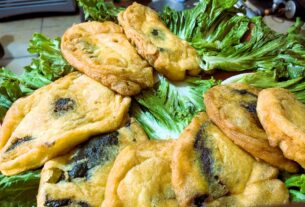
The leaves, seeds, popped grain and flour are all used in regional dishes of these states. The grain, because of its high protein content, is a popular item in tiendas naturistas - health food stores - where it is bought to be used in breads, muffins, hot cakes, and cooked as a cereal. Many brands of Mexican granola also include amaranth in their mixture. Delicious moles, pipians, soups, vegetable dishes and desserts made with amaranth have once again come to the culinary forefront, as interest in pre-Hispanic ingredients has been renewed by the chefs of la nueva cocina mexicana, the Mexican nouvelle cuisine which combines ancient ingredients with modern techniques.

Now widely sold in health food stores and supermarkets north of the border, amaranth is also available on the Internet (see Sources, below.) Amaranth flour is ideal for use in gluten-free diets. The plant is easy to grow in the home garden, sprouting quickly and needing very little special care. Although best nurtured by good soil and moisture, it is capable of surviving both drought conditions and poor soil, a fact which is probably responsible for its lasting through intervals of near neglect, and has earned it the appellation of "never fading."

The following recipes are only a sampling of the many ways amaranth can be incorporated into a great many dishes, including salads, egg dishes, chiles rellenos, stuffed zucchini and chayote, as well as atoles, puddings and cakes.


Sources for Ordering Amaranth:

Online sources for cereal grain and flour:

NuWorld Amaranth: In addition to amaranth flour, whole grain seeds, and puffed (popped) cereal, sells many innovative products, such as Aztec Amaranth Flatbread and amaranth and corn tortilla chips. The website also has some recipes for bread and dessert dishes.
http://www.nuworldamaranth.com

Multi-Kem Corp.: Sells flour, whole grain, puffed, and toasted amaranth.
http://www.multikem.com
Tel: US 800-462-4425 Outside the US: 800-441-7405

Mail Order Sources for Seeds and Plants:

Johnny's Selected Seeds
Foss Hill Road
Albion, ME 04910

Mellinger's Inc., Dept MKG
2310 W. South Range Road
North Lima, Ohio 44452

Plants of the Southwest
Agua Fria, Rte. 6, Box 11A
Santa Fe, New Mexico 87501
Published or Updated on: January 1, 2006 by Karen Hursh Graber © 2008
Contact Karen Hursh Graber

Follow Karen as she travels through the Central Mexican state of Puebla, meeting local cooks, tasting the food, and collecting recipes. With over 75 recipes, plus sections on ingredients and cooking techniques, the book takes the reader on a journey through one of Mexico's oldest and most renowned culinary regions. It can be ordered online.

Her Cookbook

All Tags