Below are selected articles and recipes from Baja California, Baja California Sur, Sinaloa and Sonora, the four states that form the Central Pacific Region of Mexico.
To see ALL articles and recipes related to this region, please use the following individual state links:
- Colima – Articles or Recipes
- Jalisco – Articles or Recipes
- Michoacán –Articles or Recipes
- Nayarit – Articles or Recipes
The Central Pacific Region is comprised of the western foothills of the Western Sierra Madre and the coastal lowlands of varied width bordering the Pacific Coast. It includes the major tourist resort of Puerto Vallarta (and the nearby Costa Alegra and Riviera Nayarit), as well as a large number of smaller coastal tourist towns and villages.
Inland, this area extends to Guadalajara, Mexico’s second city, and the Lake Chapala area (Chapala, Ajijic, Jocotepec) with rich history and large concentration of writers, artists and foreign retirees.
Here are select articles and recipes related to the Central Pacific Region:
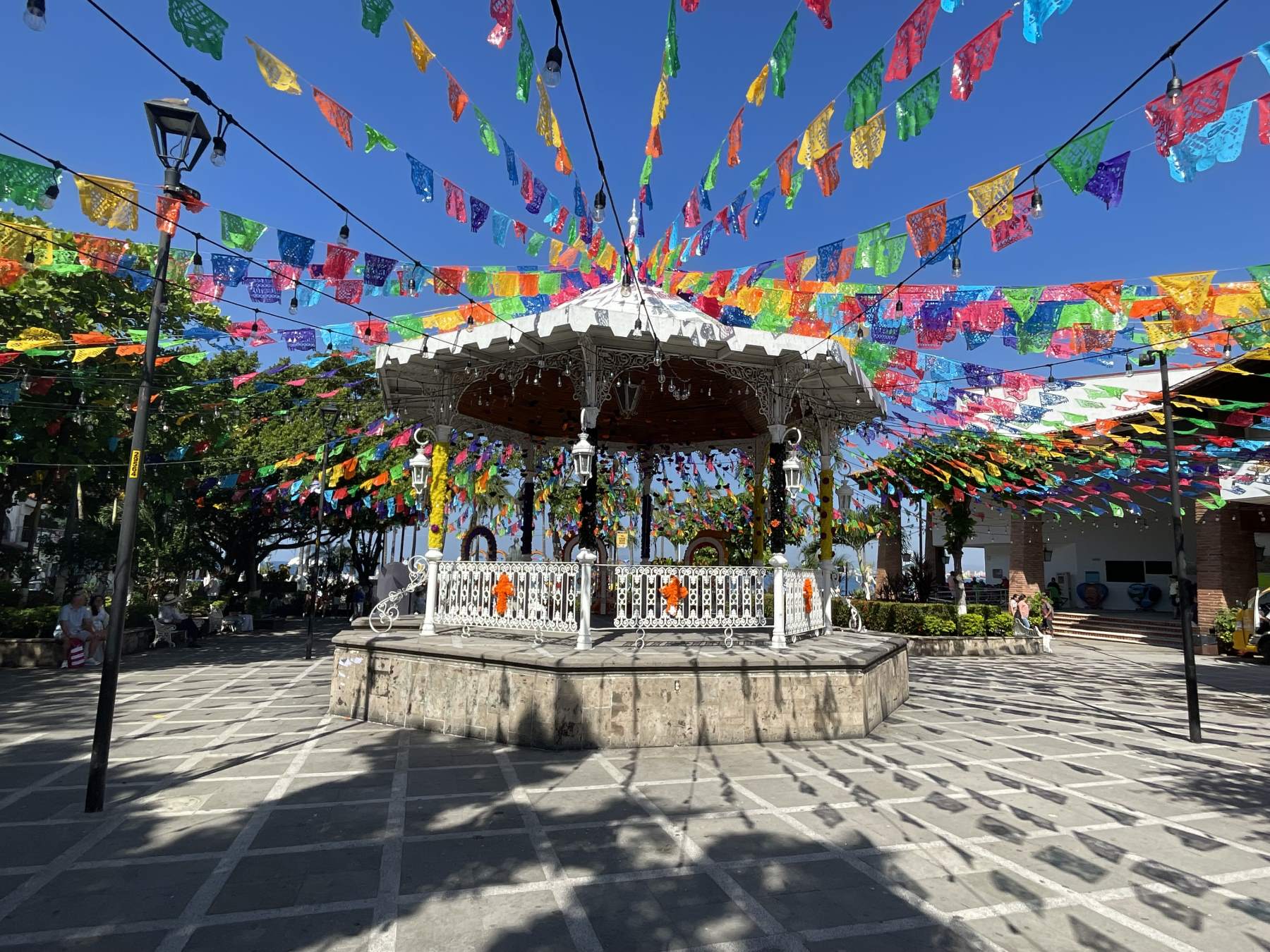
Vibrant Puerto Vallarta didn’t overwhelm my autistic partner, it set him free.
When you say the word Mexico, something odd happens to the anglophone ear. The M leans in. The E lingers. Pressure builds. Anticipation hums, then release. To most, it’s just a word. To a neurodivergent nervous system, it’s the waiting before the jump. Arriving in Mexico can feel like a sensory freefall. It is a […]
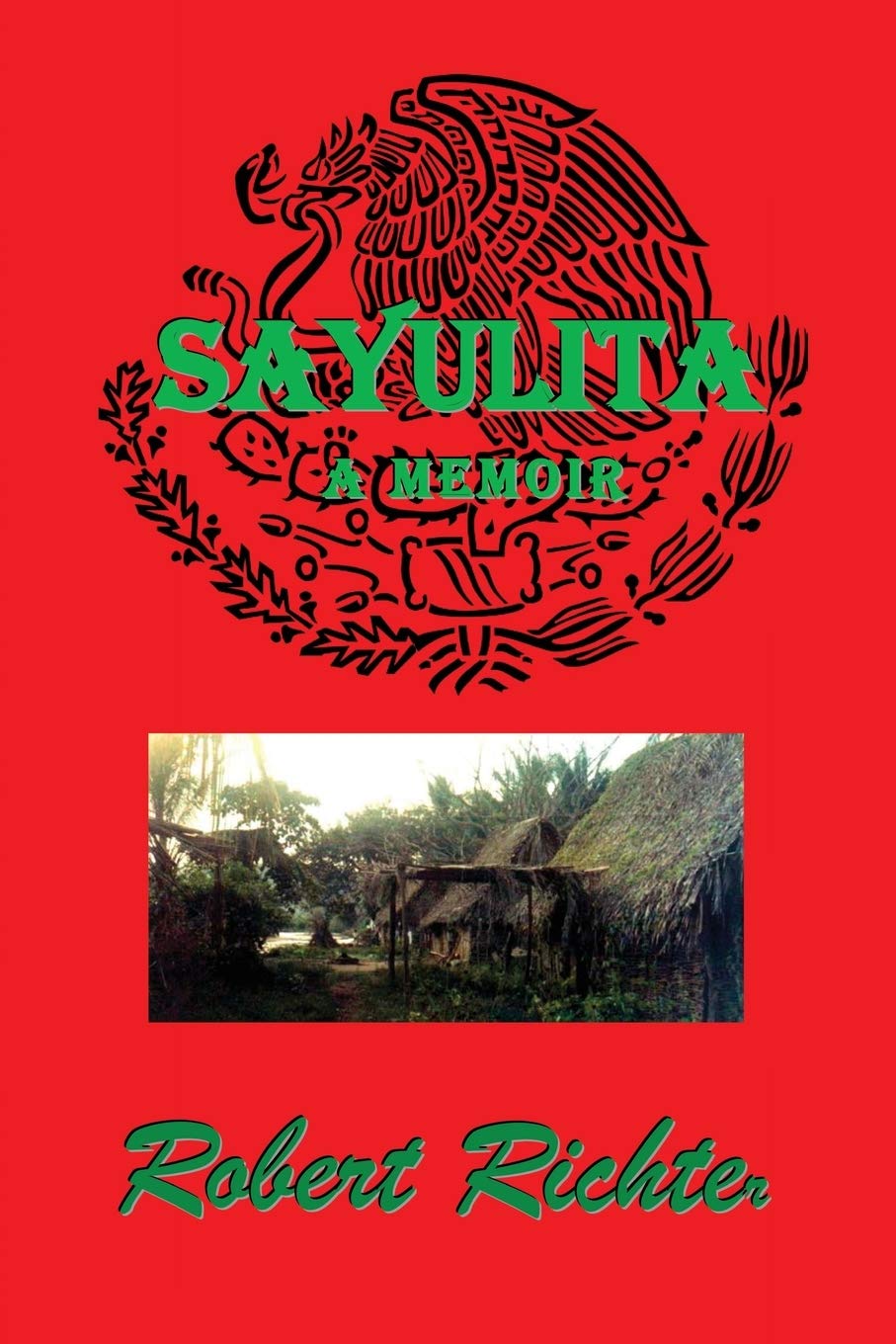
Sayulita – a memoir by Robert Richter (Aakenbaaken & Kent, 2020)
Sayulita by Robert Richter Pull up a comfortable chair and allow yourself to be transported back to another Mexico, to a small seaside village before the arrival of condominiums, time share vendors, polluters and exploiters, and the all-inclusive resorts with herds of tourists spilling into downtown areas where they shop for trinkets and souvenirs of […]
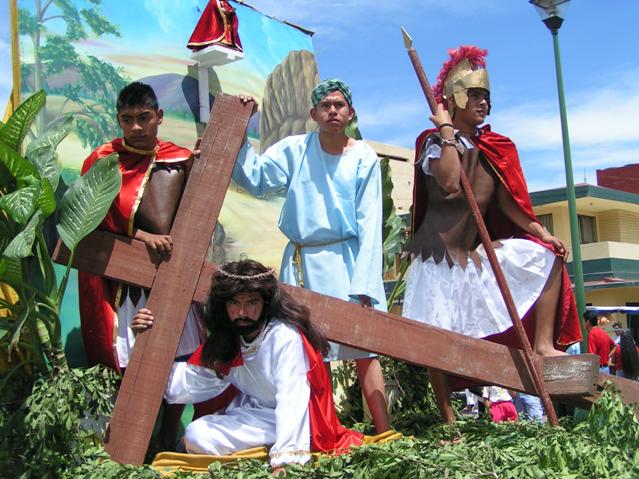
Good Friday in Tuxpan, Jalisco
“The town of everlasting festivity.” That, we were told, is what is says on the Municipal coat of arms of Tuxpan, a town in the south of Jalisco almost on the boundary with the neighboring state of Colima, and relatively close to the Mexican Pacific coast. Haga clic aquí si prefiere leer este artículo en […]
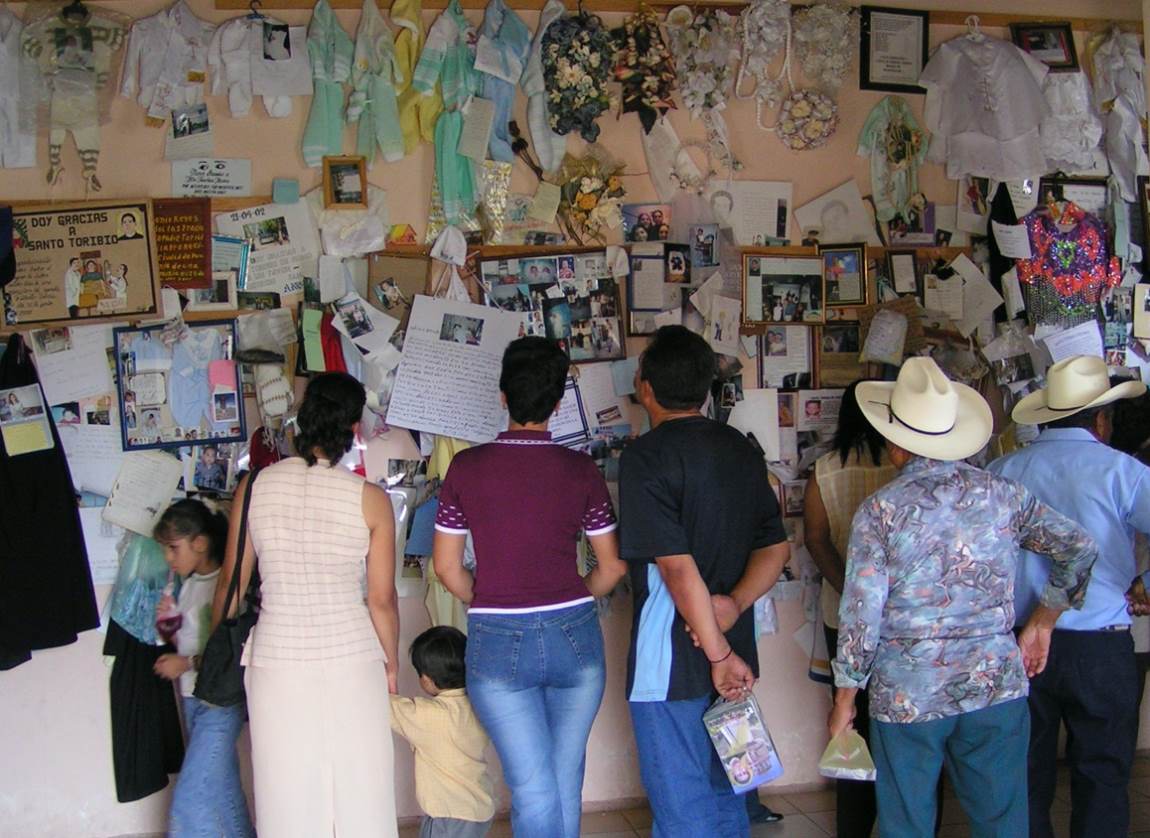
Toribio Romo: the patron saint of migrants
José de Jesús is a dark-skinned young man who wears cowboy boots and a Texan hat. He arrives to Santa Ana de Guadalupe in a pickup truck flashing US license plates. He drove all the way down from Colorado to greet the saint: Haga clic aquí si prefiere leer este artículo en español “A friend […]
Viernes Santo en Tuxpan, Jalisco
“El pueblo de la fiesta eterna.” Eso nos habían dicho que dice el escudo municipal de Tuxpan, población del sur de Jalisco casi en los límites con el vecino estado de Colima, ya relativamente cerca de las costas que baña el Pacífico mexicano. Click here if you prefer to read this article in English Llegamos […]
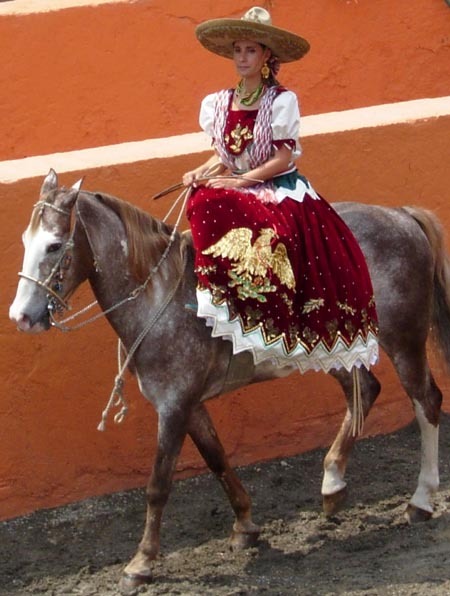
September 14, Day of the Charro
Gallery: September 14, Day of the Charro (Photos by Dale Hoyt Palfrey) The Day of the Charro, celebrated on September 14 in Mexico, oft times is overshadowed by the multitudinous fiestas, speeches and fireworks celebrating Independence Day on September 16. In his elegant costume and wide sombrero, the charro is a cowboy but also a gentleman. With […]
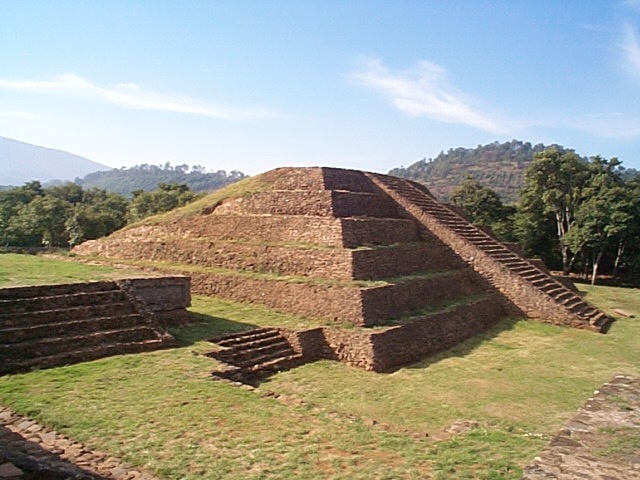
Ancient tombs and skulls in Tingambato, Michoacan
Descending from the mountains, the original (non-toll) Pátzcuaro-Uruapan highway enters avocado-growing country at Tingambato. South of the present-day village of Tingambato is the major archaeological site of Tinganio, one of the few sites in Western Mexico where there are genuine pyramids. The site was excavated in 1978 and 1979 by one of Mexico’s top archaeologists, […]
Toribio Romo: El santo patrono de los migrantes
José de Jesús es un joven moreno que viste botas vaqueras y sombrero tejano. Llega a Santa Ana de Guadalupe en una camioneta con placas de los Estados Unidos. Viene desde Colorado para saludar al santo. Click here if you prefer to read this article in English “Un amigo y yo nos fuimos de Jalos […]
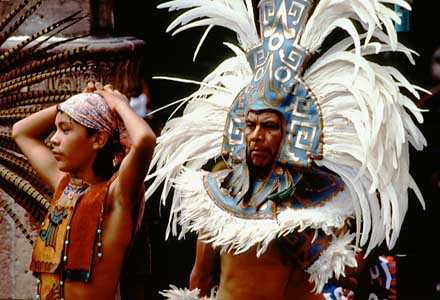
Masks and feather headdresses: Mexicans celebrate danzas
Mexicans love to wear masks, to dance and make music in a blazing display of fireworks, feasting and shooting off pistols. Appearances are deceptive; even the poorest pueblo collects money to celebrate the patron saint’s day, the Virgin of Guadalupe, Independence Day and whatever else calls for gaiety and loud noise. Religious and historical dances […]
Butterflies by the million : the Monarchs of Michoacán
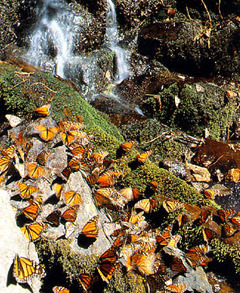
Every winter, more than one hundred million monarch butterflies fly into Mexico from the U.S. and Canada. On arrival they congregate in a dozen localities high in the temperate pine and fir forests of the state of Michoacán. As a species, monarchs are native to North America, but they subsequently island-hopped their way around the […]
Did you know? Independence battle map is upside down
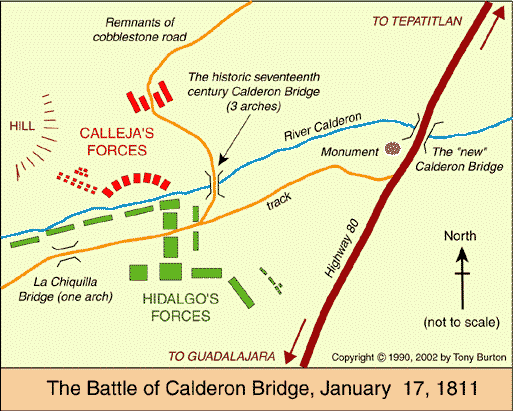
The battle in question is the Battle of Calderon Bridge (Batalla del Puente de Calderon), fought just outside Guadalajara in January 1811 as part of Mexico’s fight for Independence. The decisive battle was waged on the morning of Thursday, January 17. Imagine the scene. One side, led by Ignacio Allende, had some eighty thousand ill-equipped […]
Fireworks artist: José Zuñiga, castillero
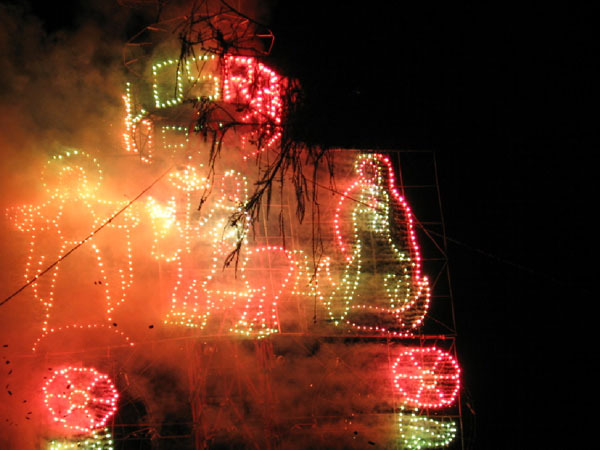
Jose Zuñiga has been making castillos for the better part of 25 years. His father was a Maestro de Fuegos Artificiales, and from boyhood, he remembers being part of the family business. Today, he runs his own fabrica, with 5 men who help with the armature, delivery and illumination of Mexico’s favorite fiesta perk. Castillos are lightweight towers of cane and wood, which […]
Caldo Tlalpeño
Esta sopa es un clásico mexicano, y aunque se dice que sus orígenes están en Jalisco, se encuentra en menús por todo el país. Esta versión es suficientemente sustancioso como para servir de platillo fuerte. El ingrediente que le da a esta sopa su distintivo sabor es el chile chipotle. Ingredientes 1 pollo de 4 […]
Did You Know? Tequila dates from the sixteenth century
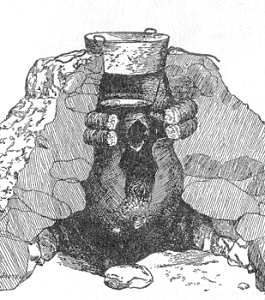
In 1897, Carl Lumholtz, the famous Norwegian ethnologist, who spent several years living with remote Indian tribes in Mexico, found that the Huichol Indians in eastern Nayarit distilled agave juice using simple pot stills, the pots being quite unlike any other Spanish or pre-Columbian vessels. By 1944, Henry Bruman, a University of California geographer, had […]
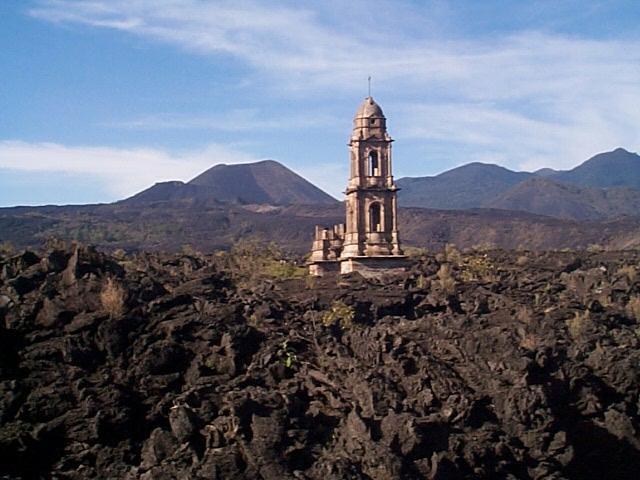
The cow killers: Memories of Michoacan in 1948
Luis Dumois’ article about Volcán Paricutín released a few vivid memories of my teenage years in Mexico. In 1948 I was incredibly lucky to visit the volcano of Paricutín in its full and frightening glory. Fountains of luminous, red lava tossed high in the air, crashing and spilling down the sides of Paricutín’s steadily growing cone. Thundering […]

Jalisco style Mexican flan: Flan de Jalisco
Ingredients 2 cups of whipping cream 1 cup milk (do not use low fat) 1 pinch of salt 1/2 teaspoons natural vanilla 1 cup of sugar 4 large eggs 2 large egg yolks 7 teaspoons sugar Position rack in center of a preheated 350 P. oven. Combine cream, milk,salt and vanilla. Bring to a simmer […]
Spicy Braised Pork: Puerco Estilo Apatzingan
The area around Apatzingan is famous for its pork. The flavor of this dish is somewhat reminiscent of the carnitas for which Michoacán is famous. Unlike carnitas, the pork is baked in the oven instead of fried in lard, and the seasoning ingredients make serving a salsa unnecessary. Ingredients: 2 pound piece pork shoulder (do not substitute with […]
Swiss Chard Tamales: Tamales de Acelgas con Salsa Verde
This is Billy’s adaptation of a dish he first encountered at the hotel La Casa de Maty in Tapalpa, Jalisco. The use of Swiss chard leaves to wrap the tamales, instead of the usual banana leaves or corn husks, means that the tamales do not have to be unwrapped before eating and gives them another […]
Beef fajitas with tequila: Fajitas de res al tequila
At the El Callejon restaurant in Tequila, Jalisco, my questions about preparation and proportions led to an invitation to their large, open kitchen area, where there was always something appetizing sizzling on the grill. This is a good recipe for outdoor cooking, but may also be prepared in a skillet. Although the tequila was added […]
Beans, a staple in the Mexican kitchen: Frijoles
Since pre-Hispanic tmes, beans have been a staple in the Mexican kitchen. They appear in a world of traditional recipes, from frijoles refritos or refried beans to frijoles charros (cowbooy beans) and many many more. Ingredients 1 kilo (2.2 lbs) black or pinto beans 1 harge onion 1 head of garlic, whole, unpeeled 5 tablespoons of salt or to […]
Chicken Vegetable Soup: Caldo Tlalpeño
This soup is a Mexican classic, and though it is said to have originated in Jalisco, it is found on menus throughout the country. This version is hearty enough to serve as a one-dish meal. The ingredient that gives this soup its distinctive flavor is the chipotle chile. Place the chicken, onion, garlic, chiles, cilantro and salt […]
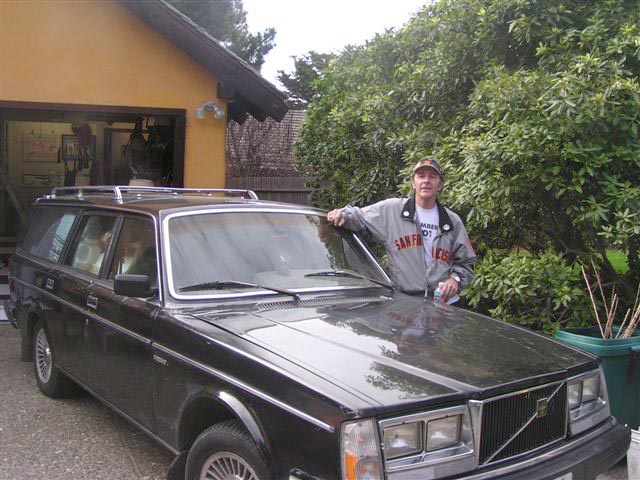
North to Nogales from Puerto Vallarta (and back)
Two years ago, I would’ve been leery about driving out of Mexico alone. Well, “everyone says” that the drive to Nogales (from Puerto Vallarta) is a drag: long, flat, boring, and nothing to see – something like, “straight roads and lots of desert.” As is the usual case with “the CV” (the Conventional Wisdom), it […]
Plaza-Style Chicken: Pollo Placero
From early evening until late at night, stands are set up in the plazas of Morelia, Pátzcuaro and other cities in Michoacan selling this popular supper. We watched women bring the different elements of this dish – chicken, vegetables and enchilada sauce – which had been pre-cooked at home, then heat them in hot oil […]
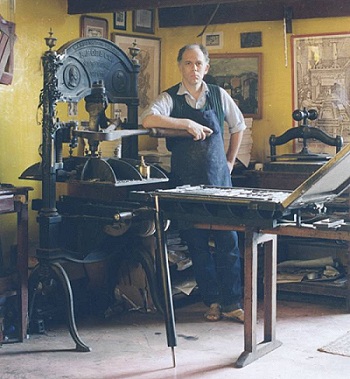
Did you know? Mexico has one of the world’s oldest still-functioning printing presses
One of the oldest printing presses still in operation anywhere in the world is in Tacámbaro, Michoacán. Juan Pascoe lives on a remote ex-hacienda outside Tacámbaro, Michoacán. Visitors invited to view his work often think they’ve lost their way in the surrounding sugar-cane fields, but then suddenly catch their first glimpse of the former Great […]
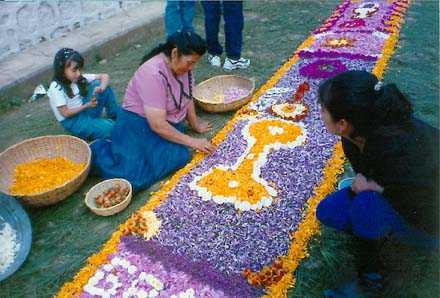
Patamban – The Fiesta De Cristo Rey
As thousands prepare for the trek to Patzcuaro, and the famous Day of the Dead Celebration, others head for the regional celebration in Patamban known as the “Fiesta de Cristo Rey”. Held on the last Sunday in October, the entire village turns out to “paint their streets with flowers,” the celebration is to honor the […]
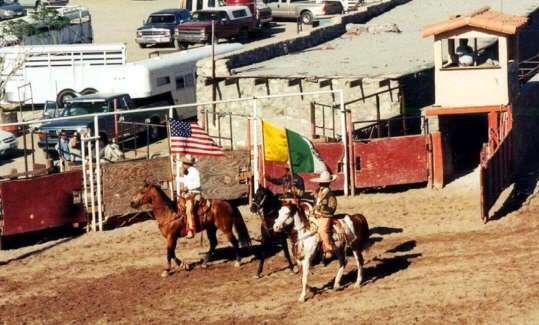
Charreada in Guadalajara
In rural Canada, I live close to the land and to a farming lifestyle that was once traditional. Therefore, when I’m in Mexico the countryside draws me to its peoples and traditions. It seemed natural to me to seek more information about the charro (cowboy), heir to Mexico’s charrería or equestrian tradition. The search led me to people on […]
Jalisco Style Red Pozole: Pozole Rojo Jalisciense
In Jalisco, red pozole is more common than either white or green, and any red pozole, even if found in other regions, is usually called jalisciense or tapatío, meaning Jalisco style. The use of both pork and chicken, plus the flavor and color of the red chiles, takes this pozole over-the-top. Ingredients: One recipe Basic White Pozole 1 4-pound […]
Fish “Meatballs”: Albondigas de Pescado
A delicious and economical way to use just about any firm, white-fleshed fish, this is a common meal along Mexico’s Pacific coast, especially in Baja California and the Puerto Vallarta area. The albóndigas, served in the tomato broth, can also be made with leftover poached fish. Ingredients: For the albóndigas: 1 pound firm, white-fleshed fish filets, ground in […]
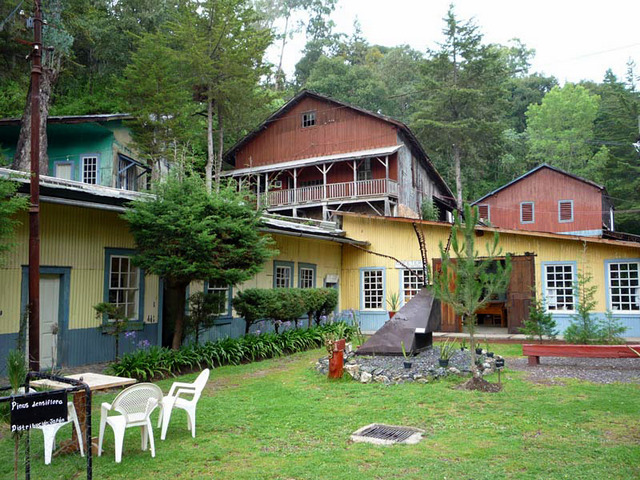
Night in Mina Dos Estrellas, a haunted mine in Mexico
The proverbial bat in the belfry, a boy trapped in a bathroom, and a witching hour wander deep into the heart of a century old tunnel provided the eerie highlights of my recent overnighter at Mina Dos Estrellas, not far from Tlalpujahua in northeastern Michoacan (see map). Yet one resident phantom, reputed to be a […]
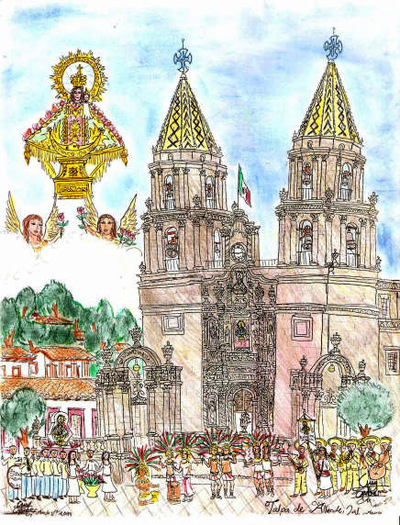
My first pilgrimage: the Virgin “Rosario de Talpa”, Jalisco
If you live here in Mexico and don’t study the culture or experience first-hand this ancient and mysterious country, you are missing the richness that surrounds you daily. It is one thing to go on an air-conditioned bus with a guide, yet quite another to accompany a Mexican friend, willing to share information about his […]
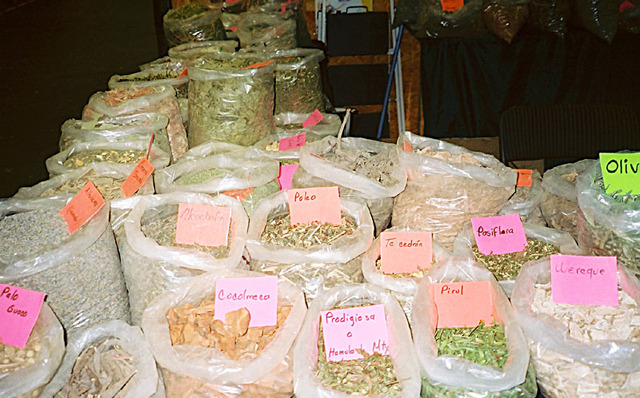
Mexican folk remedies
March is the month Talpa de Allende receives hundreds of thousands of visitors who come to pay homage to the little twenty inch tall image of Our Lady of the Rosary, also known affectionately as La Chaparrita (the short one). They come from all parts of Mexico and most of them come walking, at least […]
Smoked Fish Ceviche: Ceviche de Pescado Ahumado
Although most commonly made with raw fish, ceviche, which originated in Peru and arrived via the Pacific coast of Mexico, is delicious prepared with smoked fish, and probably a bit more reassuring for those that have doubts about raw fish. Ingredients: 1 pound smoked fish, such as mullet, sable or tuna, boned and shredded 1 […]
Driving from Puerto Vallarta to Guadalajara
Posted by Leroy Blankenship on Marzo 28, 2000 We will be driving (yes, my brother insists upon driving instead of riding the bus) from Puerto Vallarta to Guadalajara next week, and return. It would be nice to take the fastest route in one direction and the most interesting or scenic route in the other direction. […]
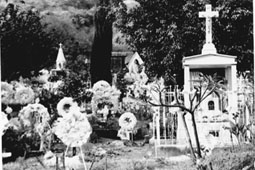
Celebrating the Days of the Dead: The Heart Speaks Clearly in Michoacán
The Days of the Dead, celebrated throughout Mexico, coincide with the Christian All Souls and All Saints days, November 1 and 2nd. People who have died in the past year are remembered, their pictures placed on family altars and special food and drink are offered for the souls of the departed. Last year (1995) I […]
Day of the Dead in Mexico: A personal perspective
The air is crisp as we head up Highway 45 to celebrate the Day of the Dead, passing through increasingly barren land. Trees, that cover the gentle slopes and crops of russet milo maize, give way to prairie grasses and then nothing except cacti and the hardy shrubs that live in this area of little rainfall […]
Honor, vengeance and machismo
Bitter are the fruits they eat in Michoacán, black oval fruits the size of an olive, borne in the summer on the capelin tree. Bitter is the story told to me in a mountain pueblo in the northeast corner of the state. Juan Manuel told his story of machismo and the fate of his horse as we […]
Where angels fear to tread: an interview with Silvia Flores
This morning Nurse Practitioner Silvia Flores Gonzalez is a little tired, having gotten up at 4:00 am to deliver a baby. The young mother knocked on the door of “El Centro de Desarrollo para Mujeres” in Ajijic at 4:00 am, and she only had $30.00 pesos to pay for the delivery. The women’s center serves […]
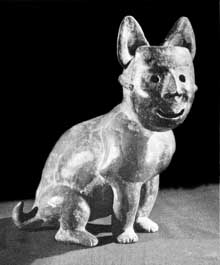
Dog with a human mask: The ceramic dogs from Colima
Mexicans love wearing masks. My favorite is a statue of a dog wearing a human mask created about 300 A.D, and found near Colima. Masks are part of the Christmas pastorelas, depicting the devil, the hermit and Sin, dressed in red satin. Masks are an integral part of many ritual dances (the Spanish word is danza for ceremonial dances.) […]
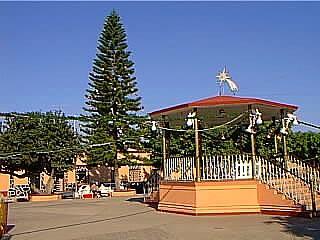
Wandering through Nayarit
Nayarit is still one of Mexico’s best kept secrets. Here you will find rich traditions, beautiful beaches, and “secret places” to discover for yourself. If you are planning a trip to explore Nayarit, you will want to consider doing it by car and taking the time to visit some of the places listed below. Formerly […]
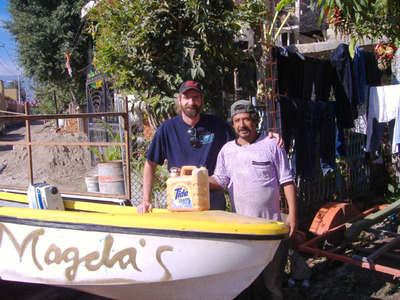
Lake Chapala fishing trip
A fishin’ we will go, a fishin’ we will go; hi, ho, the merry-o, a fishin’ we will go. Second son Gary came to the west end of Lake Chapala, to the suburbs of Jocotepec, in the colorful state of Jalisco, for a winter holiday, free food and probably an inspection of his aging parents’ […]
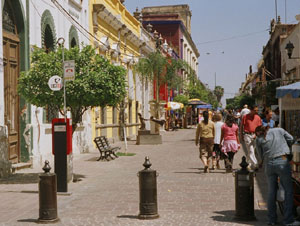
Tlaquepaque, a shopping paradise
Once upon a time, long, long ago, the village of Tlaquepaque just outside Guadalajara was where Guadalajara’s upper crust built their summer homes, places where they could escape the congestion of what was then considered to be a very busy city. Today, Tlaquepaque seems like a natural extension of the city of Guadalajara and, although […]
Michoacán-Style Rice with Chorizo: Morisqueta con Chorizo
In this recipe, the rice is good first and then combined with the other ingredients, making it a good way to use leftover cooked rice. Ingredients: 2 tablespoons vegetable oil ¼ cup chopped onion ¾ pound chorizo, removed from its casing and crumbled ¼ pound roma tomatoes, peeled and chopped 3 ½ cups cooked white […]
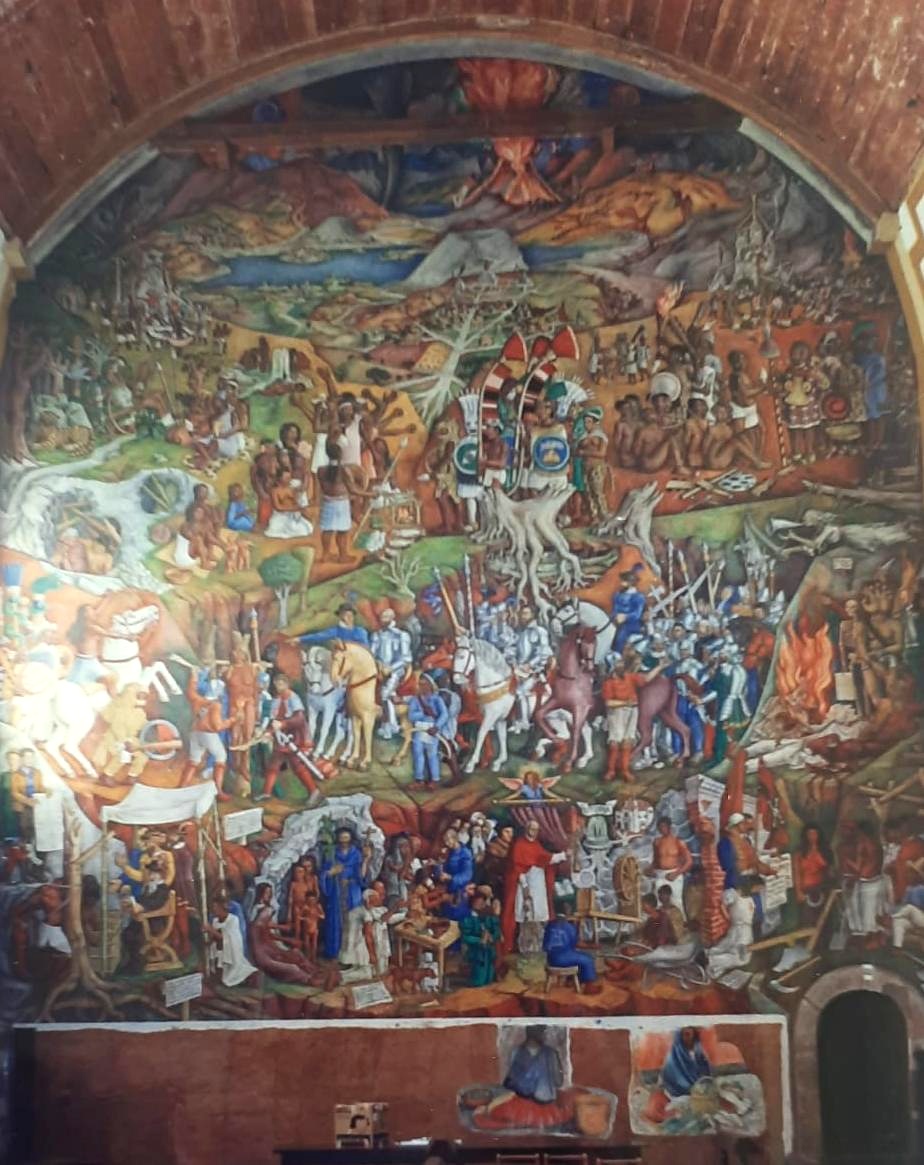
Did You Know? The centenary of the birth of artist Juan O’Gorman
Juan O’Gorman was born on July 6, 1905, in Coyoacán, Mexico City. His father, Cecil Crawford O’Gorman, was a mining engineer and artist of Irish origin; his mother was Mexican. Juan was educated at the National University (UNAM), and became a well known architect. A follower of the Franco-German rationalism school, he was one of […]
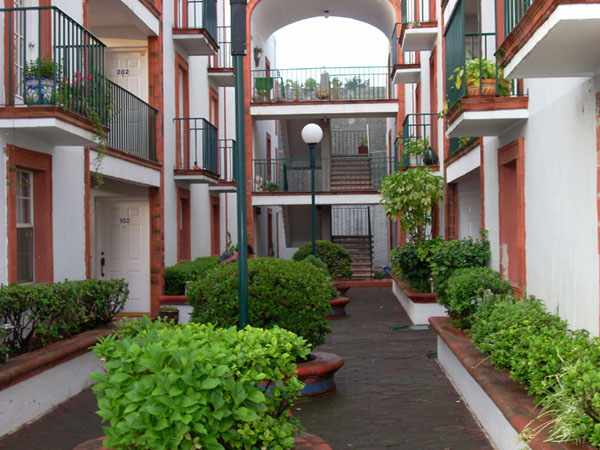
Traveling to Mexico with children
Travel to Mexico with your children? Give yourself some kudos just for considering it! If the cost is daunting — Mexico may be inexpensive but air flight is not — think of skipping a few of those college-fund payments and taking a trip with the cash instead. With money that may or may not get […]
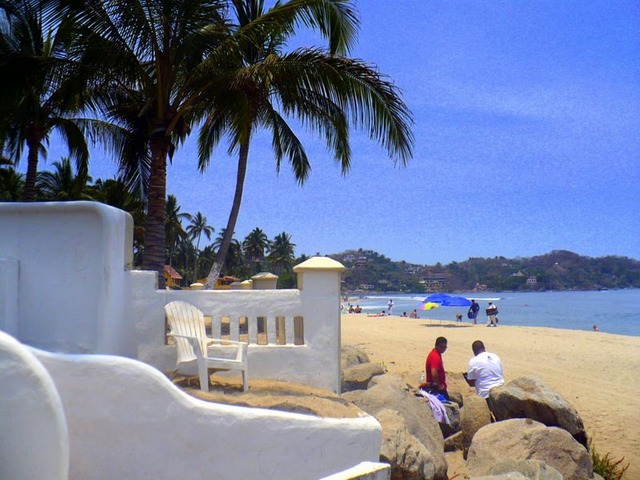
Sayulita: bohemian surf town on the Nayarit coast
Sayulita beach is stunningly beautiful, and most visitors are completely captivated by its charm. The two-mile long beach boasts soft fine sand, warm blue waters, perfect surfing waves and is adorned by rich tropical foliage and swaying palms, fulfilling most people’s fantasy of a tropical oasis. Indeed Sayulita is commonly referred to as “The Jewel […]
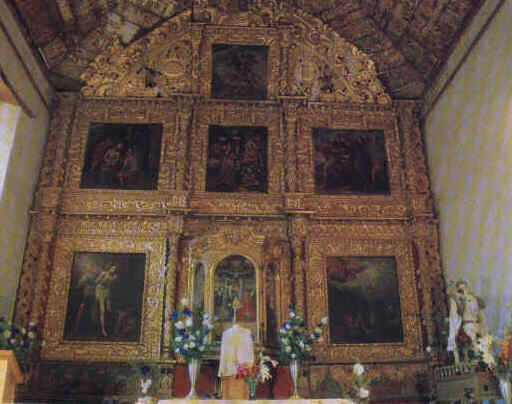
Did you know? The Sistine Chapel of Mexico
A small church with a rather nondescript exterior in a tiny village (Tupátaro) just off the main highway between Morelia and Pátzcuaro hardly sounds like the kind of place where you’re likely to find one of Latin America’s artistic masterpieces, but initial appearances can be very deceiving. The whitewashed exterior of Tupátaro’s church may be […]
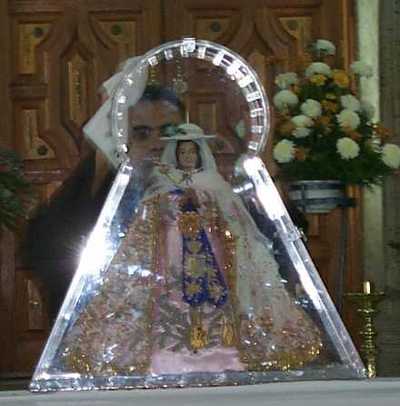
Pilgrimage with La Virgen de Zapopan
Lightning is with us all the summer. It forks and it shimmers and it zips, and sometimes it pulsates for seconds on end. It is white and yellow and greenish and bluish and carnation pink. It has given rise to legends. They say that, in the seventeenth century, the storms in Guadalajara were so severe […]
Migration Minded: The Monarch Butterfly
Mexico experiences one of nature’s loveliest gifts each winter when billions of Monarch butterflies descend on the warm forests of the country’s central highlands. The Monarch is known for its long migrations and this annual journey covers some 2,500 miles-from the chilly regions of Canada and the northeastern United States to the mountains of Michoacán. […]
The Folkloric Ballet (Ballet Folklórico) of Guadalajara, Mexico
The whirling skirts of a dancer from the Ballet Folklorico at the Teatro Degollado in Guadalajara fill this month’s cover. The costume belongs to the Jalisco segment of the show, which features traditional dances from all regions of Mexico, now in its 37th consecutive year. Following the Sunday morning spectacle, I spoke with Carlos Ochoa, […]
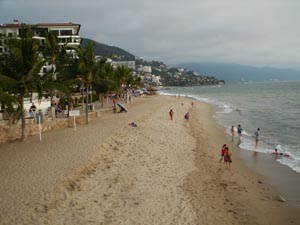
Puerto Vallarta: escape to paradise
Puerto Vallarta is steeped in enchantment. Its charismatic history reaches back some 600 years before Christ. At that time this vast untamed area was called Xalisco and was ruled by King Nayarita, known as the god of battle. He fought to keep his lands and his precious cove – now called Mismaloya – in his […]
Art in Puerto Vallarta
“Every Child is an artist. The problem is how to remain an artist once he grows up.” Pablo Picasso Art of every description is exhibited in Puerto Vallarta, from bohemian and Huichol to expressionistic and figurative. You’ll find a variety of media: watercolors, oil, acrylic, felt pen, pencil, charcoal, gold leaf, mixedmedia, ceramic, bronze, terra […]
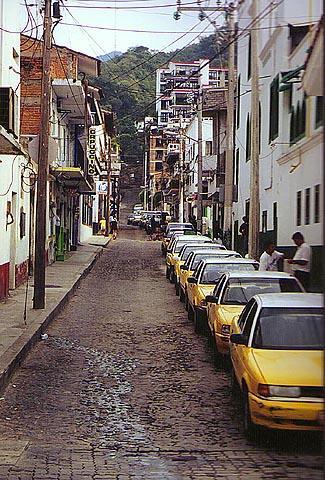
A ten year retrospective of Puerto Vallarta real estate
*Statistics from Multi List Vallarta The last decade of the millennium has brought a multitude of changes to the real estate market of Puerto Vallarta. The effects of this can be seen by the expansion of the market itself beyond the confines of the Bay of Banderas. New phrases have been coined to describe the […]
Tortas Ahogadas: Tortas with Tomato Sauce
Ahogadas means “drowned”, an apt word to describe these sandwiches on a French roll, filled with meat and bathed with tomato sauce. While some restaurants and food stalls automatically top the tortas with both salsas, most people prefer to indicate how much chile sauce they want, since it is quite hot. When serving them at home, […]
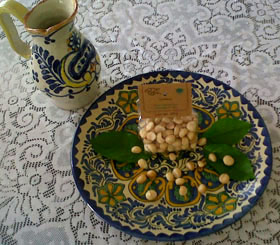
Mexican macadamia nuts: culinary gold
A recent trip to the cloud covered village of Cuetzalan, high in the Sierra of Puebla, generated more of the questions that arise on each visit. How does the regional dress of pure white cotton, worn daily, stay so clean in a place where it rains nearly every day? How do any vehicles get to […]
Mexico’s extraordinary arts and crafts
Living here in Mexico offers me so many opportunities to be thankful. How did I ever fit a career into my life? My days are filled with friends, with travels, with bridge, with doll making and writing books… and, recently, installing my new computer, learning new software programs and figuring out how to save important […]
Mexico: a visit to Sayula, Zapotlanejo and Zapopan
After having read an article in the local Guadalajara Reporter by a man who retired in Sayula, some friends and I decided to check it out. It’s a nice-sized town with a population of about 200,000, located about 1-1/2 hours from Ajijic towards Colima. The central plaza is large and full of benches and shade […]
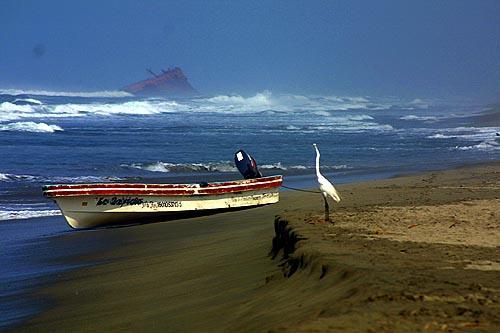
Playa Azul and Caleta de Campos: Exceptional beaches in Michoacan
In a country filled with wonderful beaches and resorts, what could possibly prompt someone to visit Playa Azul? Perhaps because it’s there – representing the only sizeable beach town along the 250km of Michoacán’s coast. One must discount Lázaro Cárdenas, the sprawling industrial giant to the south, namely because it’s not a town and because […]
Area around the Colima volcano
Posted by dave on Mayo 04, 2000 Can anyone tell me what the area is like around the Colima volcano? I am interested in learning if there are any small villages, lakes and nice valleys around the area where one might buy a piece of property and spend the summers at a higher altitude. Are […]
Guide to alternative tourism in Michoacan
Michoacán is recognized in México for its perfect combination of colors and flavors, the melancholy and joy of its music, the joy and vitality of its dances, its cultural wealth, its traditions and history, its villages and towns, and its natural beauty. All of this makes Michoacán ideally situated for travel into the extraordinary heart […]
Michoacan’s rural education
Stating what it means to be Mexican is not an easy topic to define, but the rural education system helps in forming a sense of being Mexico for many young people in Michoacán’s rural areas. The history of Mexico contains many conflicts and battles. During the years of the conquest and colonization, the people of […]
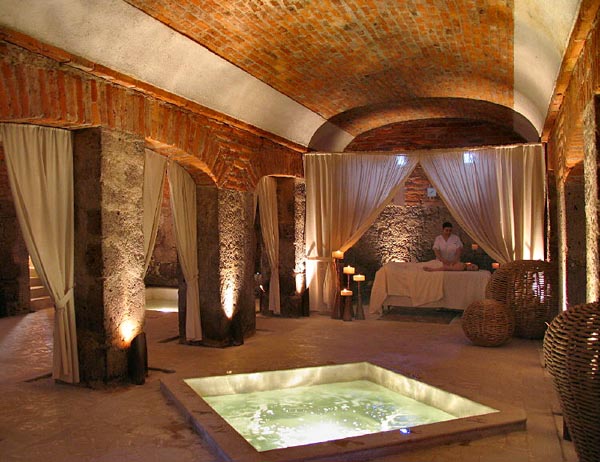
Historic hacienda inns: hidden gems of Jalisco
These amazing, restored historical mansions dating as far back as 1622 have been turned into luxurious hotels. I’ve lived in Jalisco, Mexico for more than 18 years, running a 300 acre ranch. I thought I knew it all, having exhibited and sold our purebred animals in every corner of Mexico. Perhaps then it is my […]
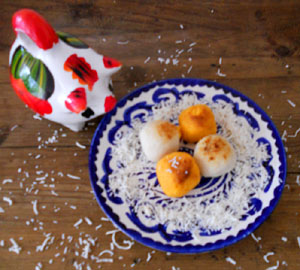
Mexican coconut sweets: Cocadas
In addition to the west coast of Mexico, Peru and Colombia also claim these sweets as their own, an indication that perhaps they followed the Pacific route of the ceviche. In any case, the coconut sweets known as cocadas are Colima‘s signature candy. Ingredients 1 large coconut, drained, peeled and grated 1 cup water or more as […]

Yarn painting – images of a vanishing culture
The Huichol Indians, whose pre-Hispanic culture still survives in the remote Sierra Madres ranges, live a life woven of magic and sacred mythology. Believing themselves to be that part of creation which entertains the Gods, Huichols are sustained by their earthly representatives – corn, peyote and the deer – thus symbolically renewing their divinity daily. […]
The Meseta Purepecha in Michoacan
Before starting out on this route, it is important to understand that the Meseta Purepecha is 100% rural, that unique artistic treasures of Mexico have been preserved, and that there is little tourist infrastructure. For an unforgettable vacation and an even better guide to Michoacán, please ask for the pamphlets and maps of the Uruapan […]
Nayarit: San Blas, Tepic and in between
The fog of hallucination that occasionally seems to envelop Mexico hovers over San Blas most of the time. The amiable residents talk of their future as the next Puerto Vallarta while they wave towels to keep off the abundant mosquitoes, and inquire if you don’t find their town tranquilo while you yawn, stupefied from a night clamorous with the […]
Mexcaltitan, Nayarit: an island city in the swamp
The mangrove swamps of Mexico’s Pacific Coast shelter a seldom-visited jewel of a day-trip destination. Legend has it that the man-made island city of Mexcaltitan, was Aztlan, the ancient home of the Aztecs, and that it was here a priest had a vision of an eagle perched on a nopal cactus, eating a serpent, which he interpreted […]
A wee malarkey about Melaque, a beach town on the Mexican Pacific
San Patricio/Melaque, on the Pacific Coast of Jalisco draws its name from Saint Patrick. Legend goes that Saint Patrick brought Christianity to Ireland and drove out all the snakes to boot. Locals say Saint Patrick became the area’s patron saint when an Irish company logged the area during the last century. But what do I […]
Jalisco style chicken stew: Cuachala
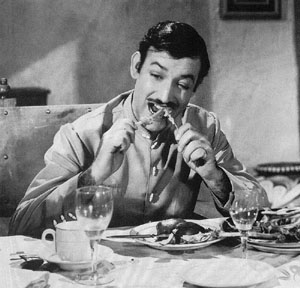
Jalisco often seems to symbolize nearly all things Mexican, especially in the country’s Golden Age movies, which abounded with charros, huge sombreros, and lots of mariachi music. The singer and actor Jorge Negrete seems to devour the food with as much passion as he performs the title song in 1949’s Cuando Quiere un Mexicano. From Tuxpan, Jalisco, this Jalisco-style […]
Michoacán-Style Tortilla Soup: Sopa Tarasca
This version of tortilla soup is similar to central Mexico’s Sopa Azteca. We enjoyed its warm and robust flavor after a drive over the cool mountain pass called Mil Cumbres (A Thousand Summits) from Morelia to Zitácuaro. The wooden buildings that characterize the region are called trojes, which is also the local name for small food stalls. Ingredients: 3 […]
The geology and geography of Lake Chapala and western Mexico
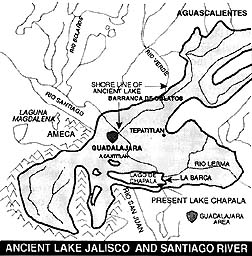
The following is a story concerning an ancient lake that covered a large area of the State of Jalisco and spread into Michoacan and Aguascalientes. This map is a visual portrayal of the lake superimposed on a regional map. The south central portion of the State of Jalisco presents a panorama of lakes arranged in […]
Mexican fire opals
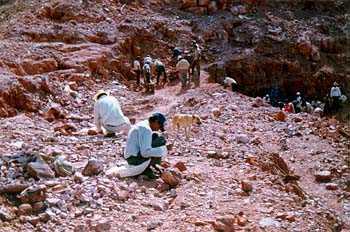
Few gemstones evoke the excitement of a precious fire opal. The flashy show of this gem makes each specimen unique, a fountain of mystery, enchantment and legend. Some say that opals convey foresight and good health. No wonder that it is the October birth stone. Pre-historically, the Aztecs are said to have decorated their most […]
Alfredo Zalce: Mexican muralist and Michoacan’s living legend
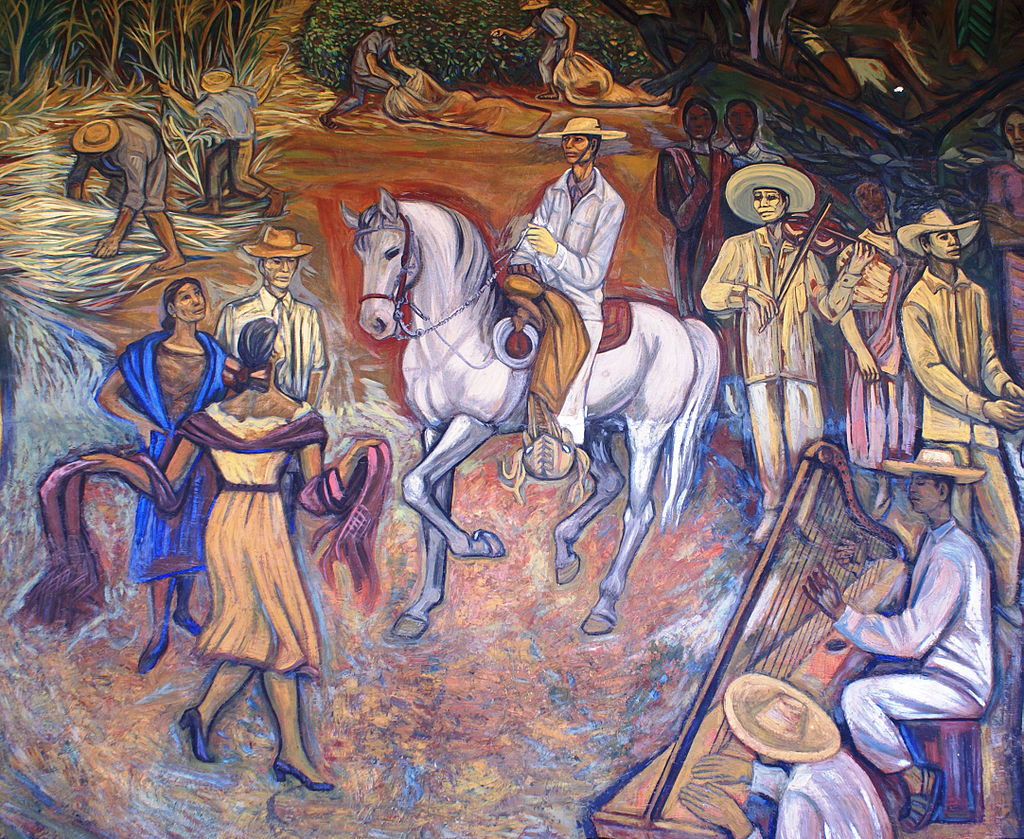
Alfredo Zalce, at age 94, is the elder of Mexico’s last living renowned, great revolutionary muralists. He was born in Patzcuaro, in the state of Michoacan, on January 12, 1908. During his early years he became friends with Mexico’s older great artists, including Rivera, Tamayo, Siquieros, Orozco, and Kahlo. He founded art schools and organizations […]
Driving from Guadalajara to Laredo and back
I would love to be able to read detailed accounts of how you drive from one place to another in Mexico, with tips on hotels, tolls, pitfalls, choices of routes and all the other things that make a journey easier and help you avoid getting lost. In talking to people I find there’s great interest […]
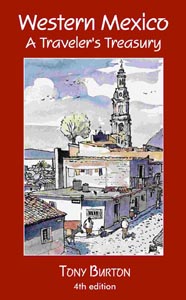
Western Mexico: A Traveler’s Treasury by Tony Burton
Cogan’s Reviews I’m not sure why I haven’t reviewed this book, currently in its 3rd edition, sooner. It’s been around since 1993 and it was one of the first books my wife and I read when we arrived here in Ajijic eight years ago. And – heaven knows! – I’ve reviewed more than 60 books […]
South of Yesterday: A True Story by Virginia Downs Miller
Cogan’s Reviews The simplest way to describe this tale is to quote from the author’s preface. “South of Yesterday” is the story of my mother’s life as a bride coming to a strange land. The book flows through the charmed life of an American living in Guadalajara in the early nineteen hundreds, into the violence […]
A Mexican Odyssey: Escape to Paradise by William Reed with Sylvia Garces de Reed
Cogan’s Reviews Where on earth do you start with William Reed? It’s as if he’s done everything in his first 75 years. His career beginning makes him seen quite unlikely for what was to follow. For example, he closed that first chapter on November 30, 1967, when he quietly retired from the U.S. Navy after […]
In a Village Far from Home: A book on Mexico’s Cora people
Cogan’s Reviews In a Village Far From Home: My Life Among the Cora Indians of the Sierra Madre By Catherine Palmer Finerty University of Arizona Press Paperback, 2000 Available from Amazon Books: Paperback I borrowed this book from a friend who borrowed it from a friend. And when I was finished I immediately started recommending it […]
Mexican Mornings: Essays South of the Border by Michael Hogan
Cogan’s Reviews Here’s an interesting and entertaining collection of essays, mainly about Mexico, but also covering a surprisingly wide range of other topics that reflect Michael Hogan’s many and varied interests. The Mexican entries include items like “The Crawling Things of Paradise”, a small tribute to all the crawling, flying, buzzing, poisonous, and non-poisonous insects […]
Mexico Magic by Dru Pearson
Cogan’s Reviews I think there are two audiences for Dru Pearson’s latest book. The first is the same as the audience for her first book, Retire in Mexico, which I reviewed here in 2004. That one was aimed very definitely at those people at various stages of contemplating making the big leap and settling, either part-time or […]
December in Mazamitla by Ralph Rodriguez with Alan Cogan
The following article is essentially a letter which a friend of mine, Ralph Rodriguez, a resident of Guadalajara, wrote to his children some years ago. It concerns an annual festival which is held in the town of Mazamitla, Jalisco, every December. It’s a pretty interesting time to visit and make the 90 or so minutes […]
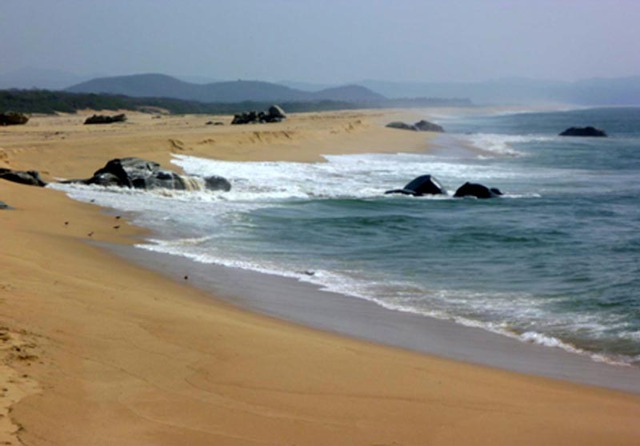
Puerto Vallarta versus Cabo Beaches
Posted by Tim Bowen on July 12, 1999 I am going on my honeymoon in 30 days, and I was told by someone who just returned that the beaches at Puerto Vallarta were not very nice to visit. I was told that the beaches were very pebbly and that there was dog crap and garbage […]
Good man comes home to Mazamitla: La Troje restaurant
Point your car (or take the bus) along the south side of Lake Chapala, past San Pedro Tesistan and San Cristobal Zapotitlan and San Luis Soyatlan and San Nicolas and Tepeguaje to Tuxcueca. Make a right turn and keep your eyes wide open. You may encounter official Mexican soldiers conducting inspections. Sometimes they just look. […]
Barra de Navidad: the sand spit is slipping
It is my sad duty to inform you that the times they are a changing, at Barra de Navidad.Our favorite spit of Pacific sand, sticking out just a little bit from Highway 200 along the west bank, is not what it used to be. Oh no, nothing has happened to the T-shirt sale — still […]
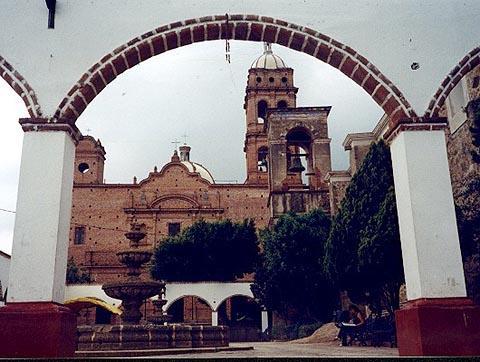
Traveling to Tapalpa
After an all-Mexico breakfast of fresh-squeezed orange juice, honeydew, banana, raspberries and mango, we dusted off our faithful VW bug and pointed it toward Tapalpa. (Tom McEwen of the Tampa Tribune used to begin columns with his morning menu. Then, I thought it goofy. Now, I think such small talk might calm a raging appetite, replace a […]
Mexico coming and going
Edd Bissell, 64, almost retired as a Tennessee pharmacist and gentleman farmer, has found a new home, at La Cruz de Huanacaxtle, on the Bay of Banderas, on the left bank of Mexico, in the edge of Nayarit, not far north of Puerto Vallarta, between the last range of the Sierra Madres and the Pacific […]
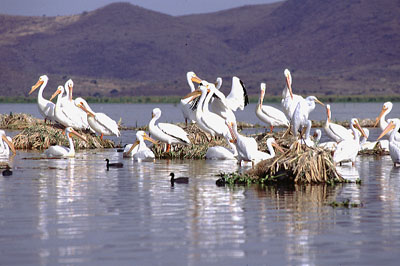
White pelicans on Lake Chapala
Granddaughter Kim couldn’t resist. Our slender, pert redhead scampered along the flatland toward the water. Thousands of white pelicans immediately got the message. After a second or three of awkward, cumbersome struggle, they got the heck out of there. Aloft, these majestic birds are among God’s most handsome creations. Big. Graceful. Glorious. Soaring. Gliding. Circling. […]
Sweet secrets of Sayula
In the early years of the 21st century, the beautiful Mexican town of Sayula had a wildly fluctuating gringo population. Half of it was lost in one day — when Paul and Debbie Katz moved to Chapala. It doubled 10 months later when they returned. Don Sellers was the stable 25 percent. He’s there and […]
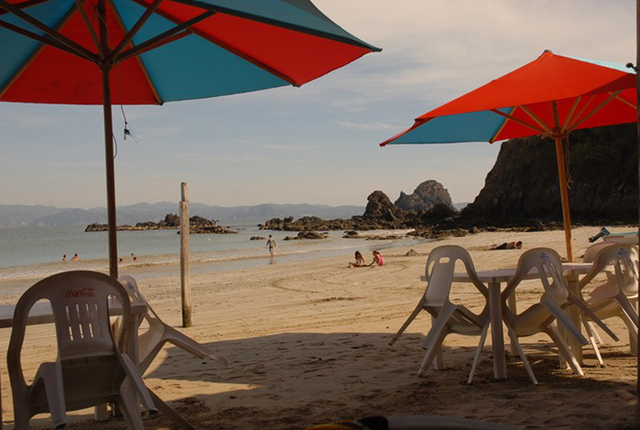
Beautiful Bay of Tenacatita
Waiting for the crowds, umbrellas frame a popular snorkling location at Tenacatita on Mexico’s Pacific coast. © Gerry Soroka, 2009 Despite hurricanes and earthquakes, political turmoil, higher gas prices and global warming, Mexico’s marvelous Bay of Tenacatita remains a sea of tranquility. White gold sand, the soft slope of the beach and shallow water gently […]
Bumbling bulldozer in a Mexico beach paradise
Artist James Vitale, owner and operator of El Encanto, a boutique eco-hotel or maybe a healing place or perhaps a vibrant retreat for creativity and education, came onto his verandah to say “Good morning, Mexico.” Living in peace and tranquility in the pueblo of Santa Cruz de Miramar, between San Blas and Tepic in the […]
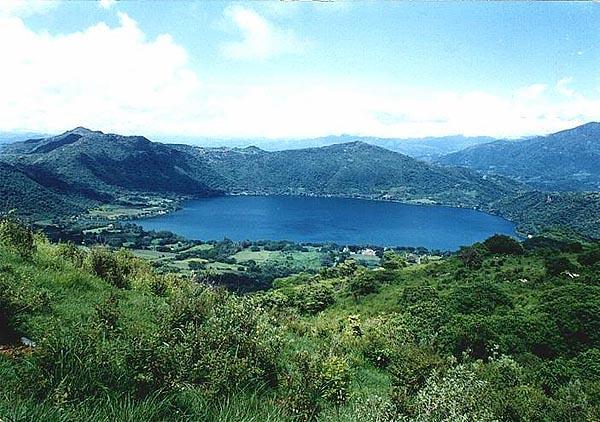
Santa Maria del Oro: near enough to perfect
After many downhill twists and turns, at the very end of a road built for Nayarit royalty, is a little lake that could have spilled from a book of fairy tales. La laguna Santa Maria del Oro, in the crater of a long-ago volcano, is near enough to perfect to forever please Christopher French. He’s been […]
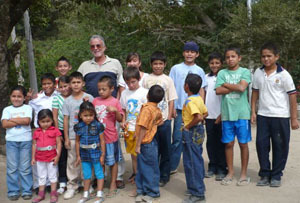
Gringos are changing Mexico
Southbound gringos of retirement age have the uncanny ability to immediately identify changes that should be made in Mexican lifestyle. Maybe you’ve heard the laundry list. “Punctuality is in desperate need of instant adjustment. Mexicans simply can’t tell time.” “There would be no language barrier if Mexicans would just speak English.” “These people are devoid […]
Bugs of San Blas
Henry Wadsworth Longfellow waxed poetic about the bronze bells of San Blas without seeing or hearing them. These less eloquent westwords are about the bugs of San Blas, a very up-close and much too-personal accounting with scars as proof of participation. From a distance, San Blas is just another beach town, in the state of Nayarit, on […]
Mexico backroads
The backroads of Mexico often offer adventure, perhaps a bit of excitement, sometimes a touch of the dramatic and, occasionally, a hint of danger. We thought we’d found all four on a deteriorating 10-kilometer connector between Highway 200 and the Pacific beaches, to and from the almost dead community of El Tecuan, an hour north […]

A Mexico love story
A genuine Mexico love story lives in a big, beautiful home behind a high wall in Tzurumutaro, a not-much-to-it community adjoining Patzcuaro in the remarkable state of Michoacan. Back at the turn of the century, Marta Palomares, daughter of a doctor, was a dedicated career woman, a civil engineer employed by the federal government, a […]

Writing about writers: Puerto Vallarta and Jenny McGill
Editor’s note: After a brief battle with cancer, Jenny McGill passed away peacefully in the early hours of December 31, 2009. I first heard of her when I was editor in chief of About Magazines and she was named U.S. Consular Agent in Puerto Vallarta, where we published a monthly edition. She was, I heard, a tough, […]
On the way to Oregon: Adventurers settle on Mexico’s Bay of Banderas
Real life is sometimes stranger than fiction. We stopped for late lunch at Octopus Garden in La Cruz de Huanacaxtle, once an old fishing village a few feet uphill from the beautiful Bay of Banderas. The lasagna needed help but the ambiance was superb – classy courtyard with fountain, showplace wooden tables and chairs, slivers […]
Colima orphanage runs on faith
Through the years, Colima, Colima meant volcano views, small sacks of sea salt, classy museums, pretty parks, souvenir casts and carvings of hairless dogs — and another hour to the beach. ¡No más! The city of palms has new and more meaningful significance. We have discovered The Home of Love and Protection for Children, a protestant […]
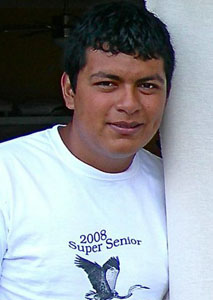
Sneaking north: an illegal immigrant returns to Mexico with honors
For some, illegal immigration is a simple equation, what you risk for what you get. Luis Alberto Martinez Gomez became an illegal immigrant four years ago. He was 16. “Everybody was on their way to the U.S.” He had shallow roots in Tepic, four years until his parents divorced. After that, his mother moved around. […]
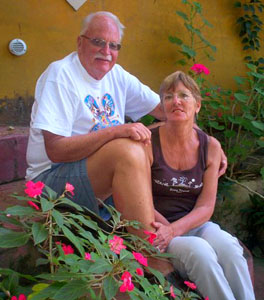
Stretching Social Security checks in Mexico
Larry Herman never expected to live this long. He made no financial provisions for old age. At 69, he and his best friend Lynda, 65, escaped subsidized senior housing in Savannah, Ga., by going back to work. They got away from wheelchairs, walkers and the sadness of people waiting to die. Alas, they soon discovered […]
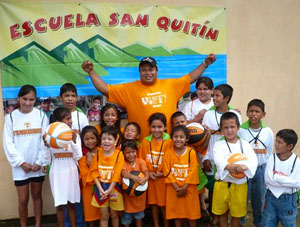
Mexico mid-term gradecard: Primary school in San Quintin Nayarit
Here is a gift for you, good news, a mid-term report from my favorite little Mexican school. Several years ago I told you about Edd Bissell, pharmacist from New Market, Tennessee, who retired to the high-rent district, Punta Pelicanos, in the town of La Cruz de Huanacaxtle, on the beautiful Bay of Banderas, in the […]
Published or Updated on August 18, 2020 by Tony Burton