The Books of Chilam Balam: Part two

The Yucatecan Books of Chilam Balam, which comprise the Chumayel, Tizimin, Mani and others, are notoriously difficult to translate and interpret because of archaic or obsolete words in the Mayan language, esoteric references – the meanings of which are now lost, and the sometimes unintelligible (to us at least) mixture of Spanish and Latin words scattered throughout the Mayan […]

Continue Reading
Mesoamerican religion and multiverses: Part Two

It is generally assumed that the idea of other universes is the unique product of “post-modern” thinking based on the Theory of Relativity and quantum mechanics. But the ancient Aztecs and Maya probably got there first. In Part One, we looked at the concept of previous Ages or Worlds in various civilizations around the globe, […]

Continue Reading
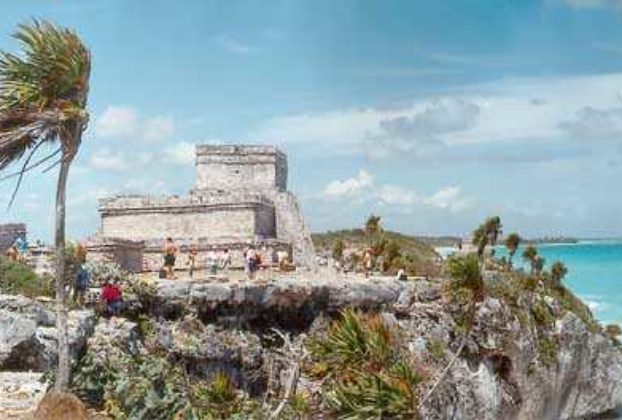
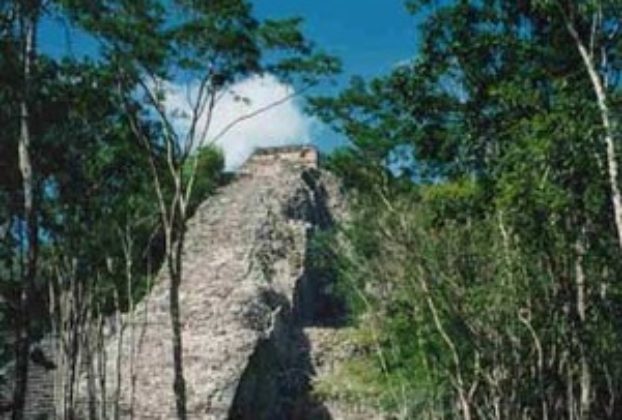
The archeological site of Coba in Yucatan was once a flourishing Maya city © Roger Cunningham, 2013

Mesoamerican epic poetry and saga: What is epic?

In Historia de la Literature Nahuatl (Mexico, D.F. 1971), the late Mexican scholar A. Garibay included a chapter entitled “Poesía Épica” (Epic Poetry) in which he gave a list of texts in Nahuatl (Classical Aztec) that he believed represented authentic Mesoamerican epic poetry and saga. Garibay was attacked on the grounds that he attempted to make the […]

Continue Reading
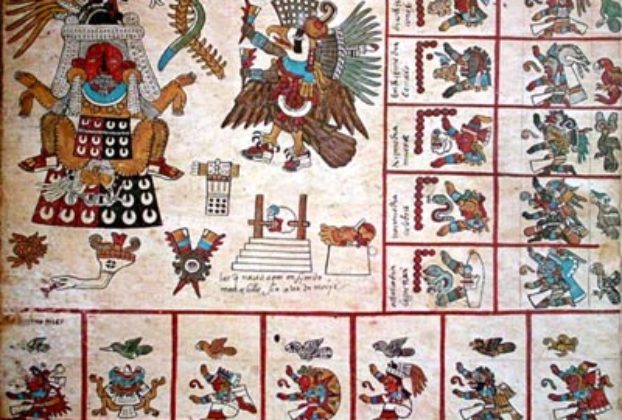
Original page 13 of the Codex Borbonicus, showing the 13th trecena of the Aztec sacred calendar. This 13th trecena was under the auspices of the goddess Tlazolteotl, who is shown on the upper left wearing a flayed skin, giving birth to Cinteotl. The 13 day-signs of this trecena, starting with 1 Earthquake, 2 Flint/Knife, 3 Rain, etc., are shown on the bottom row and the right column.

The codices of ancient and colonial Mexico

How do we really know what happened in ancient Mexico before the arrival of the Spaniards and the introduction of writing? Many articles and books have been written on the history of ancient Mexico from Prescott’s popular but biased Conquest of Mexico in 1521, to innumerable studies of the Aztecs, the Maya, and other indigenous folk in scholarly […]

Continue Reading

Primary sources of Maya history – part one

The most extensive documentation for the native historical tradition in Mesoamerica comes from the Valley of Mexico and surrounding area. This is hardly surprising, for the main thrust of the Spanish Conquest was aimed at the Aztec empire and its capital of Mexico-Tenochtitlán. Other conquests followed in the Petén and Guatemala, but the spectacular Conquest […]

Continue Reading