Mesoamerican religion: Symbolism of the gods, Part one

Our main sources of information on pre-Hispanic religion in Mesoamerica include archaeological monuments and Classic murals, as well as Landa’s Relación and ethnological reports of surviving religious practices and beliefs among the Lacandon Maya of Chiapas and other descendants of the ancient civilizations of Mexico and Guatemala. Of particular importance are the four surviving codices from the […]

Continue Reading

Mesoamerican Religion: Symbolism of the Gods Part One

Our main sources of information on pre-Hispanic religion in Mesoamerica include archaeological monuments and Classic murals, as well as Landa’s Relación and ethnological reports of surviving religious practices and beliefs among the Lacandon Maya of Chiapas and other descendants of the ancient civilizations of Mexico and Guatemala. Of particular importance are the four surviving codices from the […]

Continue Reading
Each year the Huichol walk more than 300 miles to harvest peyote for use in 2000-year-old rituals and ceremonies.

Personal reminiscences of Mexico’s Huichol people V: Journey to the sierra

Some years ago, Huichol art became very popular and was being sold at fabulous prices at exclusive boutiques around the world. On one occasion I helped my Huichol friends Nacho and his son-in-law Juventino sell some large yarn paintings. Shortly afterwards I was invited to attend the annual peyote fiesta at Las Guayabas, Nacho’s home […]

Continue Reading
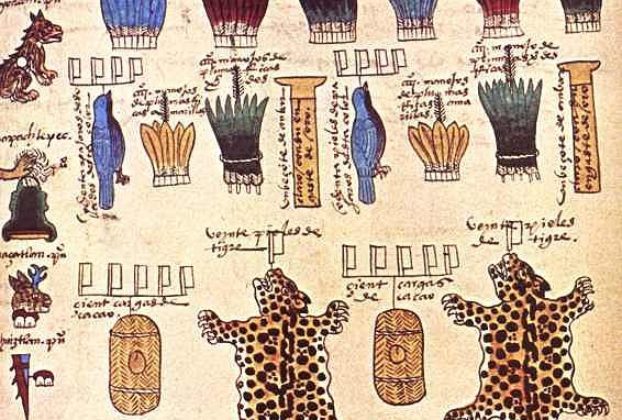
Tribute Page from the Codex Mendoza

Myth and History as described in the Mexican Codices

The story of the Conquest of Mexico in 1521 by Cortés and the Spanish Conquistadores has been told many times, but usually from the standpoint of the victors. An notable exception is The Broken Spears (Boston, 1962), an attempt by the Mexican scholar Miguel Leon-Portilla to give voice to the victims and survivors of the […]

Continue Reading

The “Indian Time” syndrome

The Mañana Principle- Mañana means tomorrow, right? Wrong! In Indian space-time, mañana can mean almost anytime … next week, next month … possibly never. However, it can be a most useful word once you disassociate yourself from American ideas of punctuality. Mañana is a polite way of never saying “no” without having to say ‘yes”. When will the lawn be […]

Continue Reading