Florence Voller & Paolo Ferrari
When you say the word Mexico, something odd happens to the anglophone ear. The M leans in. The E lingers. Pressure builds. Anticipation hums, then release. To most, it’s just a word. To a neurodivergent nervous system, it’s the waiting before the jump.
Arriving in Mexico can feel like a sensory freefall. It is a salad of colors, music, crowds and a soundtrack that seems legally required to be played at full volume, at all times.
Obvious assumptions kick in: if you are autistic, ADHD or otherwise neurodivergent, this is a place to endure briefly or avoid entirely. It’s like a habanero for the uninitiated: impressive but best admired from a distance.
However, that stereotype misses something essential and counter-intuitive. Once the initial drop passes, Mexico doesn’t keep throwing surprises at you. Sure, the place is loud. At times blindingly bright. But it is also patterned, rhythmic and crucially, socially forgiving.
For my partner Paolo and many other neurodivergent travelers like him, the greatest source of exhaustion isn’t the noise; it’s the masking. It is the constant, low-level anxiety of trying to fit into a rigid social grid, worrying that a stim or a sudden moment of visible dysregulation will draw stares.
In Mexico, that pressure evaporates. Public life here is expressive and largely unpoliced. Singing, sneezing loudly, gesticulating mid-story or stopping abruptly in the street? None of it registers as a breach of etiquette.
Upon landing, Paolo became overwhelmed. The lights and the queue closed in at once. In London, the air would have stiffened with subtle judgment. Here? Nothing. There was no pressure to ‘pull it together.’ Just space. Time. The unspoken message from the locals was simple: go easy. Be yourself.
And this is the superpower of Mexico’s landscape. Because the environment is already loud, a neurodivergent traveler doesn’t stick out. You are camouflaged by the vibrancy around you.
Once we realized we didn’t have to waste energy on social masking, we could focus on navigation. We found that Puerto Vallarta, much like other parts of the country, delivers its intensity in manageable layers. If you treat the city not as a chaotic mess but as a system of patterns, it becomes a playground rather than a prison. Here is how we learned to navigate the rhythm of the Pacific coast.
The Malecón: Finding the Logic in the Crowd
The Malecón, Puerto Vallarta’s seaside boardwalk, is often the first point of contact and understandably, the first to be written off. Street performers, vendors, Voladores spinning from poles and cruise-ship crowds create a wall of sound. It is about as relaxing as being trapped at a mariachi convention during a maracas team-building exercise.
However, spend time here and its internal logic reveals itself. The noise isn’t the jarring, unpredictable siren-wail of a northern city; it is a constant, rhythmic drone like white noise with Latin charm.
The place operates on a strict schedule. Early mornings are expansive and calm, perfect for processing the day ahead. Midday heat thins the crowds entirely. Evenings concentrate activity into predictable pockets.
Over time, we developed a reliable rule of thumb: distrust wherever the largest group has unanimously decided ‘This Is The Spot.’ People are natural followers. If you step just ten meters away from the tightest cluster of tourists, you find pockets of total peace and convenience.
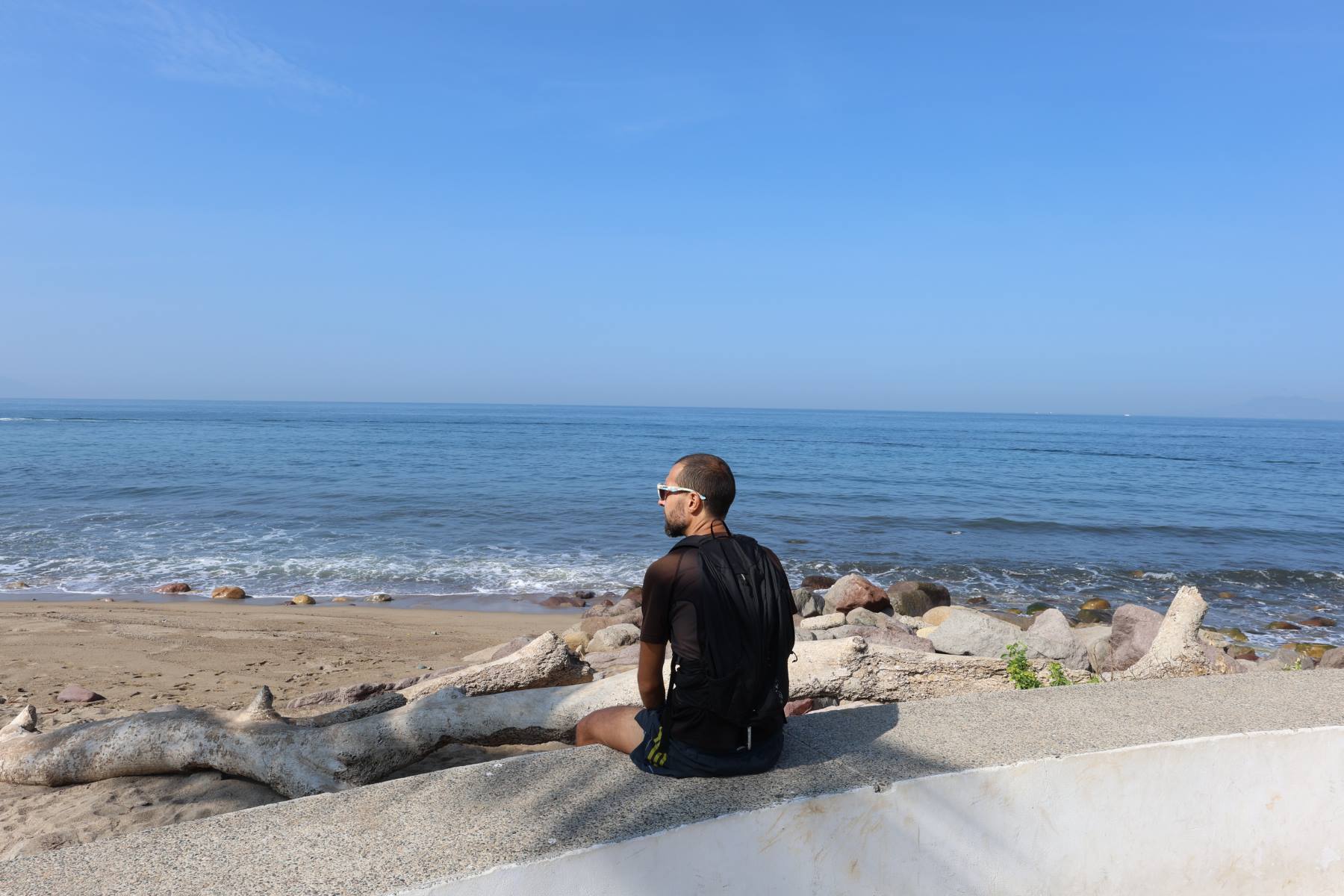
Free public Wi-Fi appears near cafes and seating areas along the central plaza and the boardwalk. With a little patience plus a strategically chosen bench, it’s entirely possible to work quietly while pelicans skim the water below. What looks like mayhem from a distance resolves, up close, into a manageable rhythm.
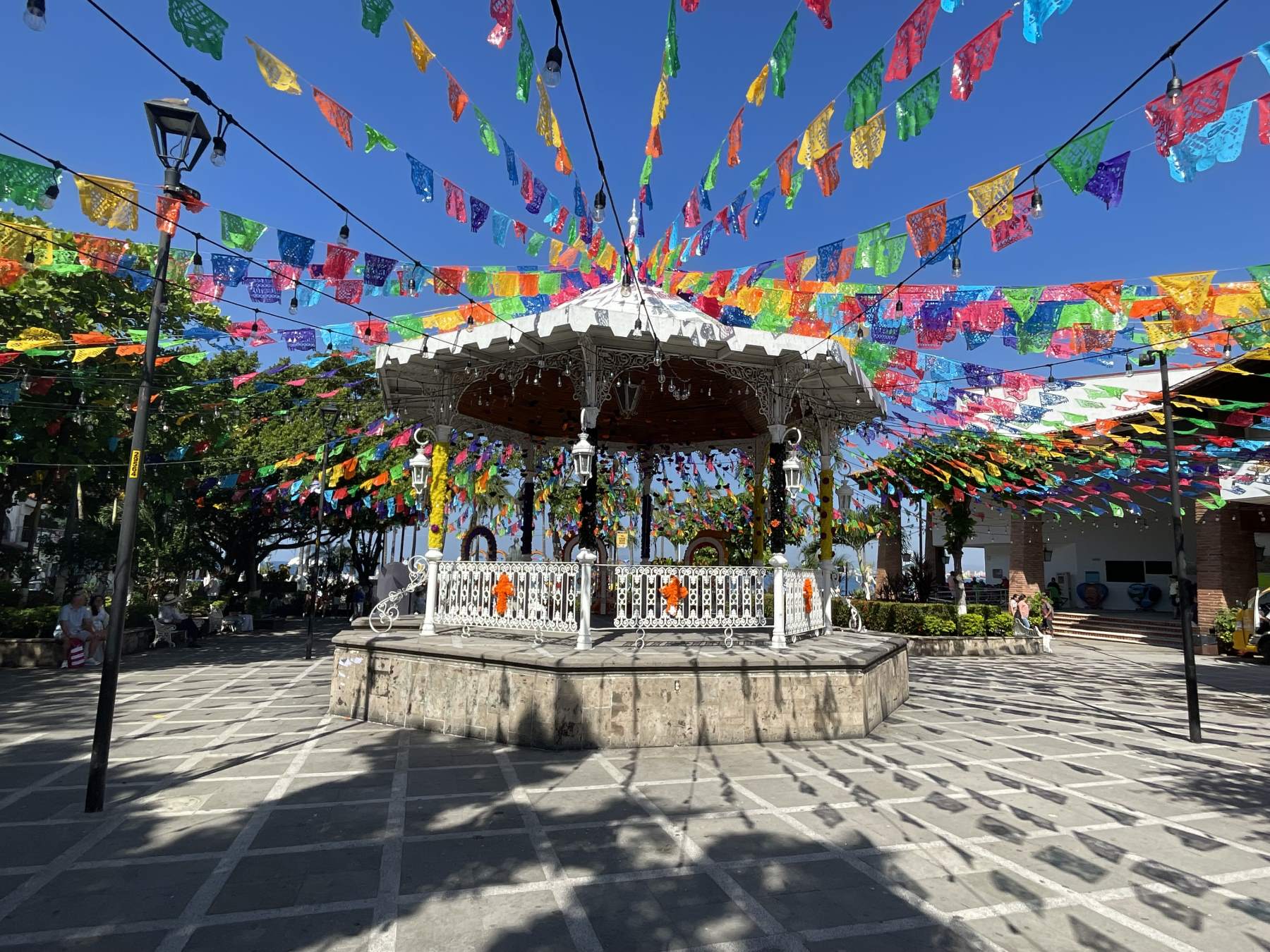
Just inland, the town plazas follow a similar logic. People gather and disperse in recognizable cycles. Benches are plentiful. Behavior is readable. Public life unfolds openly rather than ambiguously which is a small but meaningful comfort for autistic travelers who often struggle to read the ‘hidden rules’ of social spaces. Here, the rules are clear: sit, watch, eat an elote, leave when you’re ready.
For a sensory reset away from the bustle, Planeta Vegetariano sits on a notably quiet street just behind the church. It is family-run, budget-friendly and blissfully crowd-free. Inside, there is generous space, natural light by day and warm lamps by night. There is no pressure to perform or converse with hovering waiters.
Climb the small stairs outside the restaurant and you’ll find seating overlooking the sea. It is ideal for post-dinner sunsets or quietly reflecting on how a country famed for bedlam keeps producing moments of unexpected calm.
El Mirador: Order From Above
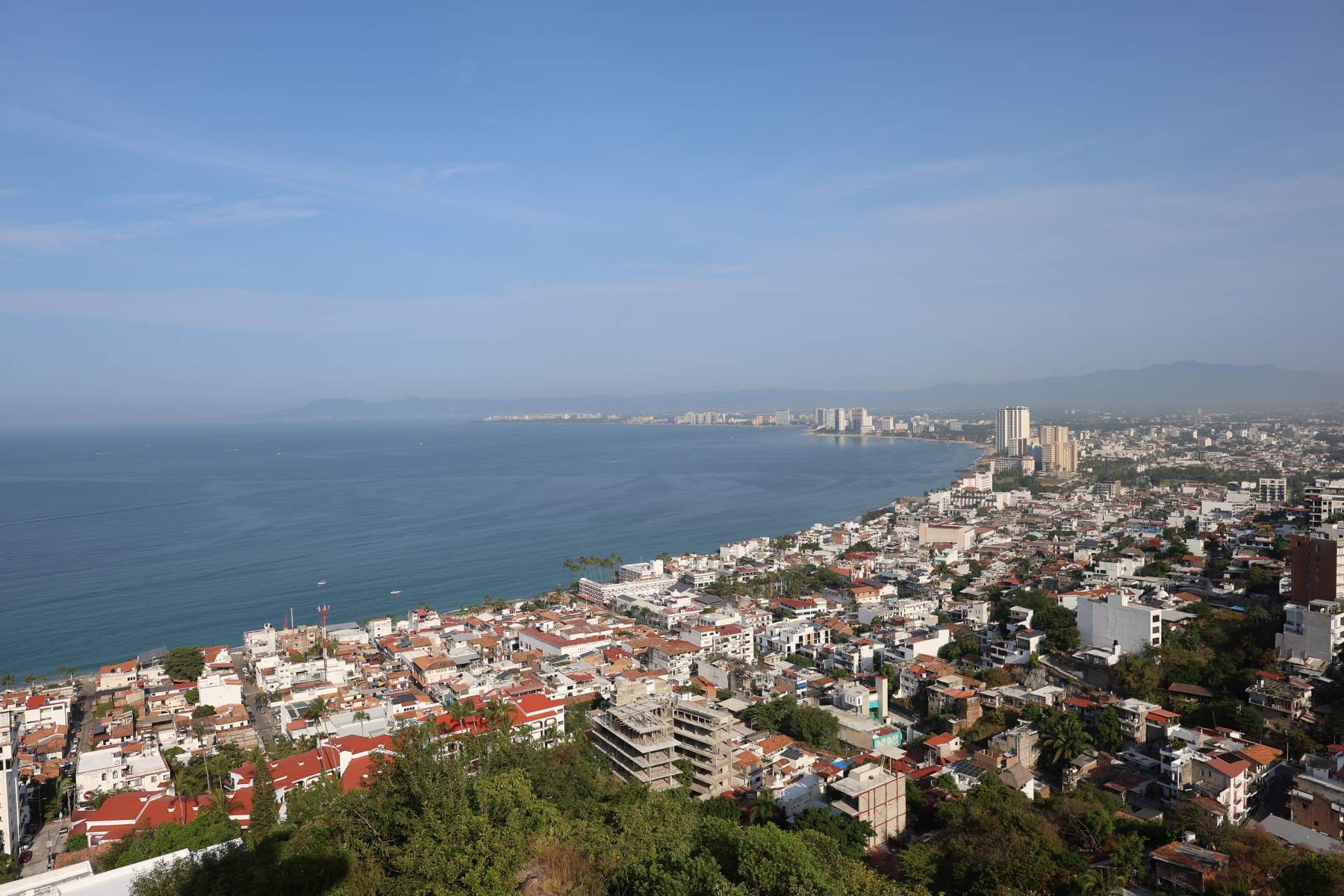
Nothing pairs better with a Jaliscan vegetarian buffet than the following morning’s hike up to El Mirador de la Cruz. For the neurodivergent brain that loves to systematize and map, getting high above the noise is pleasantly soothing. Perched atop Cerro de la Cruz, this lookout offers sweeping views over Puerto Vallarta, Banderas Bay and the Sierra Madre.
The climb is just demanding enough to feel virtuous yet grounding without triggering an orthopedic referral.
From above, the city’s apparent disorder becomes legible. You can see the grid. You can track the traffic flow. The noise becomes distant and movement slows into something almost poetic. Benches, ledges and informal seating make it easy to find a spot that feels private without being isolated. You arrive. You sit. You look and take your time. Mother Nature handles the rest.
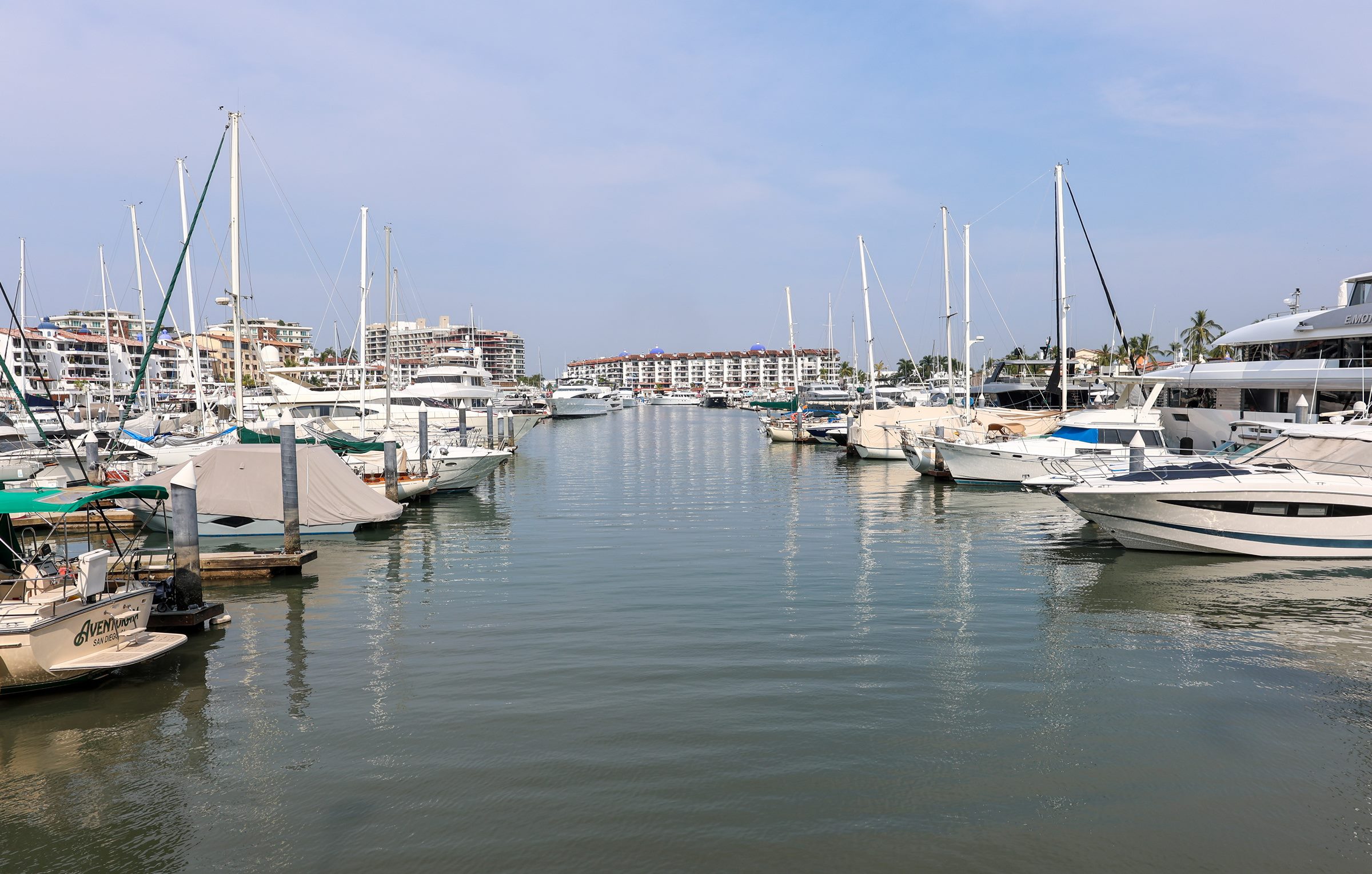
The Marina: Rhythmic Stimming
Feeling a little Captain Sparrow, minus the eyeliner and the fiery temperament? Head to the Marina.
The volume here drops immediately. Wide walkways, gently bobbing yachts and a sense of space that lowers the nervous system by a notch. Think luxury boats owned by someone named Charles, who owns multiple editions of the same Penguin Classic for ‘comparison, darling’ and insists, ‘This isn’t really a yacht.’
The area is excellent for auditory sensitivity. While the town center has brass bands and traffic, the Marina is the sound of rigging tapping against masts. It is a repetitive, mechanical clink-clink sound that acts as a natural auditory stim, predictable and soothing.
The marina boardwalk meanwhile, offers several flavors of tranquility: shaded benches where conversation dissolves into a background hum; paved paths where movement feels slow and purposeful. Keep an eye out for iguanas stretched out in the sun with the quiet satisfaction of an accountant admiring a perfectly balanced spreadsheet.
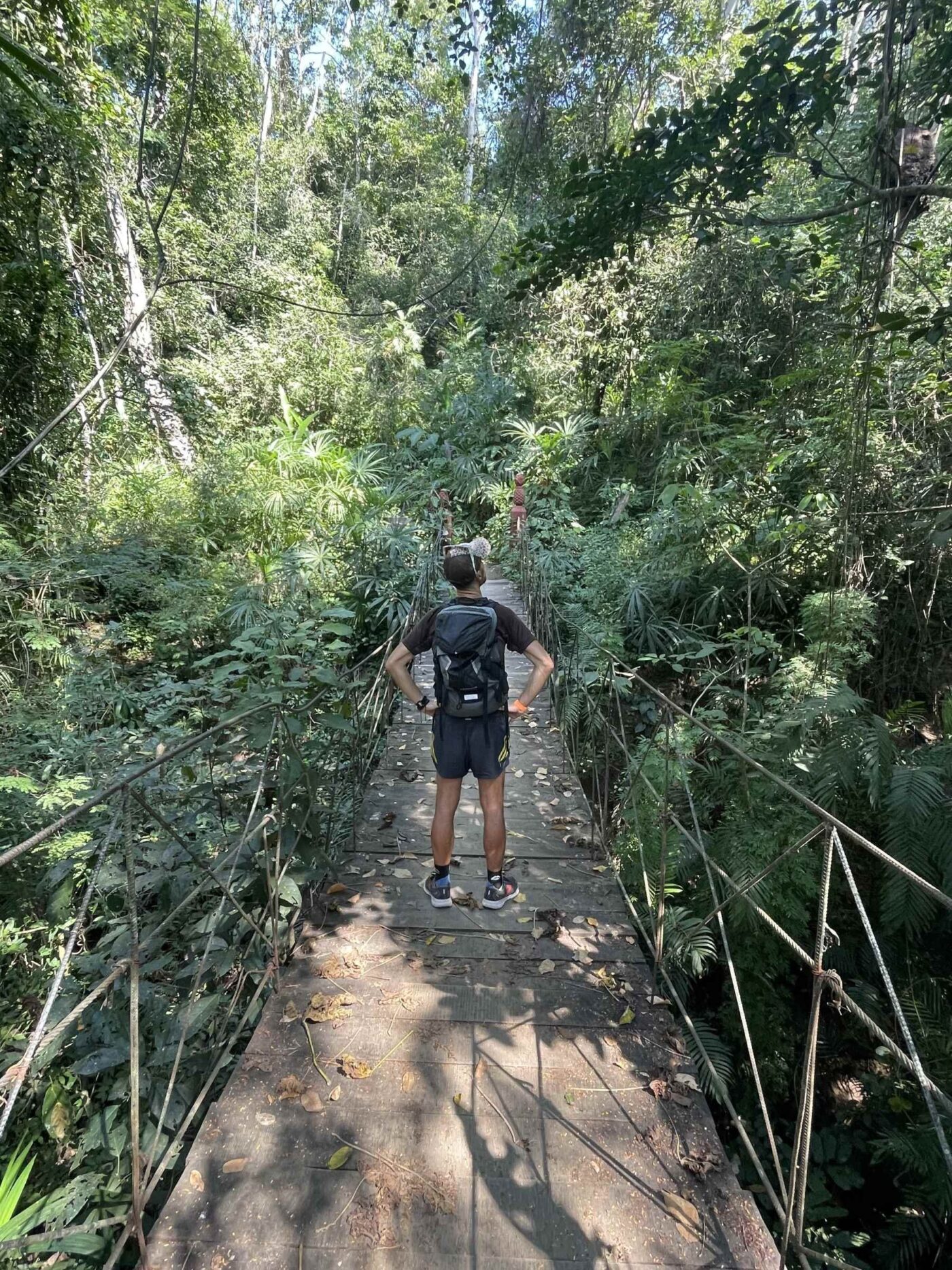
Puerto Vallarta Botanical Garden: The Hyper-Focus Sanctuary
For people like my partner Paolo, environmental variety matters. Quiet doesn’t have to mean empty; sometimes it simply means rich in detail but free of sudden demands.
For the quietly obsessive and the budding botanist, the Puerto Vallarta Botanical Garden is a delightful sanctuary. A non-profit devoted to native plants, biodiversity and research, it does far more good than anyone wearing Teva sandals strictly needs to comprehend.
Secluded pockets along the Los Horcones River offer crystalline calm, while over 230 bird species and Mexico’s largest public orchid collection provide gentle focal points.
This is where the hyper-focus ability of ASD becomes a joy rather than a burden. Birdwatching and orchid-ogling may not sound thrilling on paper, but they are remarkably effective at slowing the mind. The complexity of the orchids invites deep, singular attention. It’s hard to feel overstimulated by the world when you are squinting at a leaf whispering, ‘Is that geometry real?’
The Verdict
Puerto Vallarta, like Sayulita, Mascota or Mazatlán, is full of places like this. Calm isn’t rare here; it’s selective. It appears when you plan ahead and resist the urge to de-risk everything.
Mexico’s landscape isn’t your enemy. It is an ally, once you learn its rhythm. By embracing the ‘predictable chaos’ you stop trying to block out the world and start moving with it.
So breathe. Sit near the water. Let the Great-tailed Grackle chirp manically so you don’t have to. And remember that in a country this loud, you are finally free to be exactly who you are.
Published or Updated on: February 7, 2026 Florence Voller & Paolo Ferrari