Magic is Mexico’s superpower. Here, the ordinary and the sacred intertwine like smoke and spirit. The sacred still whispers, and its relevance is ever-present to those willing to listen to its wisdom. Alongside colorful towns and festive celebrations runs a steady stream of healing rituals, sacred medicines, and ancestral wisdom that restore body, mind, and spirit. What follows is an exploration of these ancient healing traditions that continue to bridge the seen and unseen worlds in Mexico even today.
Ceremony, Song, and the San Isidro Mushroom
“Tonight’s medicine is Psilocybe cubensis,” our curandero Marito Teonanacatl explained. “Commonly called the San Isidro mushroom, these wild fungi emerge only with the season’s first rains, and only where conditions are just right.” Despite the unexpectedly large gathering of nearly 70 people, he moved with serene composure. “You will not sleep tonight,” he repeated. “You will not sleep.”

We gathered on a chinampa—an ancient floating garden in Xochimilco’s waterways. A single, unadorned trajinera carried participants slowly through the canals, the soft lapping of water and the scent of damp earth surrounding us. Under a simple open tent, equipped with a trio of small bathrooms, we found ourselves in a space stripped of all distractions – nothing but the essential elements needed for the night’s journey ahead that wasn’t due to end until the next morning.
In pre-Hispanic times, the sacred mushrooms were called teonanácatl—a Náhuatl term meaning “flesh of the gods”—honoring their divine essence. Today, the Mazatec people know them as niños santos, or “holy children,” a name that speaks to their innocence and gentle yet profound guidance. Both names recognize these mushrooms as sacred allies carrying the wisdom to heal.For centuries, the Mazatec people of Oaxaca have used these mushrooms to commune with the spirit world where they are tools to diagnose illness, resolve conflicts, and seek guidance from the unseen.
Growing wild in the highlands after seasonal rains, the mushrooms are gathered with prayers, consumed in small, deliberate amounts, and accompanied by chanting or singing to guide visions. As curandera María Sabina once said, “With the mushrooms, you see and you speak to God.”
In the days before the ceremony, I prepared my intentions through meditation, focusing on specific questions. But the journey unfolded differently, offering an insight I hadn’t realized I needed. The guidance came gently, like a quiet presence settling beside me, offering reassurance and wisdom about something urgent my soul needed, though my conscious mind hadn’t known to ask.
Throughout the night, we gazed into the flames as Marito and his assistant wove music around us with strings, drums, and gongs. His voice carried haunting folk melodies – songs of flowing water, tender parent-child moments, love, and the miracle of existence. The music moved like medicine: rhythms lifted some into spontaneous dance, and softer passages opened floodgates of tears for others. At one point, my friend and I dissolved into uncontrollable laughter, caught in pure joy that seemed to rise from the earth.
In ceremony, psilocybin mushrooms are living teachers. Participants release burdens, reconnect with ancestral wisdom, or receive visions for life’s challenges. The journey cleanses the spirit—harmonizing heart, mind, and soul—while revealing archetypal symbols, ancestors, or universal patterns that feel both intimate and cosmic.
In recent decades, psychedelic tourism has reshaped this tradition. Some visitors approach the mushrooms with medicinal reverence,while others treat it as a recreational experience. This evolution has intensified discussions around cultural appropriation, environmental degradation, and the critical role of Indigenous leadership in protecting these practices.
Marito spoke passionately about preservation and his experience with the medicine. “For 15 years, I’ve been working with the support of the sacred mushroom medicine teonanácatl—the niños santos. Together with my family, we offer assisted therapies that include mushroom gathering, re-connection with ourselves, and integration,” he shared. His advice for newcomers was elegantly simple: “Enjoy.”
Contemporary research is examining psilocybin as a treatment for depression, anxiety, and PTSD, with studies demonstrating its ability to disrupt harmful thought cycles, enhance psychological openness, and foster enduring wellness. Marito himself works successfully with U.S. veterans who journey to Mexico seeking PTSD treatment after conventional therapies have proven ineffective.
Yet for the Mazatec people, these mushrooms are more than medicine—they are sacred allies. As one elder cautions, “If you do not come with respect, they will not open their world to you,” reminding us that healing is as much about intention and reverence as it is about science.
For more information about Marito’s work, he can be reached through his Facebook page.
Peyote and the Blue Deer
“My dad was heavily involved with peyote,” my friend said matter-of-factly as we sat in a cafe. I frowned into my matcha latte, debating whether I should learn to like this tea or just admit it wasn’t for me. She went on, “Our family thought of him as sort of a druggie because of it. He was featured pretty prominently in a book about peyote,” she explained. The book had become her only keepsake of him—the worn pages representing all that remained of their connection.
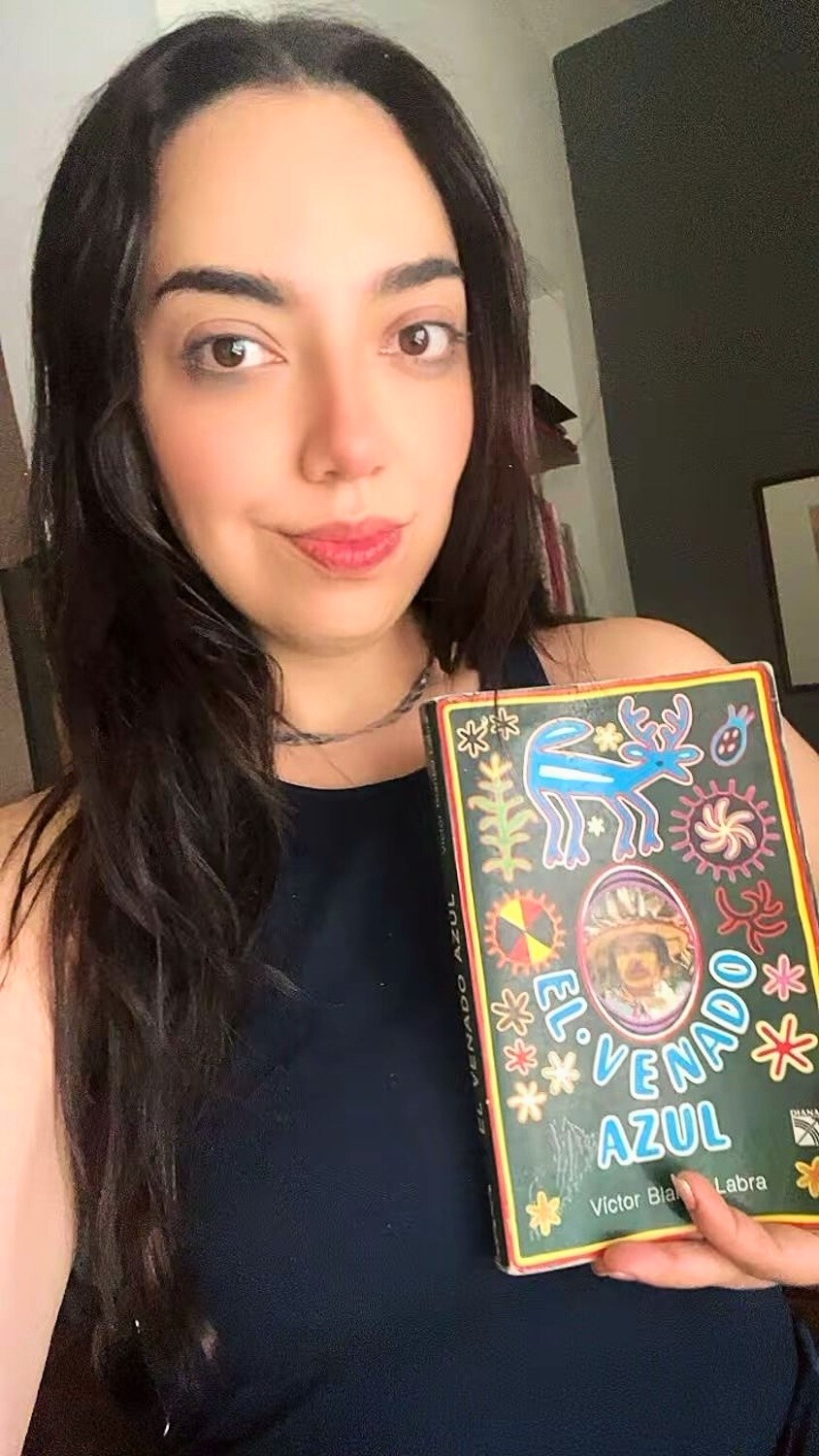
Right away, I knew I had to get my hands on that book. El Venado Azul (The Blue Deer) by Víctor Blanco Labra is a vivid, first-person account of traveling with the Huichol (Wixárika) people on their sacred peyote pilgrimage. The Wixárika are an Indigenous Mexican people known for their intricate beadwork, vibrant yarn art, and enduring spiritual traditions, with peyote (hikuri) at the center of their cosmology.
My friend’s father appears throughout El Venado Azul as “El Doctor,” a trusted guide and recurring voice in the story. He offered direction, context, and grounding during the intense spiritual work of the journey. His presence threads through the narrative like a compass, shaping the reader’s sense of what it means to walk the path of the peyote pilgrim.
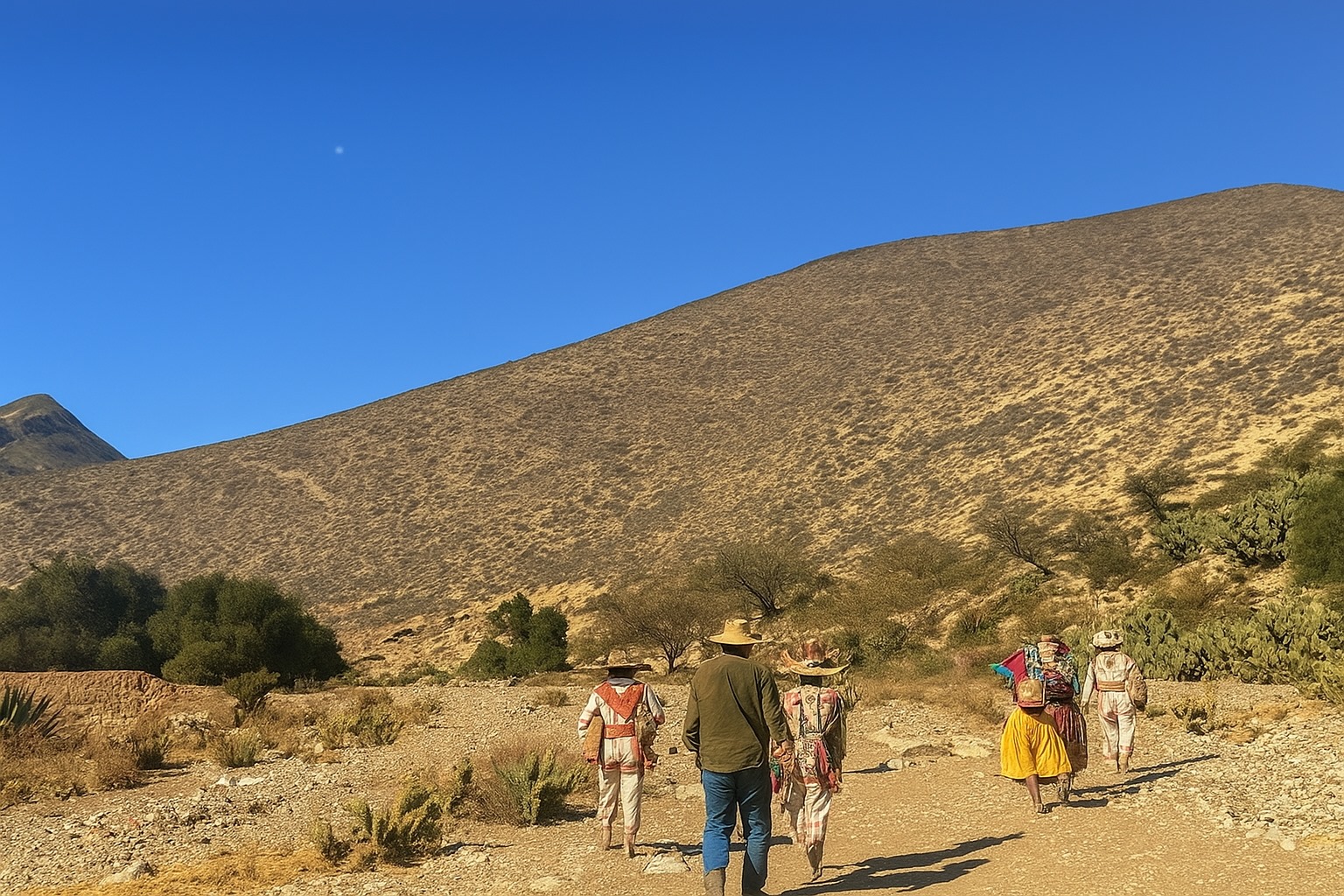
In Wixárika tradition, peyote is not simply a plant—it is the embodiment of the Blue Deer deity, a divine messenger between humans and the gods. According to legend, the first peyote emerged from the footprint of this mystical deer, who led the ancestors to the desert. Its blue hue is linked to water, rain, and the divine realm.
Peyote itself is a small, spineless cactus (Lophophora williamsii), bluish-green and divided into ribbed sections called “buttons.” Harvesting is done carefully, cutting above the root so the plant can regenerate—a reflection of the ecological respect embedded in the tradition. The fresh buttons are usually eaten raw during ceremonies. Labra captures the reverence in a single line:
“Holding the hikuri in my hand, I felt its weight was not of this world—it was as if I carried a fragment of the desert’s own heart.”
Ceremonies are rich with song, prayer, and confession. Led by a marakame (shaman), pilgrims seek healing, guidance, and balance. Labra emphasizes that it is not indulgence or escape, but an ancient technology for restoring harmony within both individual and community.For the Wixárika, peyote is a living spirit that restores balance. Those who walk with it speak of feeling their strength return, of illness lifting, and of the heart becoming lighter. It heals the body, the memory and the spirit—reminding them of who they are.
Yet these medicines have faced centuries of persecution. Spanish colonizers in the 16th century sought to replace Indigenous spirituality with Catholicism, condemning peyote and forcing ceremonies into hiding. Colonial prohibitions evolved into selective acceptance, and today Mexican law criminalizes peyote for outsiders while protecting it as Indigenous cultural heritage.
Thumbing through El Venado Azul proved challenging as it’s only available in Spanish, yet I could feel the connection between personal memory and Indigenous history. El Doctor wasn’t just a character—he was a keeper of medicine traditions that survived centuries of colonization and persecution.
Though he’s no longer alive, I like to imagine inviting him to one of our café conversations, watching father and daughter reconnect as I sip my matcha latte. Maybe then, finally, it would taste just right.
Smoke, Herbs And The Magic of Limpias
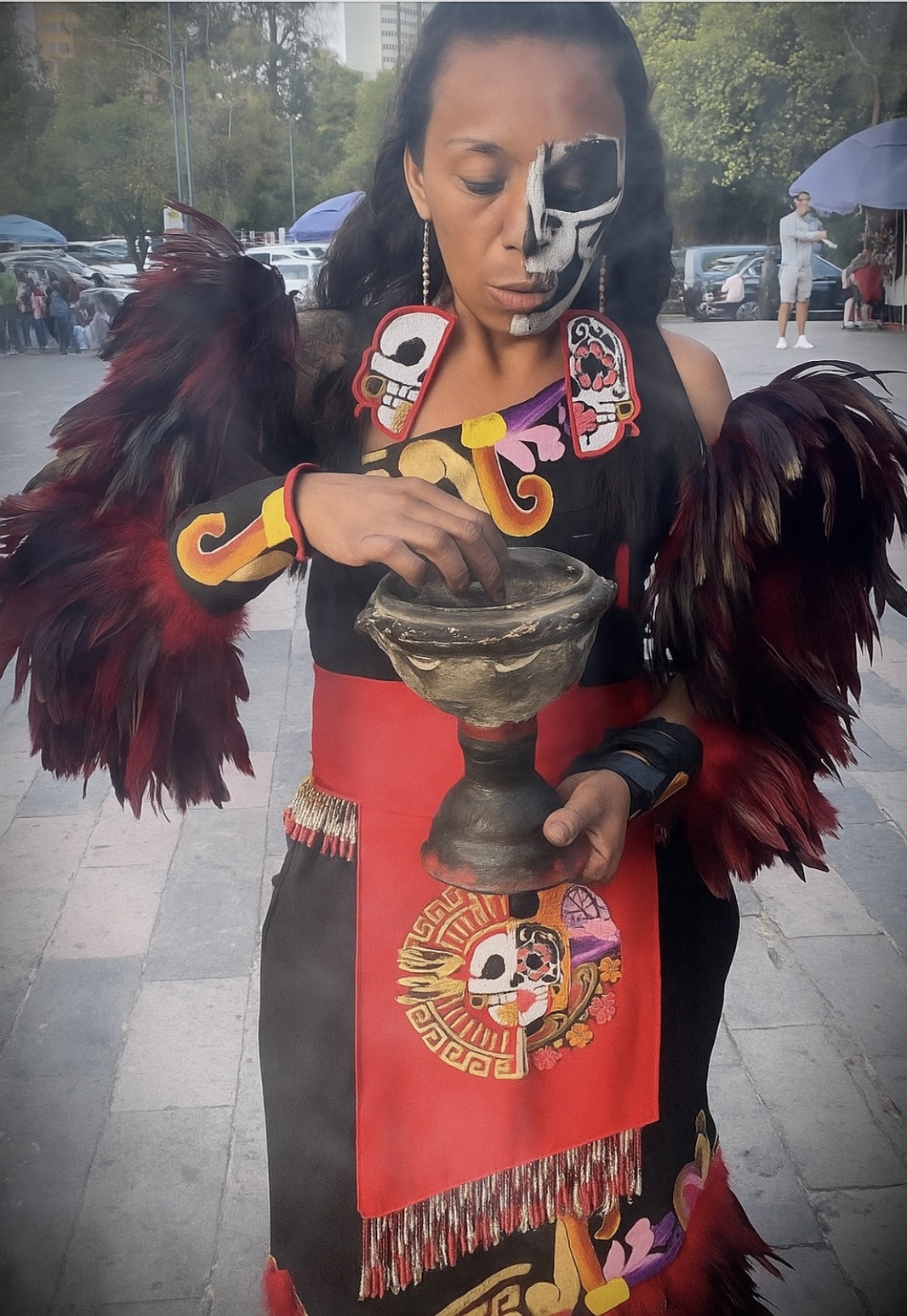
Mexico is a deeply spiritual country where cleansing rituals or “limpias” are woven into daily life. Rooted in ancient Mesoamerican beliefs about the interconnectedness of body and soul, these practices use eggs, copal smoke, or fresh herbs to release and renew energy. Families still turn to curanderos for protection, to clear spiritual imbalances, and invite harmony—opening a doorway between the visible and invisible worlds.
Many times, I’ve followed the scent of copal and the sound of ceremonial drums to find elaborately dressed sahumadores, or keepers of the copal. Witnessing the sacred Dance of the Concheros in Mexico City always presents an opportunity for a mystical copal cleansing. The aromatic resin, whose smoke is believed to purify the spirit, is ever-present in Mexico. It drifts through markets, sacred spaces, and homes—including my own—anchoring protection, grounding, and continuity with the ancestors.
One of my most powerful experiences took place in a small temple in Mexico City. Equipped with a bouquet of fragrant herbs, 2 eggs, 2 limes, 4 peppers and a bag of course salt, I received both an herbal and an egg cleansing. Inside a dimly lit room with charred walls, a perfect circle of salt was prepared on the floor. The curandero swept the herbs across my body while chanting prayers “a Dios”. The eggs were pressed into my skin, and the peppers brushed over me. The ritual grew more intense as flames were introduced – and yes, the salt ring was lit. Prayers were spoken over me as he worked, and by the end, I was left raw and washed anew.
Limpias reflect the cultural importance of communal healing. The relationship between healer and participant creates a dialogue of trust and provides sacred moments of stillness amid daily chaos.
Rebirth in the Temazcal
“A temazcal will transform you, I promise – and without plant medicine,” said Amaya Martínez trying to convince me to attend an upcoming ceremony. “It’s super Mexican, we need to goooooo!”
Stepping into a temazcal feels like crossing a threshold into another world. The low, rounded stone chamber is dark and womb-like, a return to Mother Earth herself. As the heated volcanic stones—the abuelitas, or “grandmothers”—are carried inside while their glow holds the memory of the earth. Soon, water infused with herbs is poured over them, and the space fills with thick, fragrant steam that clings to your skin.
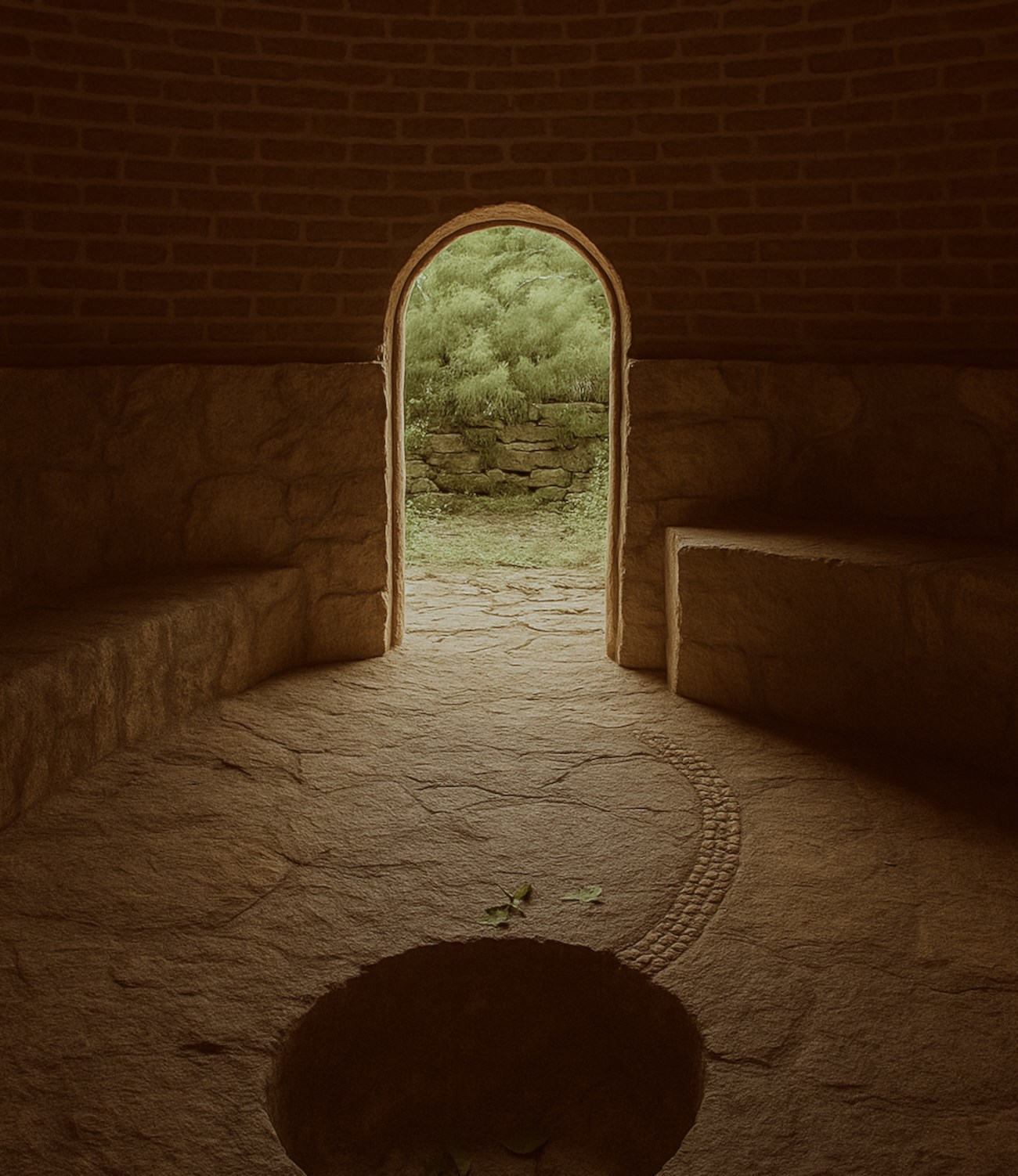
“When you enter the temazcal, you return to the womb of the earth,” the guide explains. “It is a space of purification. It reminds us of who we are.”
The guide begins with prayers and songs, calling in the four directions. You sit in silence, sweating, listening, more sweating, breathing and sweating through the heat that seems at first overwhelming.
In the early moments of the temazcal, the gentle heat begins by cleansing the skin, leaving it refreshed and radiant. As the temperature rises, the warmth penetrates deeper into the muscles, releasing built-up acids that often cause contractions and stiffness. These impurities are carried into the bloodstream, where the body works to eliminate them. With this release, the muscles, tendons, and even the bone structure begin to relax and realign, allowing the body to settle into a natural state of balance. At its peak, the heat reaches the organs, drawing out accumulated toxins, taking heavy emotions (and your resolve) with them.
Many participants describe the detox effect as a physical, emotional and energetic purification. First, the fire begins to burn away what no longer serves you, then the rising steam carries your intentions upward. Finally, the body releases its weight through sweat, leaving you lighter, emptied out, and renewed. In the stillness that follows, you are both cradled and remade by the earth, returned to wholeness.
As The Smoke Dwindles…
Rooted in Indigenous wisdom, Mexico’s ancestral healing unites body, spirit, and nature. Medicines, rituals—copal, cacao, and many others—carry traditions forward, evolving yet safeguarding their sacred power.
Related articles on MexConnect
- The temascal: Traditional sweat bath
- Comprehending shamanism in the Huichol world
- Ecotourism in Mexico: Arroyo Guacamaya, Ixtlan and the Sierra Norte of Oaxaca
- Beliefs of Mexico’s Huichol people: Responsible Ecstasy