Paolo Ferrari
I am not an addict or so my dealer says. Because I can stop whenever I want. I probably won’t, but that’s a different story. Today, for example, is Friday. It would be ridiculous to quit right before the weekend, wouldn’t it?
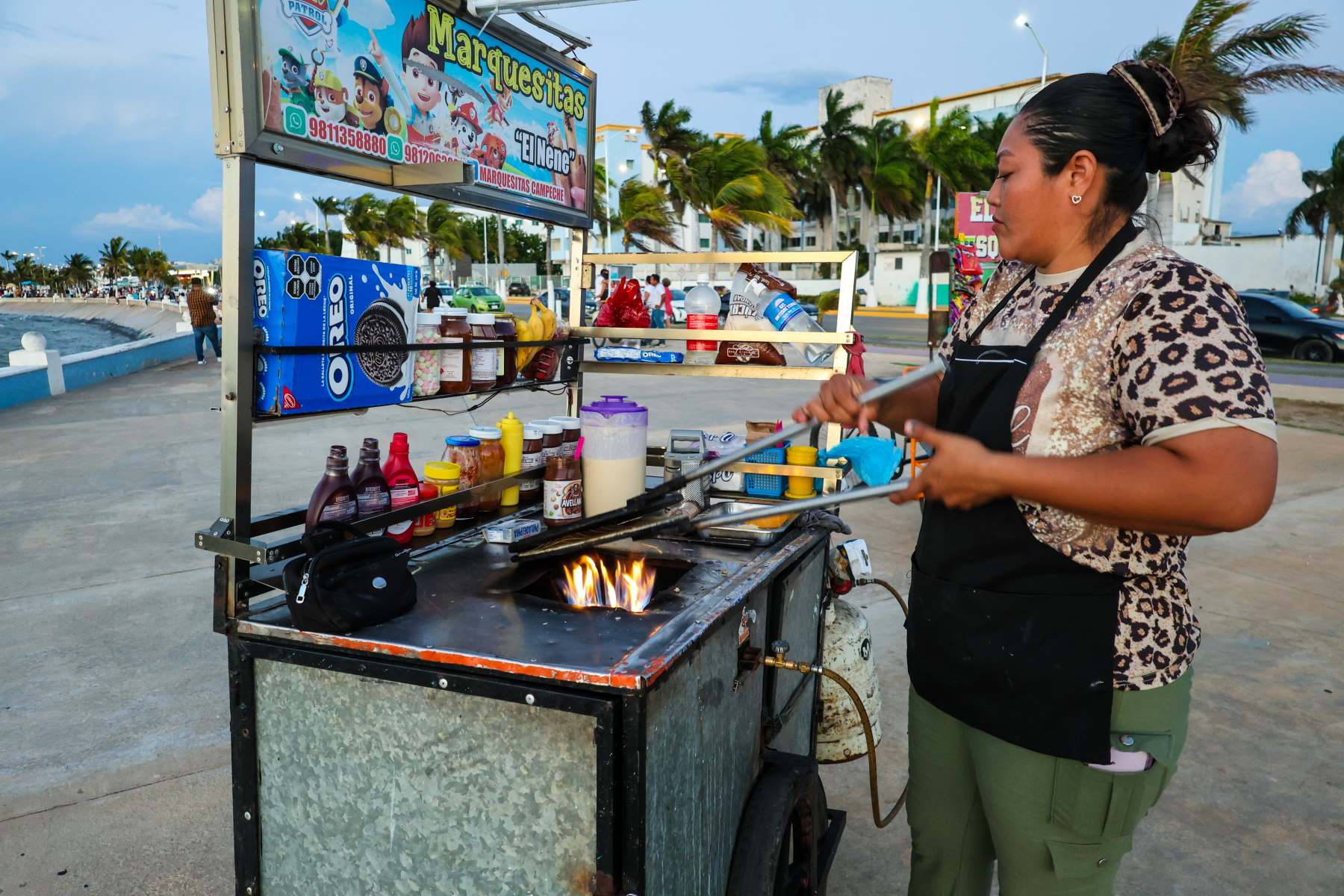
I blame Guadalupe or Lupe, as she prefers. The thirty-seven-year-old supplier has spent the last five years holding territory along the waterfront malecón (promenade) in San Francisco de Campeche, usually near the Fuente Marina.
At night the fountains erupt into ‘Poesía del Mar’, a twenty-meter-high spectacle of water, colored lights and music beneath a sky full of stars.
Now, most people come for the show. Me? I’m trying to look casual while avoiding eye contact with the woman holding the contraband.
Lupe never comes on too strongly. No pressure, no aggressive sales tactics. Just a soft voice drifting across the promenade like a sugar-coated siren call.
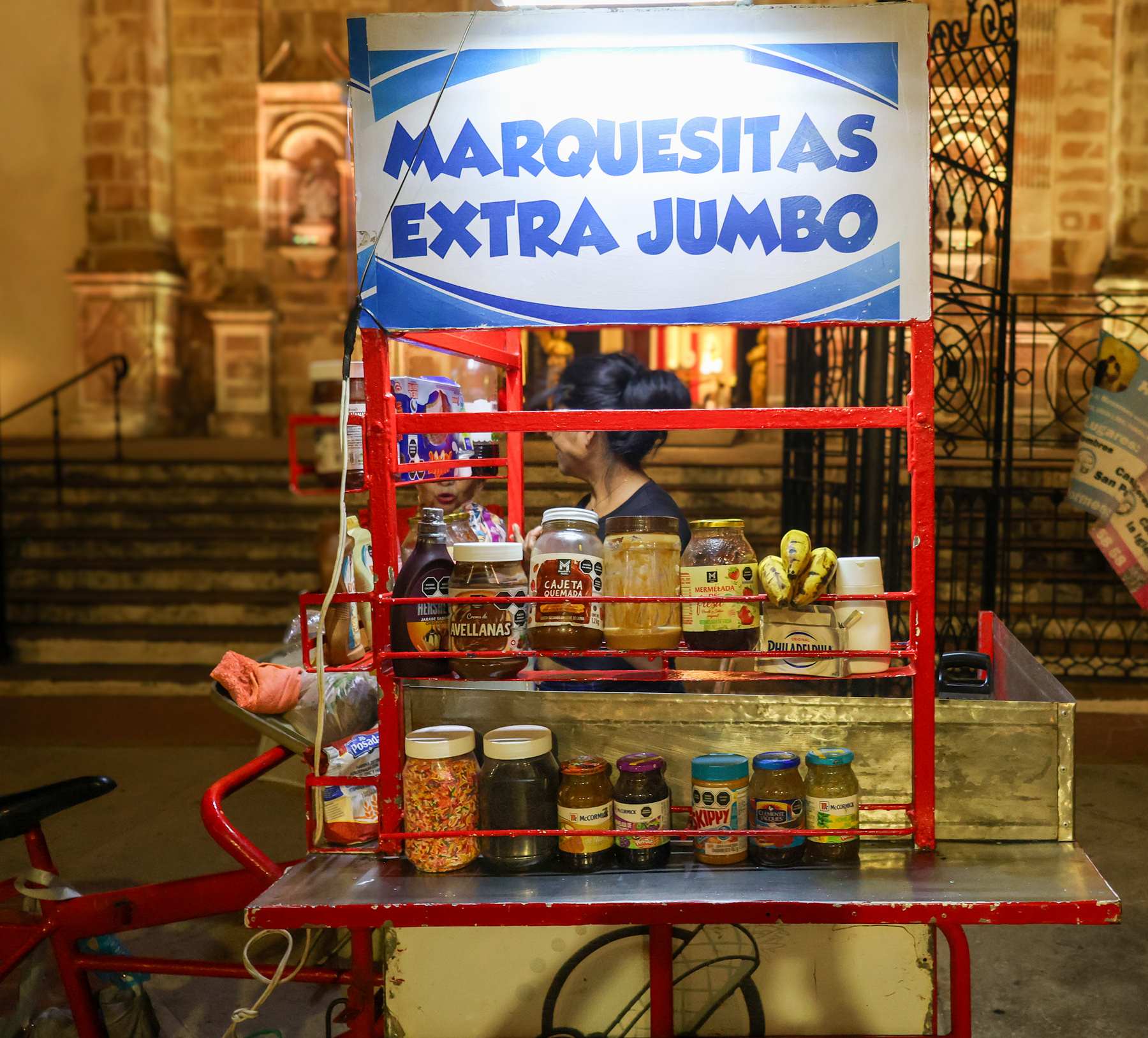
Marquesitas
‘Marquesita? Wanna try one?’ Her English is flawless, sharpened by years in California helping her tío (uncle) run a breakfast stall where apparently, butter and industrial amounts of dulce de leche can solve almost any emotional conflict.
‘Nutella, platano…
I kept walking.
‘Marquesita… marquesita…’
Her voice followed me down the promenade.
‘Fresh. Crispy. I make it how you like… ‘
I wasn’t listening.
‘Fresa, manzanas, queso de bola…’
I definitely wasn’t listening.
‘Wanna try my sweet and sour combo?’
Yeah. Nice try, lady.
Five minutes later, I was under the fountains holding a tiny hot sample, looking giddy and medically irresponsible.
The special
‘Wait,’ Lupe whispered, glancing around as if we were arranging a cartel hand-off. ‘You want the special?’
Do I want the special? Don’t be ridiculous, I thought, feeling like a Labrador who has been let loose in a sausage factory.
‘Sí, sí, gracias,’ I said as my taste buds began cheering like tiny drunk tourists.
She smiled the way experienced dealers smile when they know the first one is never free.
A moment later she handed it over. It burned slightly in my palms. My very first marquesita.
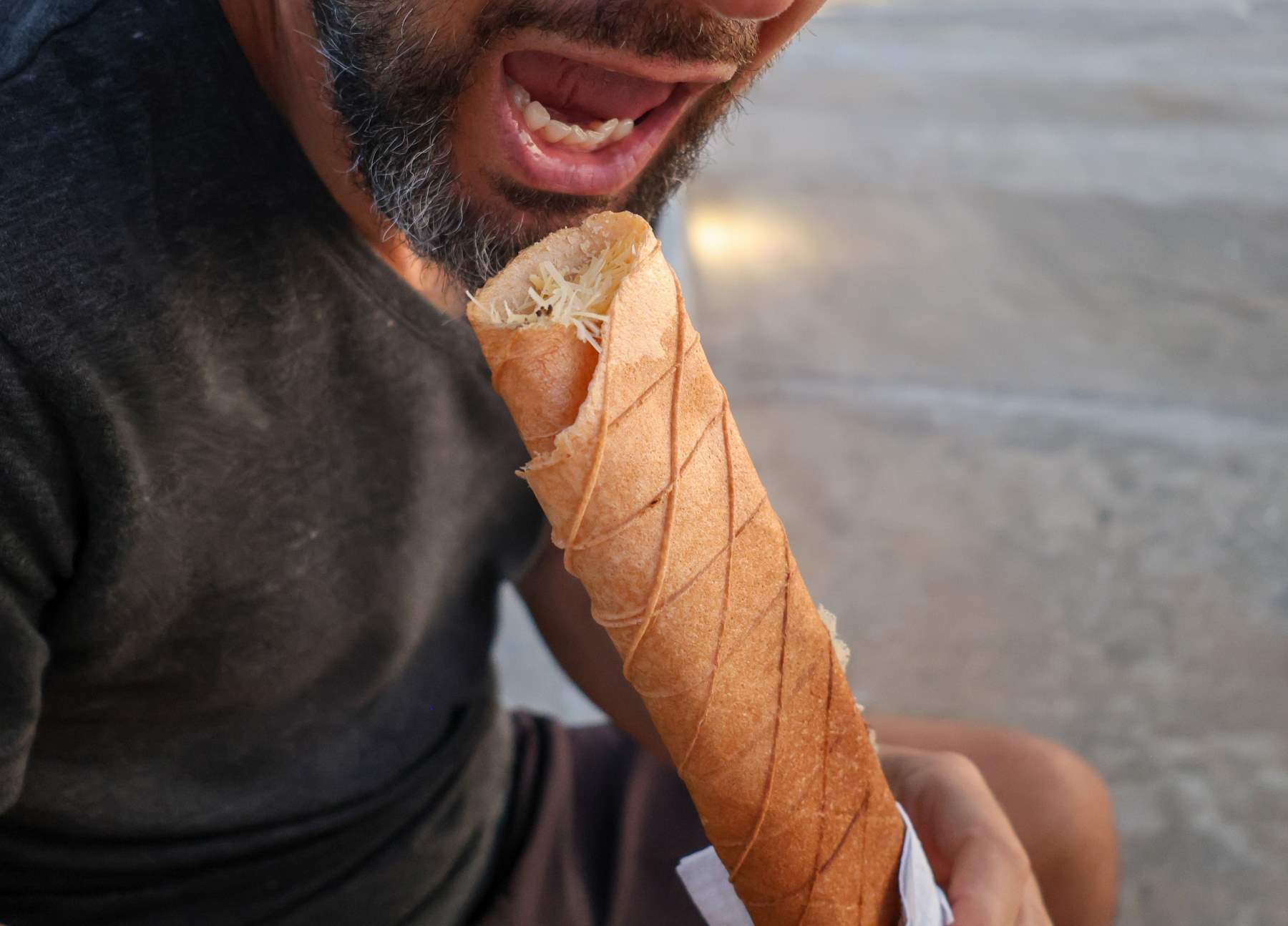
I held it gingerly, like a priceless Yucatecan artifact that should probably have come in a glass box.
Then, one bite in I knew two things immediately: first, I was no longer in control of this love affair. Second, no dessert should be allowed to be so seductively crunchy. Not in public. No way, José…
For the uninitiated, a marquesita is what happens when a French crepe ditches Europe, quits the 9-to-5 and moves permanently to the Yucatán Peninsula. To understand the addiction, you have to respect the chemistry.
Most visitors assume it is simply a thin pancake, or at its best a thin rolled-up ice cream cone. They are wrong.
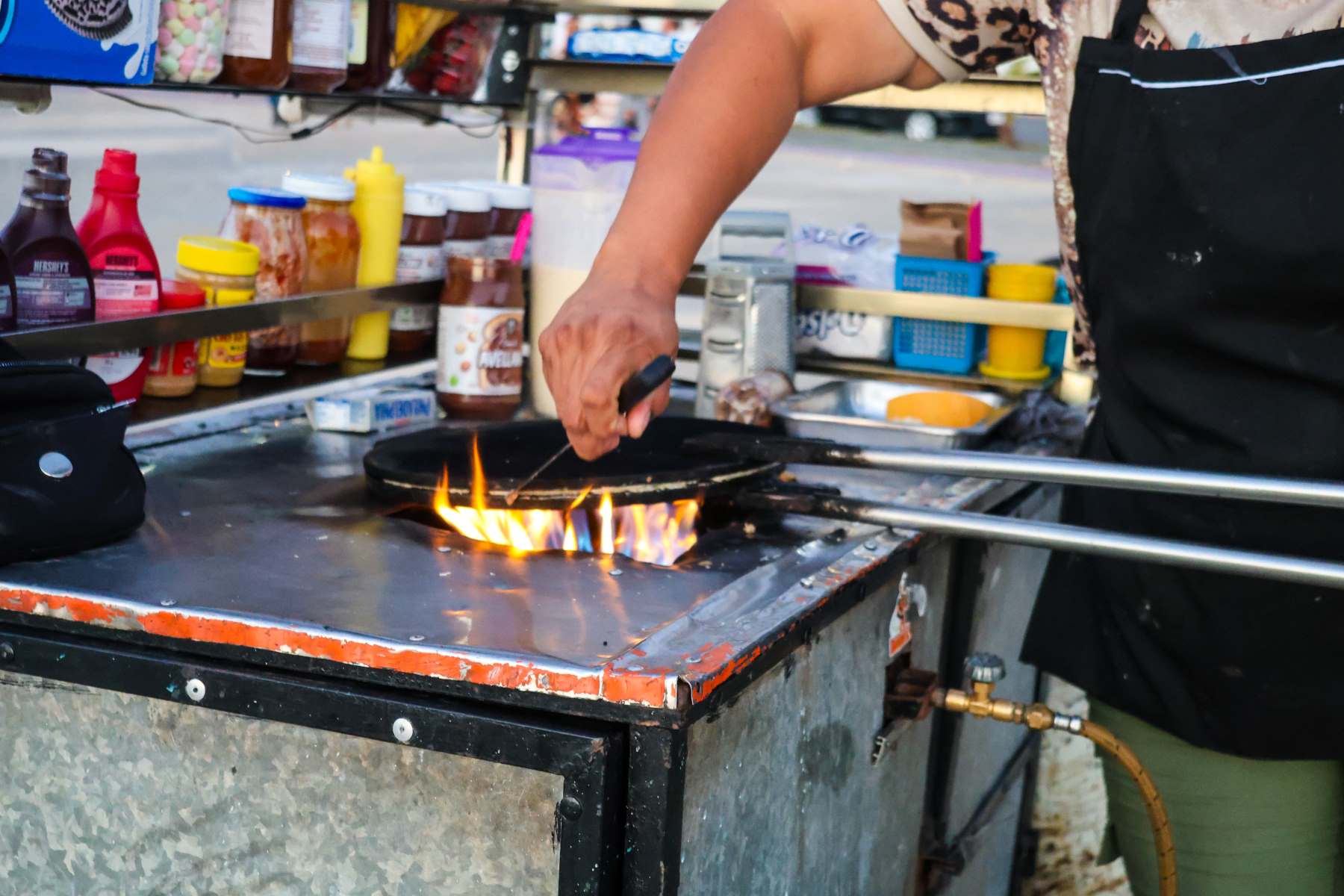
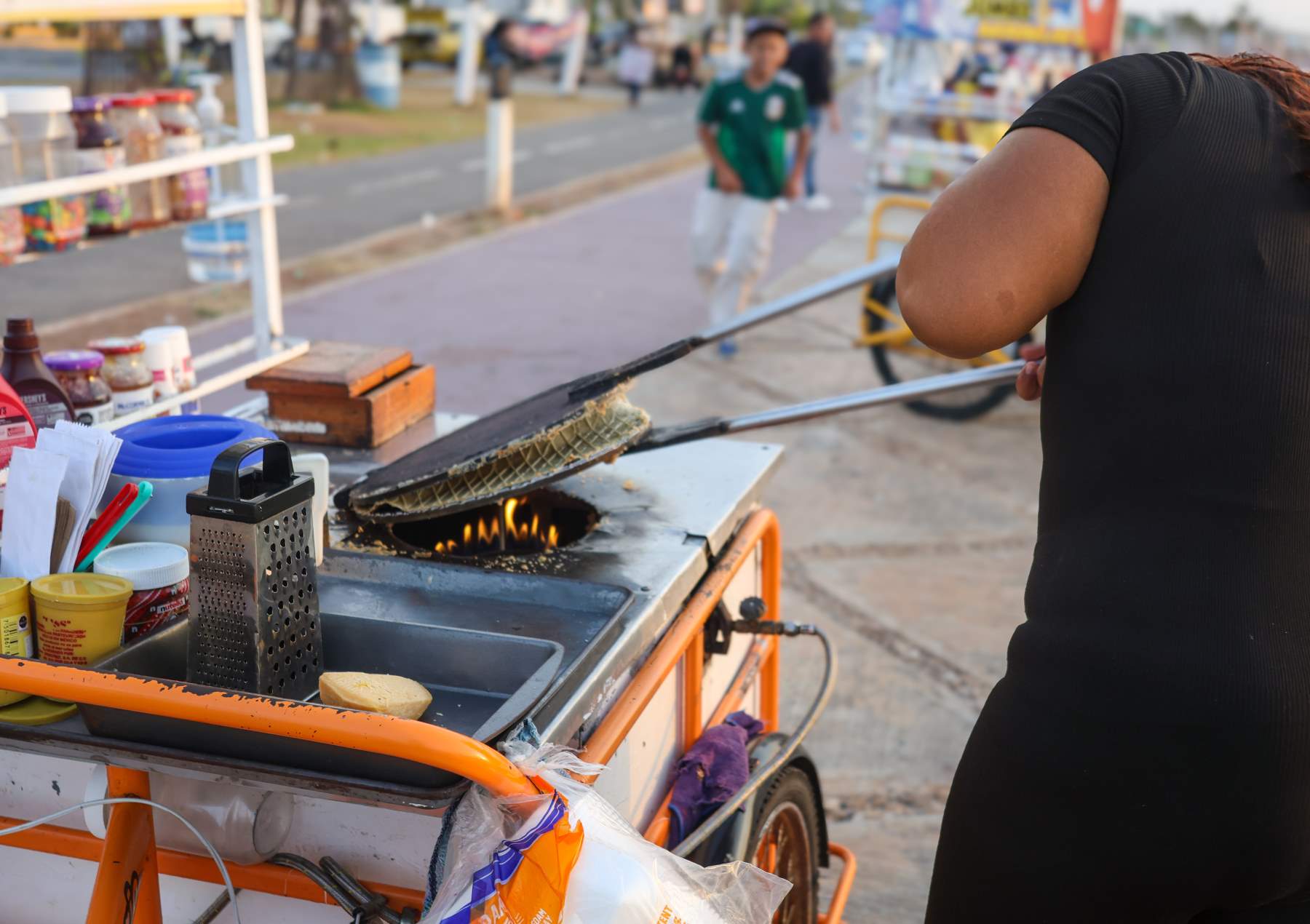
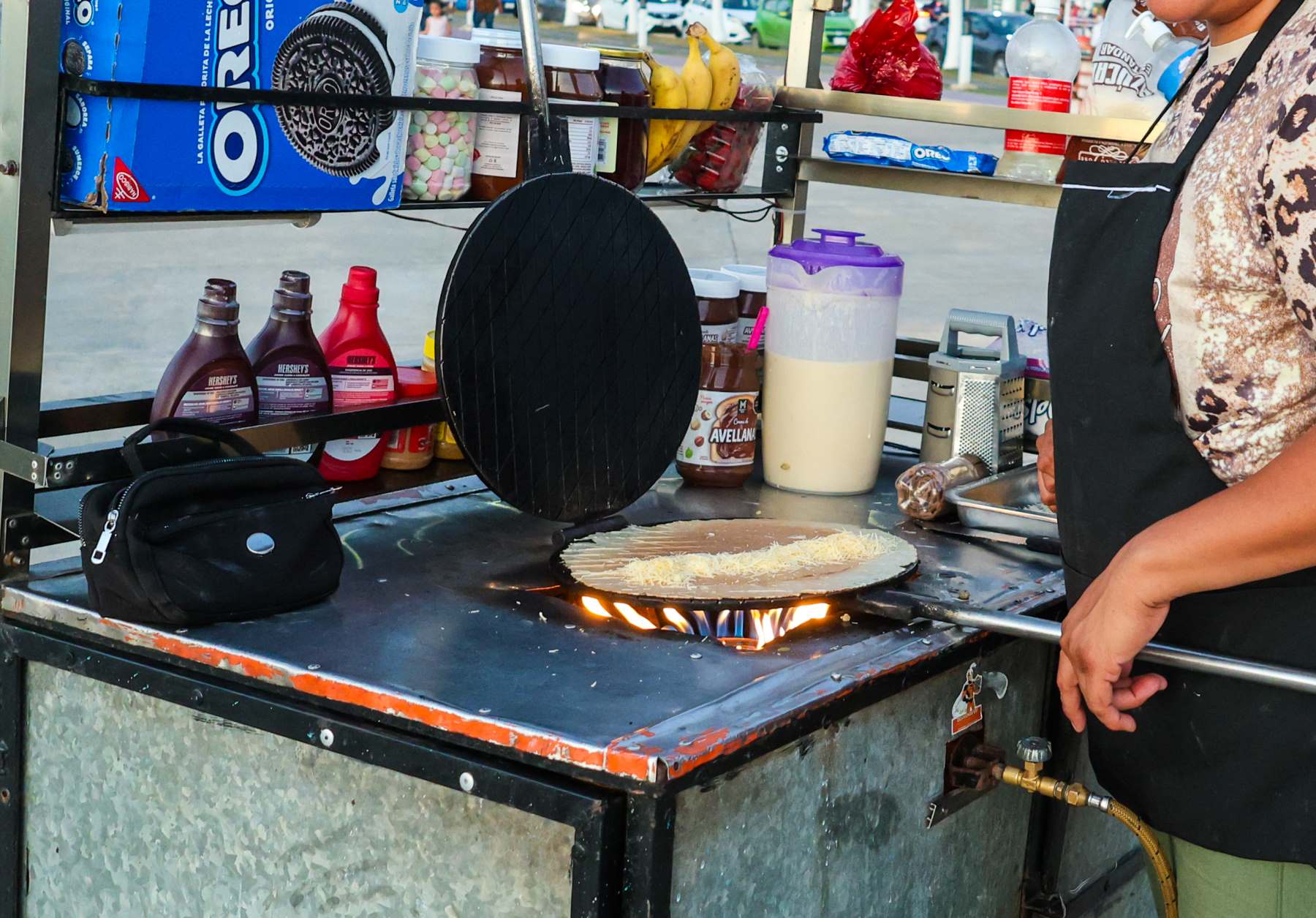
It starts on a plancha, a round cast-iron press that looks vaguely like an antique waffle maker. A thin batter of flour, milk, eggs, butter and sugar is poured onto the hot metal and spread quickly into a delicate circle. Within seconds it transforms into a crisp golden wafer.
Before it cools, Lupe rolls it with the speed of someone who has done this thousands of times into a narrow tube that looks suspiciously like something you should not be smoking near a police officer, no matter how friendly they look.
Then she packs it.
Inside can go Nutella, cajeta, jam, condensed milk and whatever is left of your enamel.
Yet what usually causes visiting foreigners to briefly question the entire Yucatan Peninsula is the cheese.
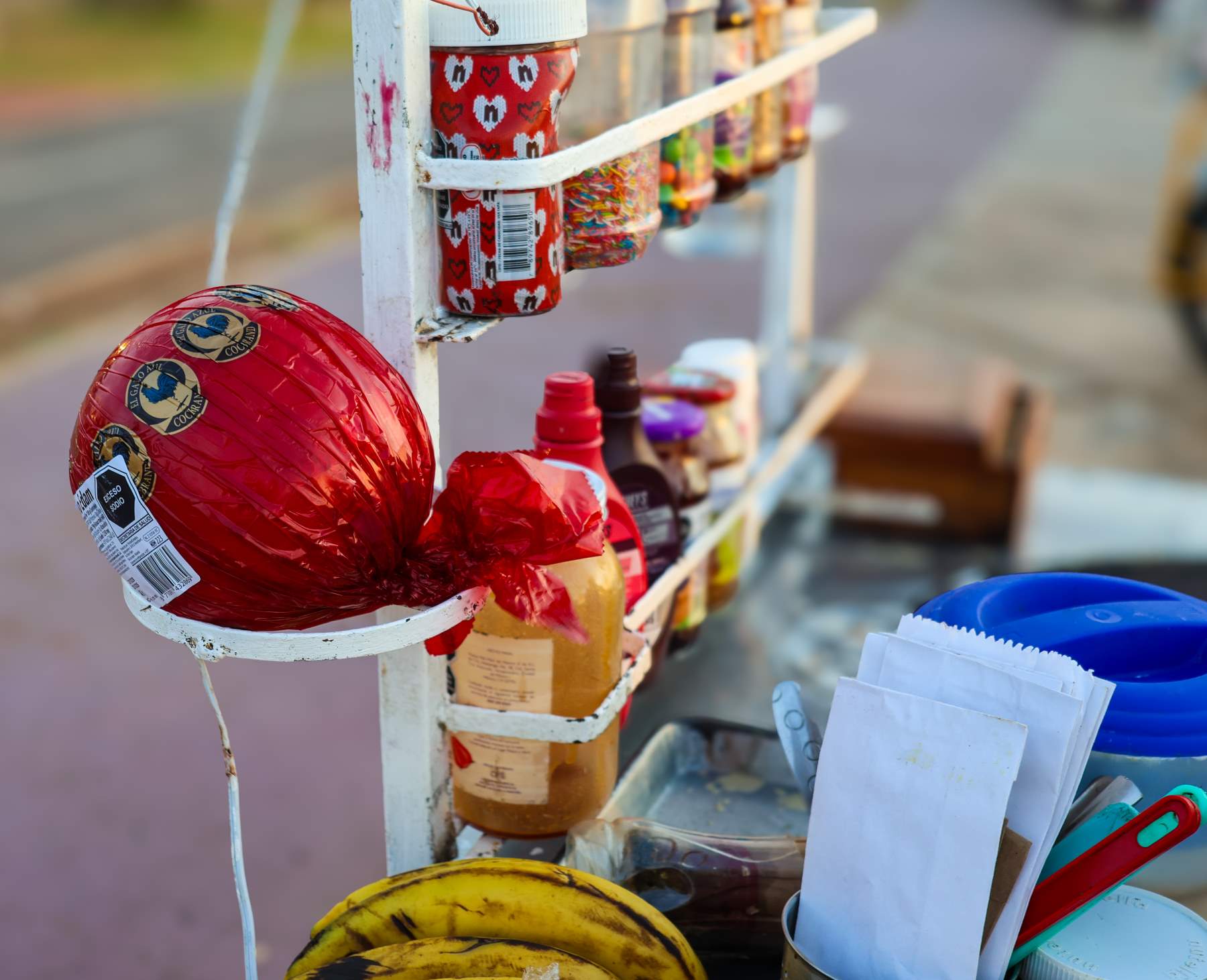
Queso de bola
Not just any cheese. Dutch Edam. Locally it is known as queso de bola, literally ’round cheese,’ because it arrives as a wax-covered sphere. Around here, many insist the only acceptable version is the imported Gallo Azul brand.
Apparently there are some things in life you can compromise on. Clearly cheese inside a dessert is not one of them.
Obviously, many years ago somebody looked at a sweet snack and thought: you know what this needs? A small but decisive contribution from the Netherlands.
And somehow, against all logic, it works.
The salt cuts through the sweetness. The richness softens the sugar. The warm wafer shatters. The cheese melts.
However, what makes Lupe diabolically dangerous is her loyalty program. Once she recognizes you, the menu stops being a menu. Extra banana? No problem. More Nutella? Sure. Maybe a thick stripe of strawberry jam down the side? Absolutely. And how about some honey drizzled over the top with extra cheese? Bring it on!
Innocent beginning of habitual pleasure
Like most dangerous habits, the marquesita began innocently enough.
Back in the 1930s in Mérida, an ice cream seller named Don Vicente Mena Muñoz, known locally as Polito, noticed that cooler weather was ruining business. Rather than accept defeat, he began experimenting with the thin wafer cones he used for ice cream and started filling them with cheese instead.
Whether genius and desperation are technically the same thing remains open to debate. The result was the marquesita.
According to local legend, the name came from the young daughters of a wealthy family, little ‘marquesas’, who became regular customers.
In hindsight, naming a snack after rich girls who could not stop eating it should probably have been everybody’s first warning.
Now the fountains begin again overhead.
The crowd murmurs. Children point at the lights. Music swells over the water.
Lupe looks at the half-finished roll in my hand.
‘There are more, she says. ‘We close at midnight.’
I look at the marquesita. I look at Lupe.
‘I’ll take another one, please.’
She smiles like she already knew that.
‘See you Sunday,’ she says.
Which, as far as I can tell, means I’ll be seeing her again next week. And the week after that.
At least until one of us moves away or I get deported. I’ll settle for when I start leaving sugar footprints along the Campeche malecón.
Published or Updated on: May 23, 2026 Paolo Ferrari