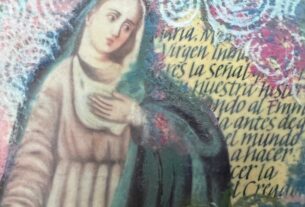
First, You Smell It
“¿Qué estás quemando?” (What are you burning?) I asked the curandero. The folk healer looked at me the way you’d look at someone asking a ridiculously obvious question. “Es copal,” he smiled in amused disbelief.
My first week in Mexico City, wandering through Chapultepec Park, I stumbled on the Concheros dancers mid-performance—elaborate headdresses, ankle shells, faces painted for the gods. Afterwards, I joined the line for a limpia (cleansing), antsy and over the moon. Finally at the front, the curandero told me to close my eyes and hold out my arms. He ran the smoke up my body, then turned me around to bless the back. Before I dropped 50 pesos in the collection dish, I had to ask.
In Mexico it’s everywhere—that warm ribbon drifting through market stalls, rising from a temple doorway. It bypasses your thinking mind entirely and conjures something ancient. It links the living to the dead, the earthly to the divine, and the individual to something much larger than themselves. It now sneaks out of my apartment to greet my neighbors. In every place I dwell, copal is the first to enter and the last to leave.
Then, It Heals You
The scent triggers a reflex that slows and deepens breathing, drawing the mind toward stillness. Copal’s name comes from copalli, the Nahuatl word for incense resin. For over 3000 years, the Maya, the Aztec, the Zapotec have burned it as an offering to the gods—a living prayer, a bridge carrying human intention upward. When the Spanish arrived in the sixteenth century, they labeled it “devil’s incense” and banned it, while Indigenous communities preserved the practice in secret. In one of history’s quiet ironies, copal eventually found its way into the very Catholic churches that had once condemned it. That’s copal’s nature—persisting and finding its way in.
Today it burns across the full span of Mexican spiritual life—in limpias, temazcals, mushroom ceremonies, Día de Muertos offerings, where the uninitiated find themselves somewhere between witness and participant, not entirely sure which world they’re standing in. It sits on home altars for medicinal use and daily ritual. Its bark has long been brewed into teas for respiratory ailments and applied topically for inflammation. A tree this generous has never lacked for devotion.
Then, You Follow It
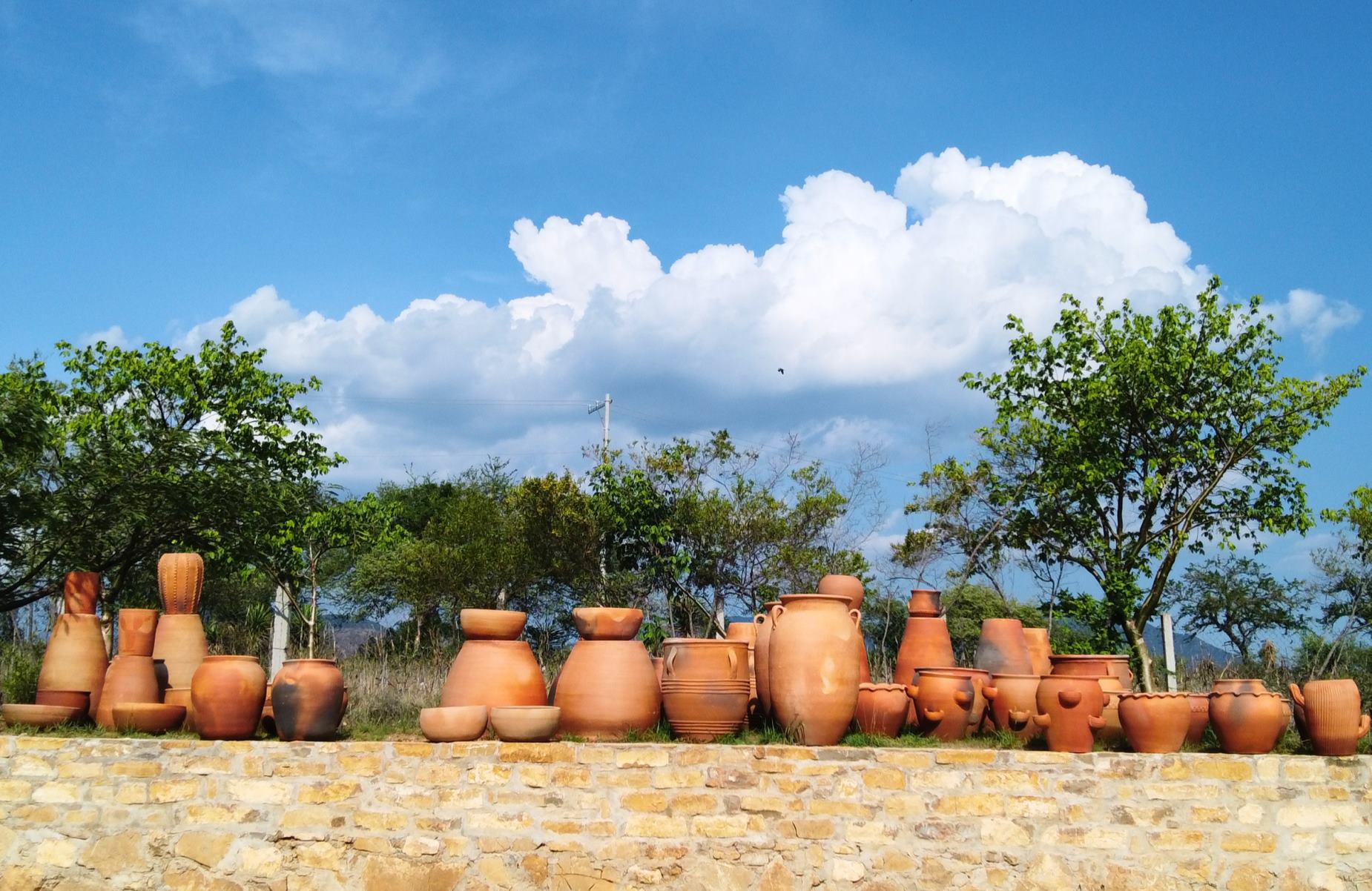
The 30-minute ride from Oaxaca City to San Martín Tilcajete feels like a city gradually loosening its grip—fewer buildings, more sky, and the mountains asserting themselves. Then, the town comes alive in color: murals cover nearly every wall, vibrant and detailed enough to prompt a hasty, blurry photo from the moving car. The craft has spilled into the streets, and into the air.
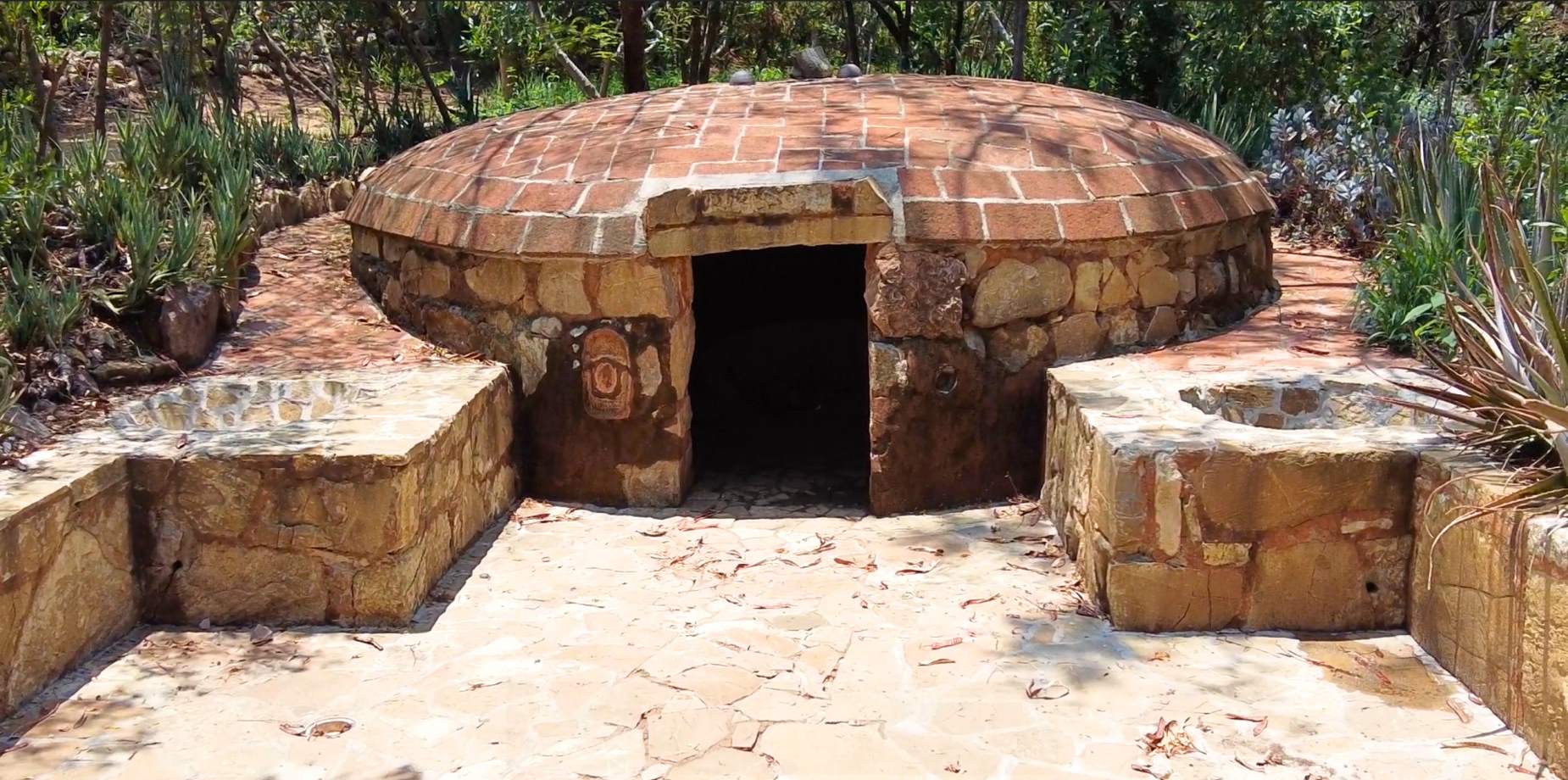
I wore sneakers and play clothes expecting dusty forest paths. What I found felt like stepping into someone’s sublimely curated, very intentional life. Numerous copal trees were at various stages of growth—some barely as tall as me, others already leggy and reaching to 20 feet and beyond, the light catching their gnarly bark. Pots of cacti and succulents crowded the paths. And hiding in the greenery, as though it had simply grown there—a temazcal.
María Ángeles came to greet me—she and Ximena, her marketing person. María, with her kind face and soulful dark eyes, wore her hair pulled back in a low ponytail. She is one of those people who makes you feel immediately at ease. I knew she was needed in five other places, but she remained thoughtful, deeply present, unhurried. She moved through the space with quiet purposefulness, her hands finding their way to things that needed tending—which, it seemed, was everything. Without fanfare, she walked me through what they’d built over three decades—19 united communities with three branches: art, gastronomy, and conservation.
The chicharras were deafening. Oaxacans call them rainbirds for the way their song peaks just before the rains break, and I’d never heard anything like it before—thousands of them singing at once from the trees, disruptive and magnificent. Walking the grounds with Ximena, I had to lean close to catch her voice—a whisper against the roar of them in the canopy.
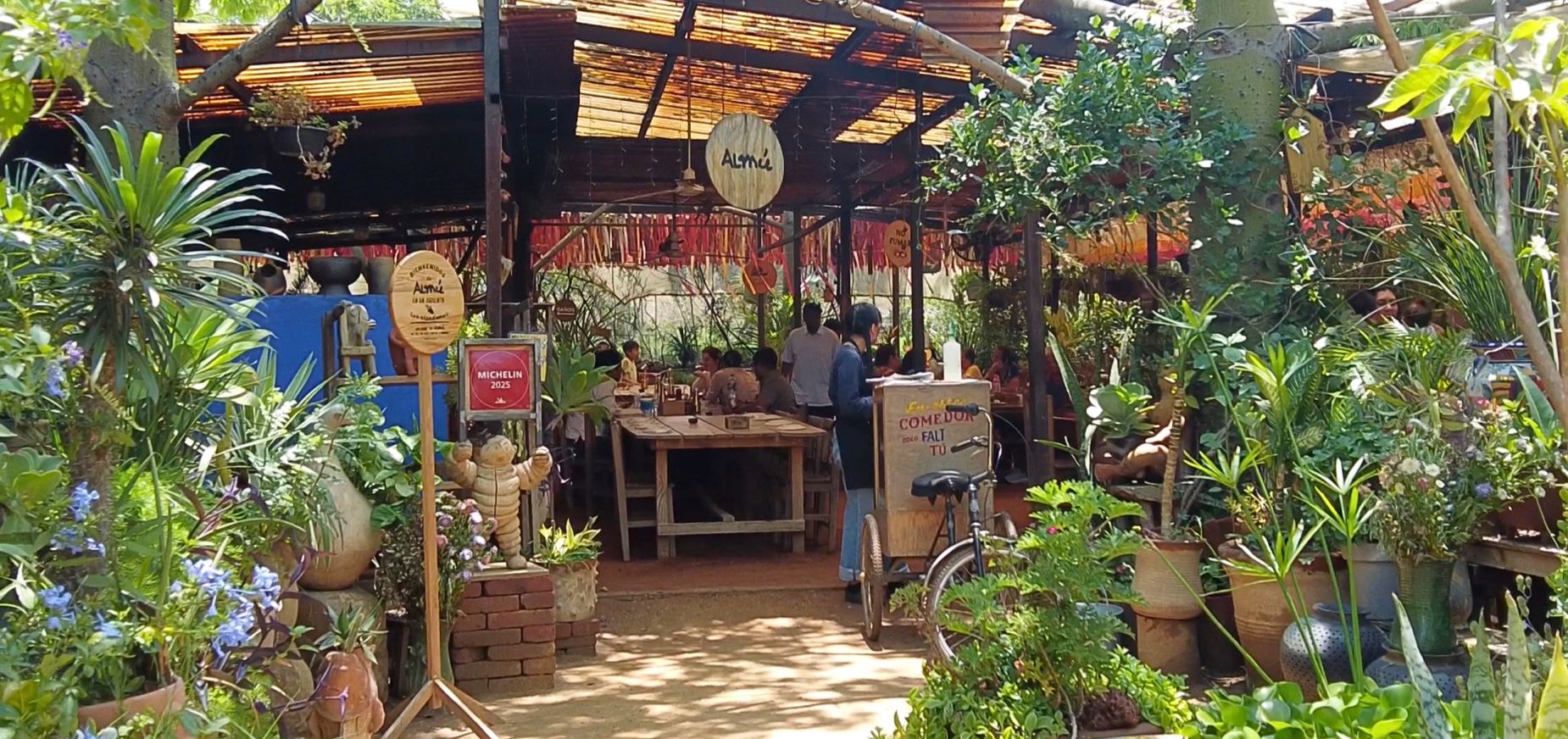
Near the restaurant, char and chile drifted from an open kitchen where cooks turned fresh masa over a hot fire. The back of the restaurant felt ancient and elemental while the front was full of ambiance. Patrons dressed for celebration, and plants leaned toward the light. The decor had personality without trying too hard, feeling like it was designed by someone who actually loves being alive. On my way to the plantación that day, I wrestled with whether I would stay for lunch. Upon seeing the hum of activity around the gastronomic arm of the project, aptly named Almú, I had not a single solitary doubt.
So, We Protect It
Researchers and conservationists tell a localized, but no less urgent story. In the Oaxaca valley, many copal species were cut down long ago by corn monocultures. María says the workshop trade is recent by comparison, and much of the copal used in workshops does not even come from the valley. In other words, the craft is often blamed for a loss it did not cause. Even so, demand for copal wood has grown as alebrijes became popular from the 1980s onward, and workshops now source wood from farther away. Mexico is home to dozens of Bursera species, and a copal tree can take 30 years to mature. Trees are still cut before they are ready, and the pressure on supply remains real—but the history is more nuanced than that.
María, who with her husband Jacobo has spent 30 years at the center of this tradition, says copal is not becoming endangered. “But we don’t want to wait for it to disappear,” she said. “We want to conserve and generate trees—father and mother—so that our pollinators, the birds, can carry seeds across the hills and into other communities.” The depletion here is local—the species itself holds strong beyond these valleys. The motivation came partly from watching a community reforestation effort in San Martín Tilcajete go untended between planting seasons, before a devastating fire swept through an area that had been reforested for over 20 years. The bio-conservation project Palo que Habla was born from that decision.
The copaleros who harvest their resin work within a narrow window each season, making careful incisions into bark and waiting while the tree weeps its resin slowly from the wound—drop by drop, it gathers. In a video documenting copal harvesting, Don José Cardoso, a veteran copalero with 40 years of experience working in Chiautla de Tapia (in the state of Puebla) describes the rhythm simply: “When it first comes out, it is very runny, and little by little it sets and hardens.” That patience is baked into the tradition itself. So is the knowledge. “My grandfather taught my dad; my dad taught me; and I’ve already taught my sons,” he says. “When I die, they will already know how to do it. The tradition stays with them.”
Here, It Becomes Sacred
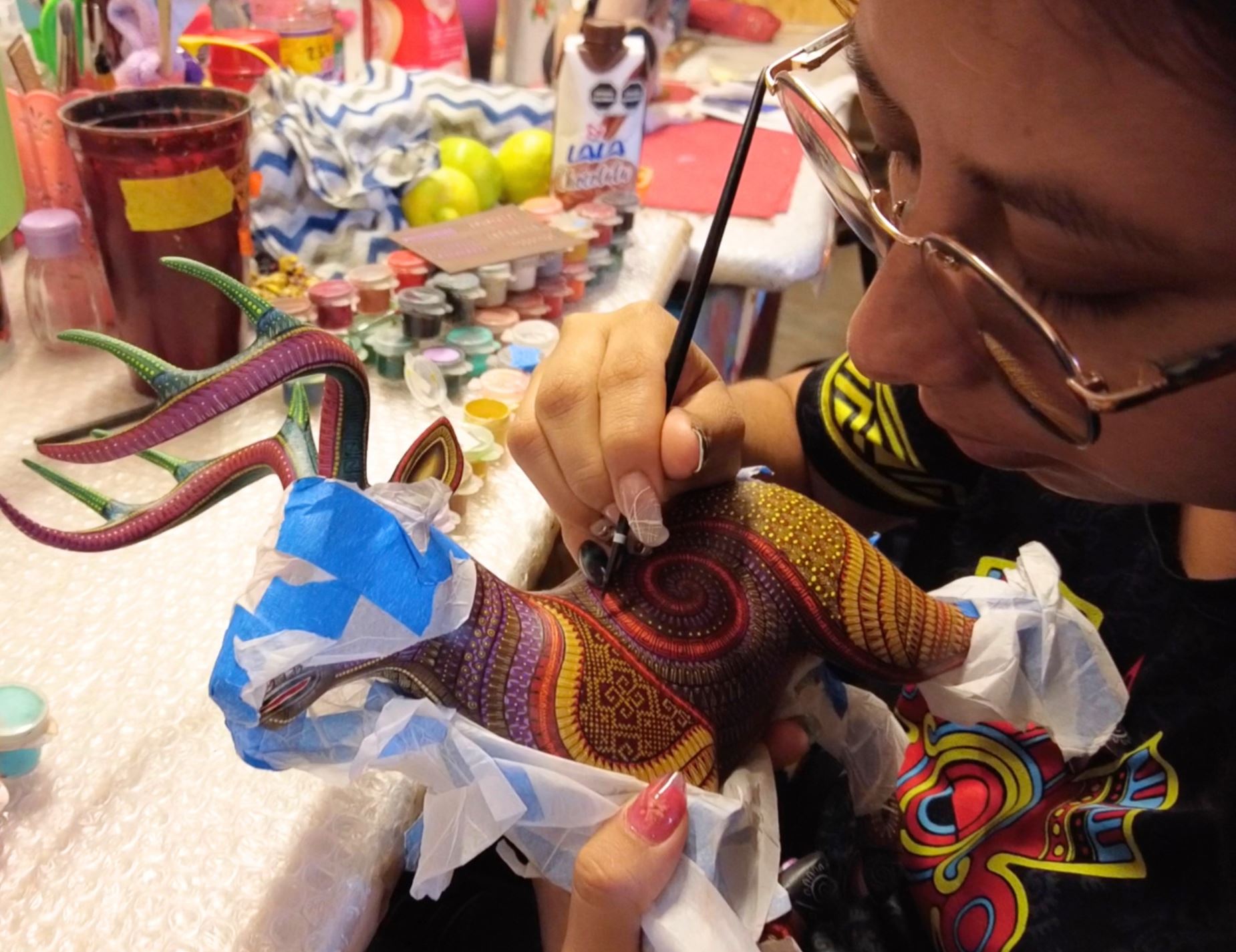
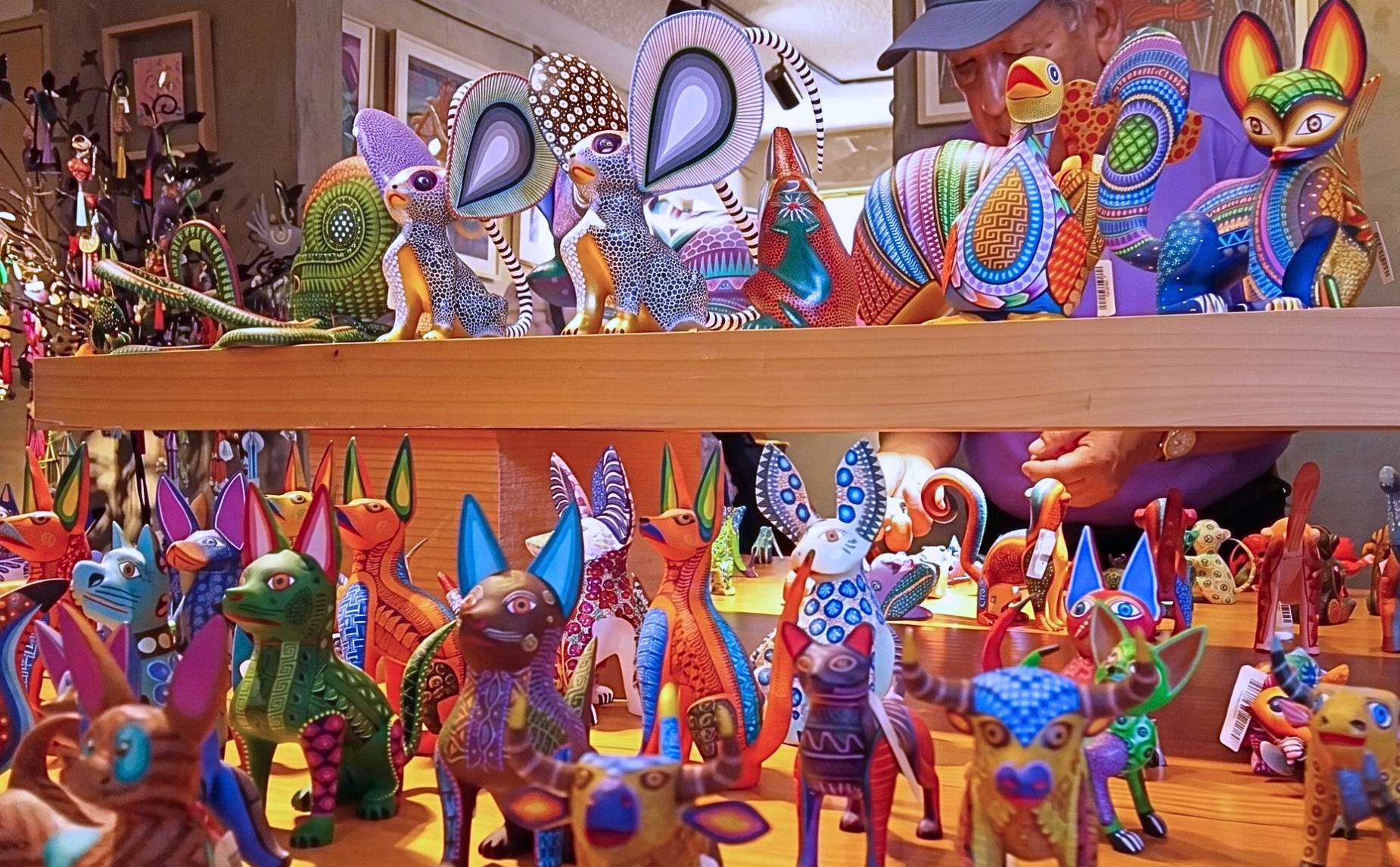
Just five minutes down the road, the Jacobo y María Ángeles Workshop is where their story actually began. The moment I stepped through the door, the deep, woodsy smell of freshly worked copal filled the air. Alejibre figures lined every surface—animals mid-transformation, some barely roughed out, others already alive with paint in ridiculously intricate detail. Jaguars and rabbits and serpents and creatures I couldn’t name, every one of them covered in symbols so finely rendered they seem to vibrate on the wood. Children were grouped together at some of the benches, their hands moving with the focused calm of people who have been doing this since before they could read. This art form is a life path, handed down and taken very seriously.
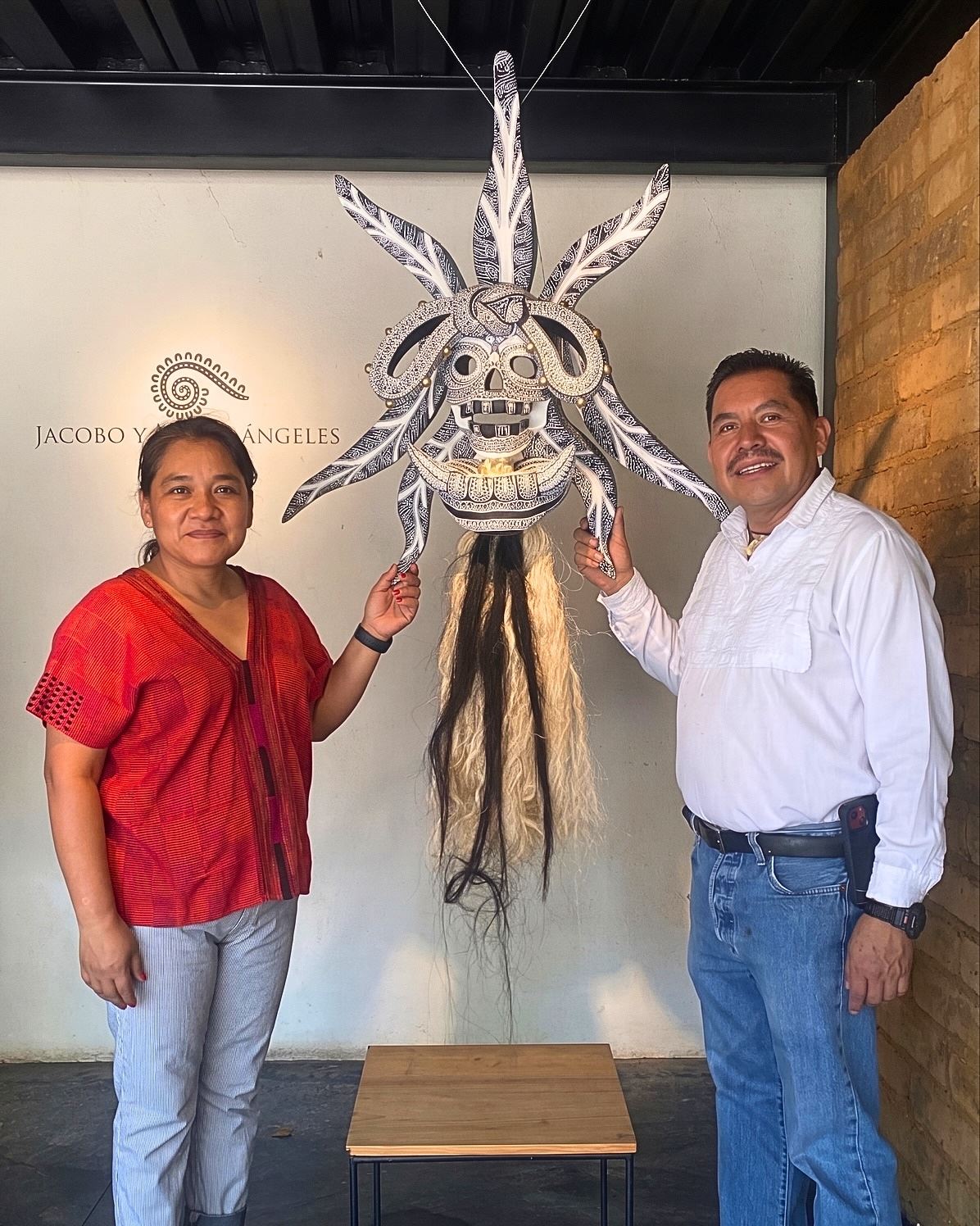
I met Jacobo—dark-haired, mustached, with the easy warmth of a man who has spent decades welcoming people into a project he loves. I snapped a few photos of him and María together, then Jacobo was off, moving through the workshop to greet his many visitors with the same generous warmth he’d given me.
What the workshop produces are tonas and nahuales—the sacred protector animals of the Zapotec tradition. Assigned at birth, fused with the human spirit, these are spiritual objects first. Jacobo and María prefer these names to “alebrijes,” the term the outside world uses.
With a tour guide, I walked the area where wood cures for months before it’s ever painted—up to three years for the largest pieces, left to dry while life continues around it. She mixed vibrant pigments from raw ingredients, every color coaxed from the earth. A pinch of pulverized cochineal—a scarlet beetle harvested from cacti—with a drop of honey and the color shifts; the same powder with zinc becomes something else entirely; baking soda turns it another direction altogether. Upon completion, we were left with various hues of reds, blues, greens, yellows, pinks and purples. When the time comes, each row of symbols is drawn from the Zapotec visual vocabulary—the ant for work, the house for protection—a single figure holding an entire cosmology written across its painted surface. I stood there wide-eyed, as if color itself had just been invented in front of me.
To Repay, You Plant It
Between 2004 and 2020, Jacobo and María planted approximately 40,000 plants—primarily copal and other endemic trees. First on their own land, then on communal and ejidal lands, pulling neighboring communities into the work alongside them, drawing on the principle of tequio, collective labor for collective benefit. This ancient Zapotec practice understands that the land belongs to everyone, and so does the responsibility of tending it. The tree’s generosity is a lifelong conversation: repeated harvests of sacred incense in the hills, followed by another transformation under a carver’s blade in the workshop.
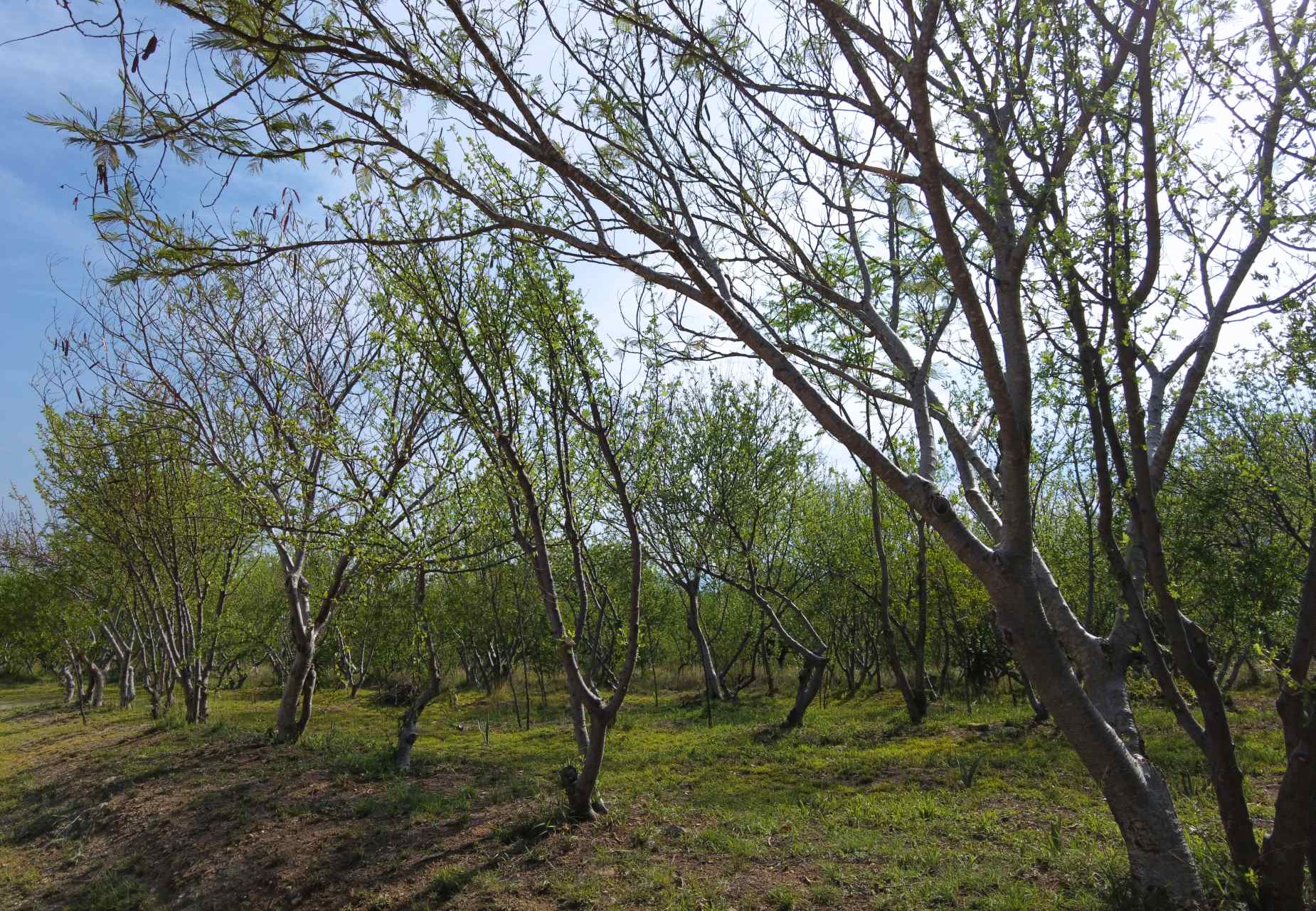
There’s a tiny building at the edge of the plantation with a spiral ladder. Covered in colorful murals, it quietly invites you to climb to the top. So I did. I spun around slowly with my camera, capturing the arduous work of volunteers from 19 communities. Many of those trees will be harvested by hands not yet born—a gift for those who don’t even exist yet.
“In art, the only language is the ability to transmit to future generations that the past will be part of the future. It’s important to respect certain processes, but above all, to respect their cultures and origins. We must hold on to that sense of belonging, so that we don’t lose where we live, nor the respect for our own origin.” — María Ángeles
The menu arrived as a notebook—handwritten, with whatever the market had to offer that morning. I sat with it a moment longer than I needed to. There’s something I love about a kitchen that waits to see what’s good before deciding what it’s making. Inside the first micro-forest of Palo que Habla, Almú is a young eatery with a smoky open kitchen. Cooks carry their ancestors’ recipes in their hands and the food tastes like it was made for revered family members. I ordered the black mole with pork and rice, and an agua de maracuyá. The mole was the single best I’ve ever tasted. Almú has since received a Michelin Plate in the 2025 MICHELIN Guide Mexico. Sitting there, belly full, handwritten notebook in my hands, and surrounded by plants, I believed it completely.
And Still, It Lingers
Copal smoke rises and disperses, and you might think it disappears. But no, it lingers—in the fabric of your clothes, in the part of you that relaxes in its presence.
What Jacobo and María have built works the same way—interconnected, pervasive, quietly transforming everything it touches. A craft rooted in sacred animals, a crisis that demanded a response, land restored through an act of long faith, a restaurant rooted in the same soil as the trees, and a town whose walls bloom in color—an entire community expressing itself in art.
Standing on that small building in the Plantación de Copal, surrounded by trees whose smoke will one day rise in ceremonies of future generations, I realized I didn’t need to worry about the copal. The copal, it turns out, is in very good hands.
The Jacobo y María Ángeles Workshop and Almú restaurant are located in San Martín Tilcajete, approximately 30 minutes south of Oaxaca City. Guided tours of the workshop are available and highly recommended. The gallery Voces de Copal is in Oaxaca City. Entry is free.
Related articles on MexConnect
- The temascal: Traditional sweat bath
- Ecotourism in Mexico: Arroyo Guacamaya, Ixtlan and the Sierra Norte of Oaxaca