More than a deep dive into cool waters, cenotes (sinkholes) are portals to the past, conjuring up the history and lore of the Yucatán Peninsula, where they were thought to be passageways to the underworld or Xibalba: the place where the dead met the most powerful of gods and underwent trials and challenges.
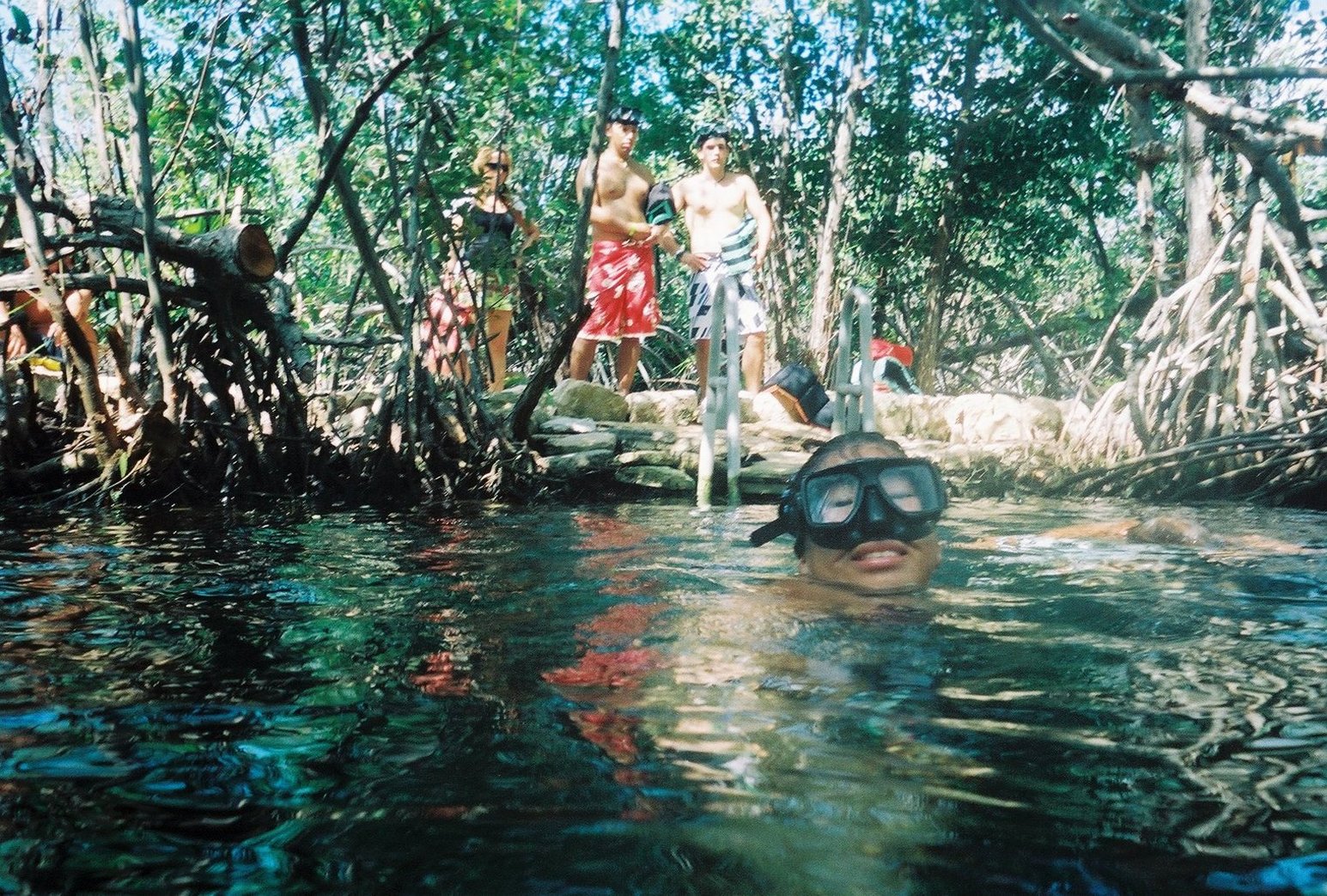
But who is going to dive that deep to get even close to Xibalba? Certainly not me. Instead, I enjoy the beauty of cenotes, pools of water often hidden deep in the jungle, accessible by following narrow, well-trodden paths lined by thickets of ceiba trees, beach cabbage, wild tamarind, Spanish cedar, gumbo-limbo and Spanish elm. Formed when the permeable limestone covering much of the Yucatán collapsed due to wind and rain, revealing the water beneath, there are several distinct types of cenotes or sinkholes.
Types of cenotes (sinkholes)
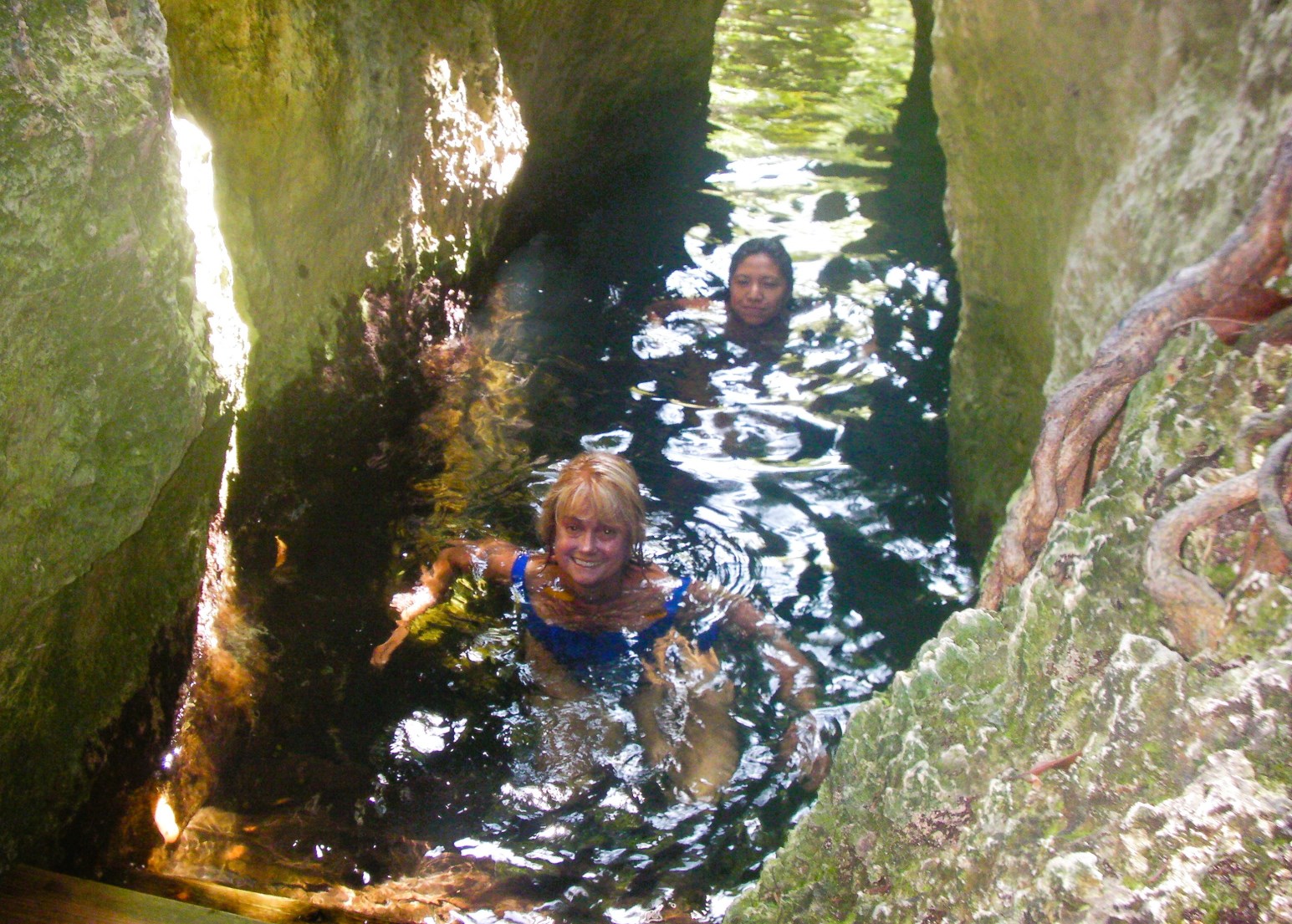
Ancient or open cenotes are so called because the ceiling has completely gone, resulting in a look similar to a lagoon or large pond. These are typically the most easily accessible because little if any climbing is involved. Semi-open cenotes, with their partly collapsed ceilings, offer a more adventuresome blend of shadows and sun, often requiring climbing down ladders or stairways. Cave cenotes are still almost completely enclosed, their limestone ceilings still mostly intact, seemingly like sanctuaries under the earth.
Caves and underground water systems have always lured me, having gone to school in Southern Indiana, a place that is a spelunker’s dream due to its numerous caves carved out of limestone though we don’t call the underground lakes cenotes in the Midwest. We call them sinkholes, a much less glamorous name.
But there’s more difference than just a name. Indiana was so wild 200-plus years ago that even Daniel Boone, the famed woodsman got lost and had to be saved by his brother, while what makes the Yucatán so fascinating—beyond its sandy beaches and bustling cities and towns like Cancún, Tulum, and Playa del Carmen—is its historic resonance dating back more than a millennium to when the once-great Mayan empire designed cities based on engineering feats that are still mystifyingly complex.
Multiple uses: from mundane to sacred
It’s this sense of history that adds to the beauty of what the Mayans called dzonots, meaning water wells, as they were often used for drinking water. But that wasn’t always their only use. Some, like the Cenote Sagrado (Sacred Cenote), a vast sinkhole in Chichén Itzá some 20 yards deep and just under 80 yards wide, were the sites of ceremonial sacrifices with people, gold, ceramics, jewels and even what is thought to be an altar tossed into the waters to appease the gods.
Declared a UNESCO Patrimony of Humanity, you can’t swim—and who would want to—in the Sacred Cenote. But with 6000 to 10,000 cenotes dotting the Yucatán landscape (more than any other place in the world) to choose from, many of them accessible through curated tours, there’s a variety of experiences to choose from. Let me share some of my favorites.
So, grab your snorkeling gear, water shoes, and underwater cameras (check to see if they’re allowed, as each cenote tour has different rules) and decide what type of cenote adventure best suits you.
World’s largest underwater cave system
The aquamarine blue waters of Gran Cenote, near Tulum, are easily accessible by a stone path leading down into calm and shallow waters. A snowy white-sand bottom is a good place to start for those who don’t want to get too adventuresome. But there’s more to this cenote if you wish to explore. It is part of the 350-kilometer-long (217-mile-long), 130-meter-deep (420-foot-deep) Sistema Sac Aktun—the largest known underwater cave system in the world—and one of a series of cenotes connected by wood walkways.
Venture further underwater here for views of fish, and towering stalactites and stalagmites. The water is slightly cooler as the ceiling lowers as you travel further into the cave. As a safety precaution when snorkeling, don’t come to the surface without first raising your hand to see how close you are to the rock roof of this part of the cave to avoid hitting your head.

Leap into the underworld
Cenote Calavera is also part of the Sistema Sac Aktun. Calavera means ‘skull’ and that name, in part, refers to the shape of the entrance with a large mouth-like cavity and two smaller openings in the limestone, all of which are entrances. Enter by descending a wooden ladder, or by leaping more than two meters (eight feet) into the water. The cenote is 15 meters (50 feet) deep, so it’s a safe drop.
The nearby Cenote Zacil-Ha looks like a giant round swimming pool carved out of stone with wooden stairs (watch out, they can get slippery) leading down from surrounding platform. For a little added zest, there’s a zipline running close to the water’s edge.
The waters of Cenote Sac Actun, translating to white cave, are crystal clear in this cave cenote lit by pinpricks of light coming from the opening in the ceiling. Dos Ojos (Two Eyes) is also a cave cenote with deep waters so clear that visibility is 300 feet or more. Only open for certified divers, the waters team with fish as well as the more exotic freshwater jellyfish and cave shrimp. There are bats here and for the most part, they’re not bothersome but keep in mind that many cave cenotes have bat colonies as well.
Follow in the footsteps of Mayan Royalty
Just eight minutes by car from Chichen Itza and once restricted to Mayan Royalty, Cenote Ik Kil is a variation of an open air cenote, called a deep open or deep open air cenote, where the roof has fallen in to expose the walls and the water far below. Here, the opening to the water below is ringed by hanging vines, exposed tree roots and thick layers of foliage clinging to the rocky sides. A staircase hacked out of limestone provides access to the 200-foot-wide and 85-foot-deep cenote.
In Akumal, a small beach resort south of Playa del Carmen, take one of the organized excursions to Yal-Ku Lagoon, the name comes from the Mayan term for Nest of Fish. There are open swimming areas, an underground river, and caves, artificially lit, that showcase blue waters. Don’t be alarmed by the large iguanas. They’re friendly.
Adventure parks and cenote tours
Xplor por Xcaret, an adventure park in Riviera Maya, offers several soft watery adventures including the 437-yard Stalactite River Swim, an underground swim past rock formations and through small caves. Life jackets and helmets are provided but keep in mind the river can be a bit chilly at a constant 75 degrees Fahrenheit (24 degrees Celsius).
The tour of the four cenotes at Xenotes Xcaret, another eco-park from the privately owned Grupo Xcaret, covers the spectrum from open air to underground lagoons. Known for its blue waters, Cenote Azul, teems with abundant marine life including turtles. Also on the Xenotes Xcaret tour is Lu-um is Lu-um, a cave cenote described as ‘only’ eight million years old, making it the newest cenote in the region. For the daring, there’s assisted rappelling down the cenote walls.
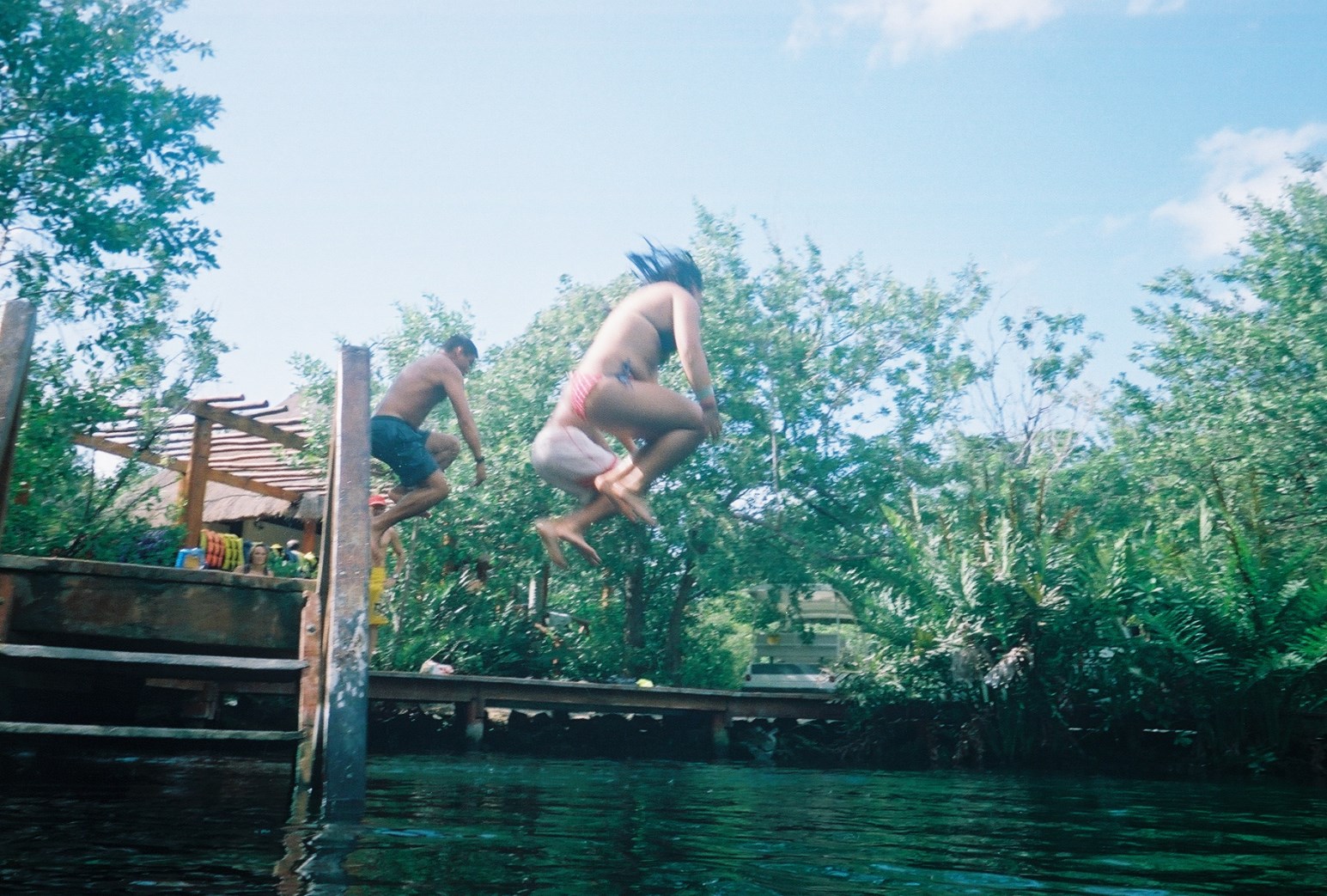
While many cenote tours start at a pick up at the hotel, some are found just by driving along the highway looking for signs. So, it is with Cenote Cristalino. A faded roadside sign announces the entrance, and the fee to swim when I was last there was under $10. Like most cenotes, it gets crowded quickly, so go early. The waters of this long cenote, with its wide open areas and hidden rocky areas, are pretty patches of deep greens and blues edged by large boulders for sunning, a swing, and swimming platform. For convenience, there are restrooms and vendors selling food.
Route of the cenotes (Ruta de los Cenotes)
North of Playa del Carmen, near Puerto Morales, the Ruta de los Cenotes (Cenotes Route) is a trail connecting eight cenotes ranging from the open air Las Mojarras with its ziplines and jumping platform to the Cenote Kin Ha, one of the largest cenotes in the region, with its clear open waters and cave systems for exploring. Other cenotes on the route worth checking out include Cenote Zapote, which is easily accessible by stairs carved out of rock and is surrounded by foliage. Cenote Chilam Balam is both a cavern and a sinkhole, the latter with both a 36-foot and 54-foot diving platforms.
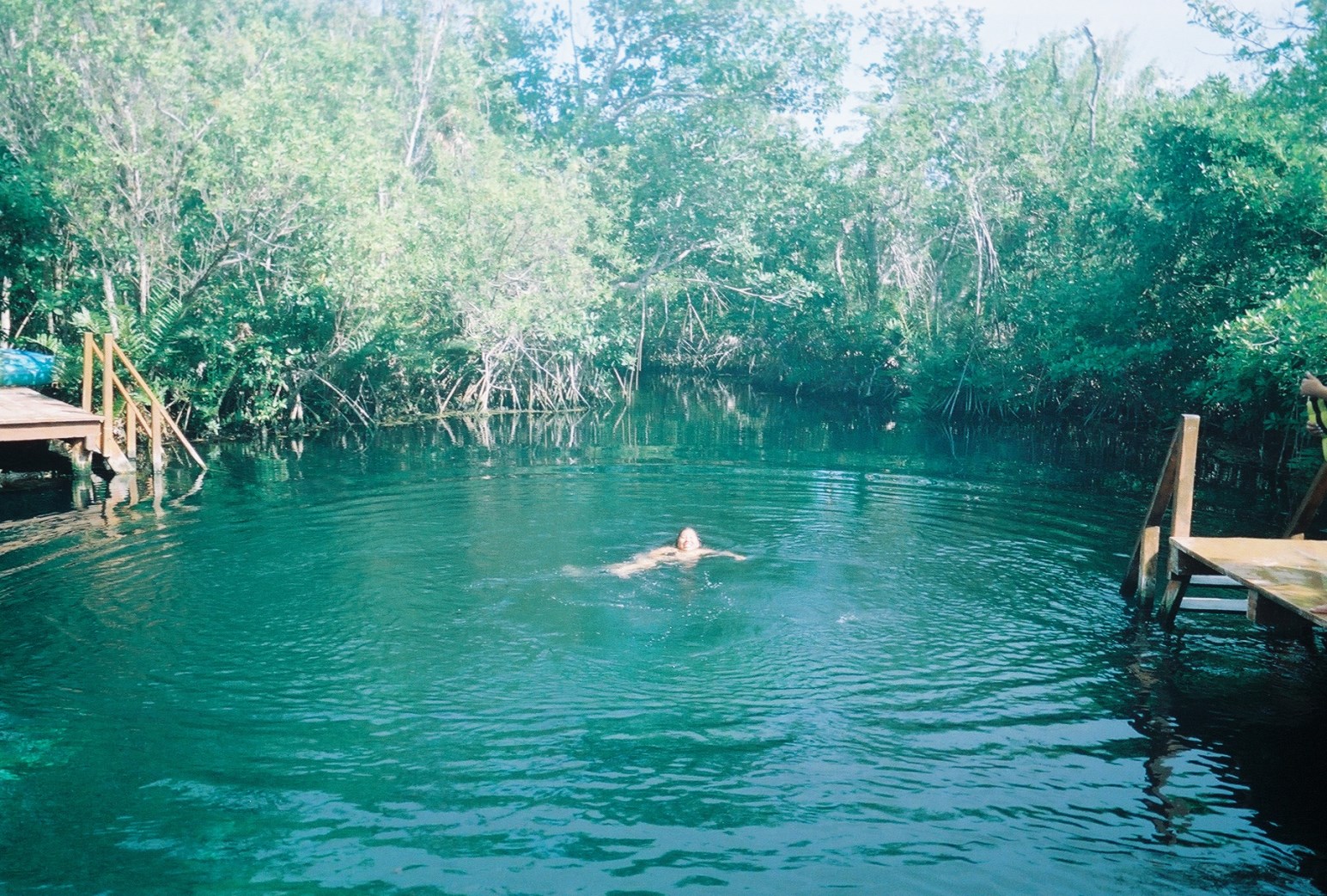
For those who want easy access to ten distinctive cenotes, a stay at the all-inclusive Hacienda Tres Ríos Resort provides easy access to its 326-acre Tres Ríos Natural Park. It’s a day-long adventure or more to explore all of them, though currently the natural park is open only to guests at the resort.
Cenotes are time capsules, reflecting a way of Yucatán life that’s existed for millennia; they connect history, nature, and adventure for all to enjoy.