On my first evening in San Miguel de Allende, my friends and I walked up Callejón Blanco, the street where they were renting a house for the winter, turning right on to Quebrada and then, crossing a bridge overlooking Templo de las Monjas, we turned again onto Umarán, heading towards the city’s main plaza
It was a short walk. Later, when I looked at a map, I was surprised by how close it was to where we were staying. But San Miguel, located in central highlands of Mexico at an elevation of 6270 feet, with its quaint but chunky and unwieldy cobblestone streets, is no easy stroll.
“You’ll get used to it,” my friends told me as they slowed down to my pace. I doubted that but didn’t say anything. I could barely talk.
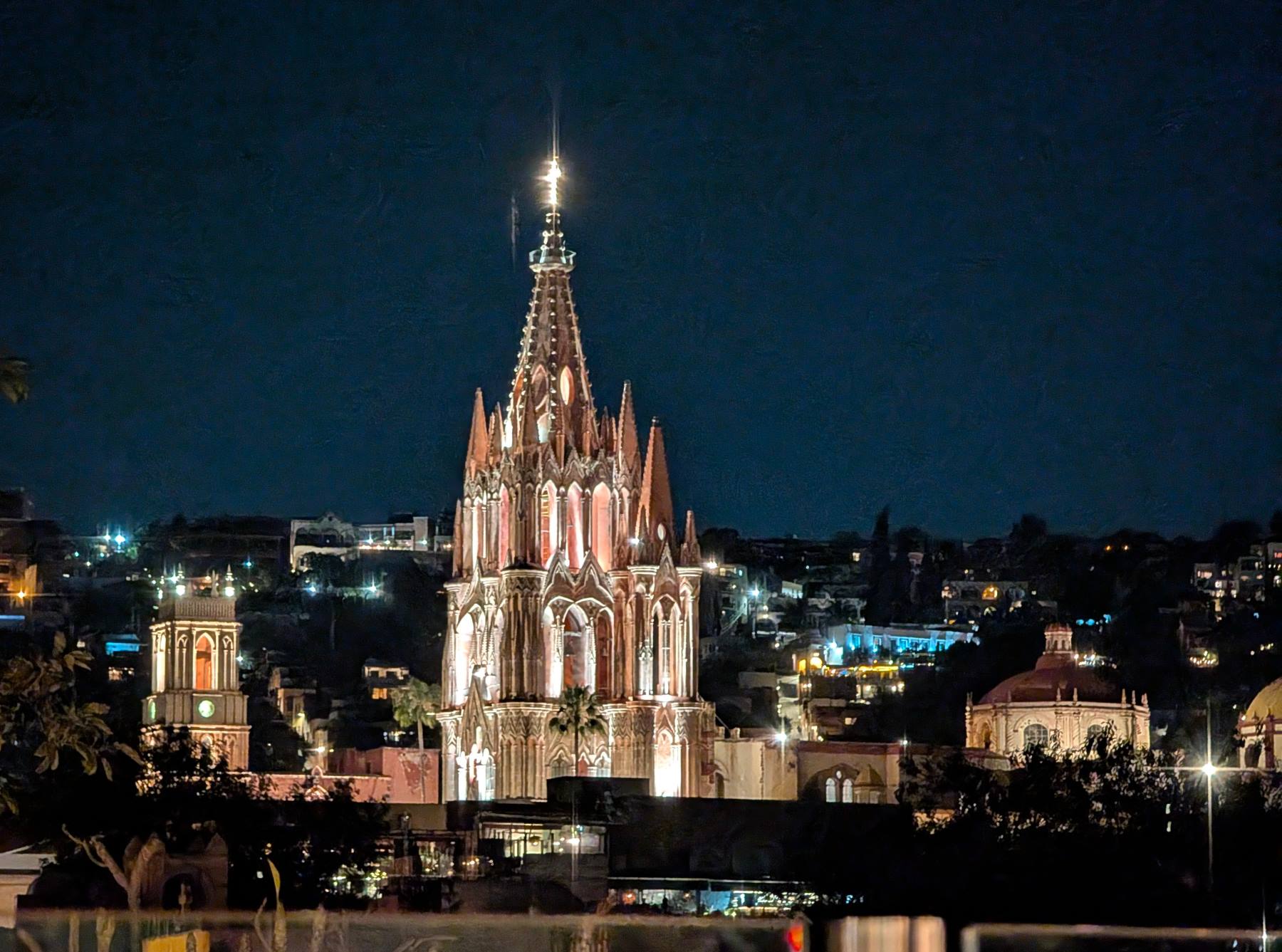
We were heading towards La Azotea, a roof top restaurant and bar near El Jardín, the city’s main plaza also known as the Jardín Principal and right across the street from La Parroquia de San Miguel Arcángel, the pink neo-Gothic cathedral said to be the most photographed church in Mexico.
The streets surrounding the main plaza are always crowded but that night, the beginning of El Día de los Cascarones, it was even more so with vendors selling gaily painted hollowed-out eggs stuffed with colorful confetti. Called cascarones, the idea is to break them on the heads of others, sending confetti drifting through the air and creating a bond between the two.In other words, if someone cracks a cascarone over your head, it’s a sign of affection.
I’m told that it’s a pre-Lenten tradition and will be part of the nightly celebrations until Easter Sunday. Given that it’s still February, there lots of eggs still to be broken. I buy a bag of cascarones, it only costs about 50 pesos or $2.50. It seems like a bargain given the work involved in turning fresh eggs in cascarones. I make a note to myself, seeing all the bits of confetti and broken eggshells strewn about, to be sure to celebrate El Día de los Cascarones somewhere easy to clean.
It’s four short flights up to La Azotea’s rooftop bar and we’re shown to a table that overlooks the La Parroquia de San Miguel Arcángel which, lit up at night, is right across the street. I must be the only tourist in the restaurant as I’m the only one snapping photos and I do take a lot of them.
The chef here, Arturo Sandoval is one of the best-known chefs in the city. According to his bio, he also oversees several other restaurants in San Miguel including La Parada — a Peruvian restaurant — and Atrio, another rooftop eatery with a view of La Parroquia that my friends say we’ll go to on another night.
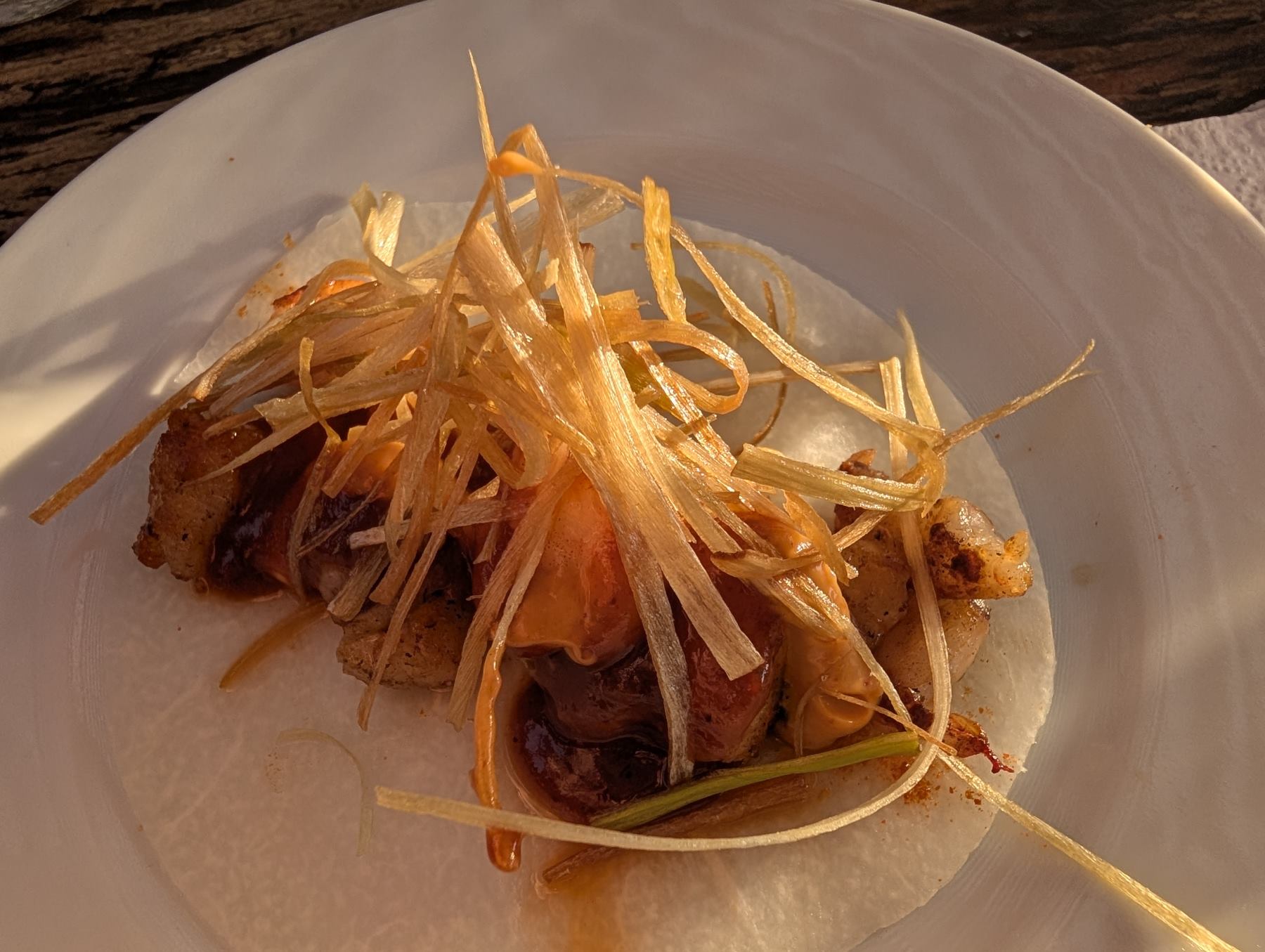
One of the specialties here are the paper thin tortillas made from jicama and filled with lightly breaded shrimp topped with thinner than matchsticks fried leeks, a mayonnaise spiced with chipotle and a tamarind sauce. I also chose a tamarind margarita while my friends each order Rojo Atardecers, a robust drink made with mezcal, agave, honey, ginger, and hibiscus flowers. Dawn, who is into veggies, ordered the roasted cauliflower and Steve the Tuna Tataki which was sliced tuna encrusted in sesame seeds served over avocado, smoked oyster sauce, and jalapeño peppers.
It was at La Azotea that I learned my first lesson about eating in San Miguel de Allende. The restaurant with its stunning view and excellent service would cost a fortune in the U.S. but the tacos cost 200 pesos and the drinks between 180 to 240 pesos or about $11 for the plate of tacos and the same amount for our drinks.
Though SMA is expensive compared to other cities in Mexico because of its expat population, it’s a bargain compared to the United States or Canada. According to Forbes Global Properties, approximately 10% of the city’s total population is from a different country, representing more than 60 nationalities, though the majority are from the U.S., Canada, and Europe. Almost 20 years ago, UNESCO designated both San Miguel de Allende and the nearby Sanctuary of Jesús Nazareno de Atotonilco as a World Heritage Site.
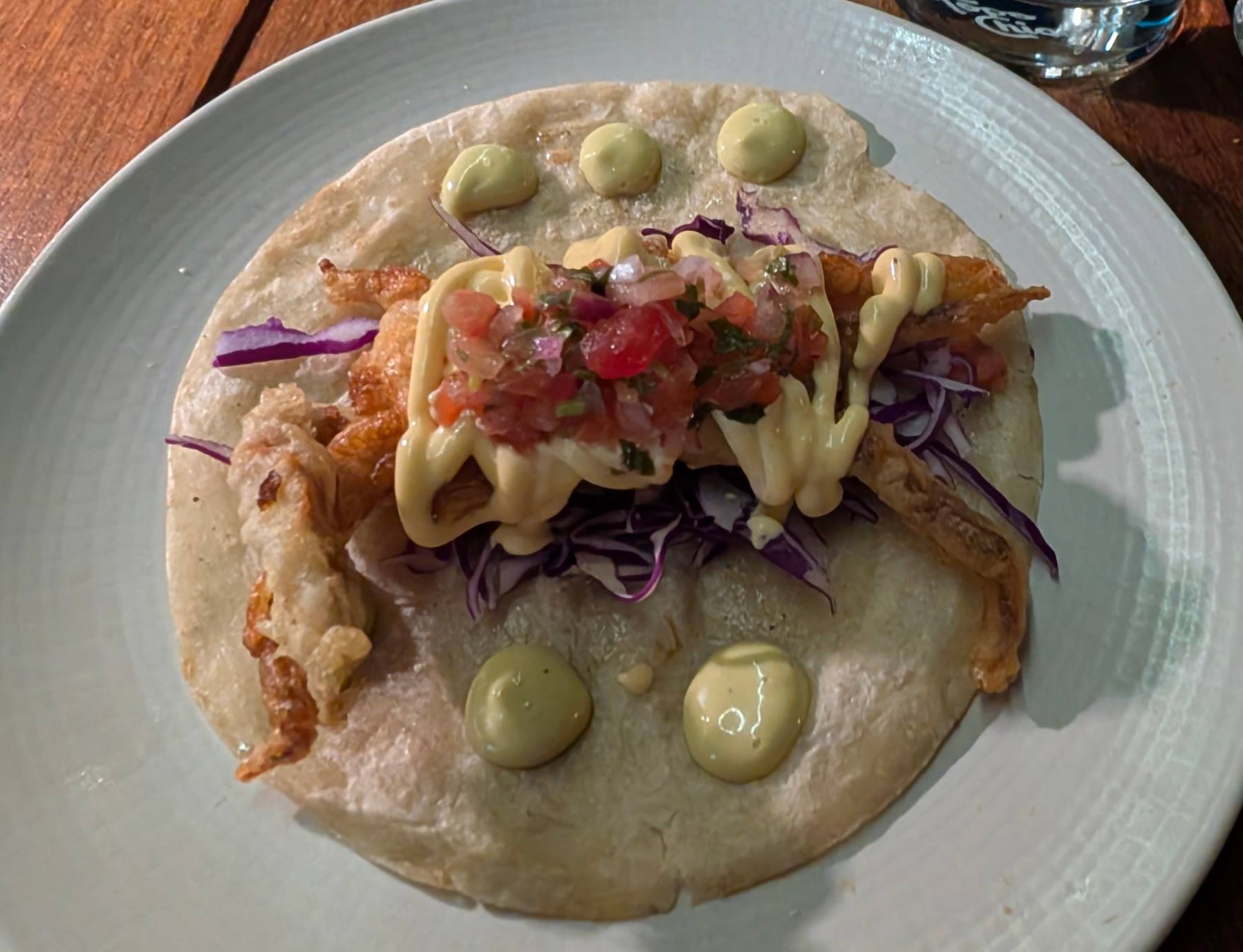
As diverse as the population is, so are the culinary offerings. You could literally eat a different cuisine every night. If I follow Callejon Blanco east towards La Parroquia within less than a mile my options include the sleekly modern Bocaciega with its Greek and Mediterranean offerings such as squash blossoms, grilled lamb chops, and freshly made pita bread. Spätzle, sausages, Alsatian crepes, goulash and German potato salad are all part of the German-centric menu at Berlin Bar & Bistro while Nudol features bao, ramen, dumplings, and Korean-style wings. My friend Steve loves the soft-shelled crab tacos served with an aioli sauce and Dawn likes the Pekin duck tacos at Atrio, another roof top restaurant across from La Parroquia.
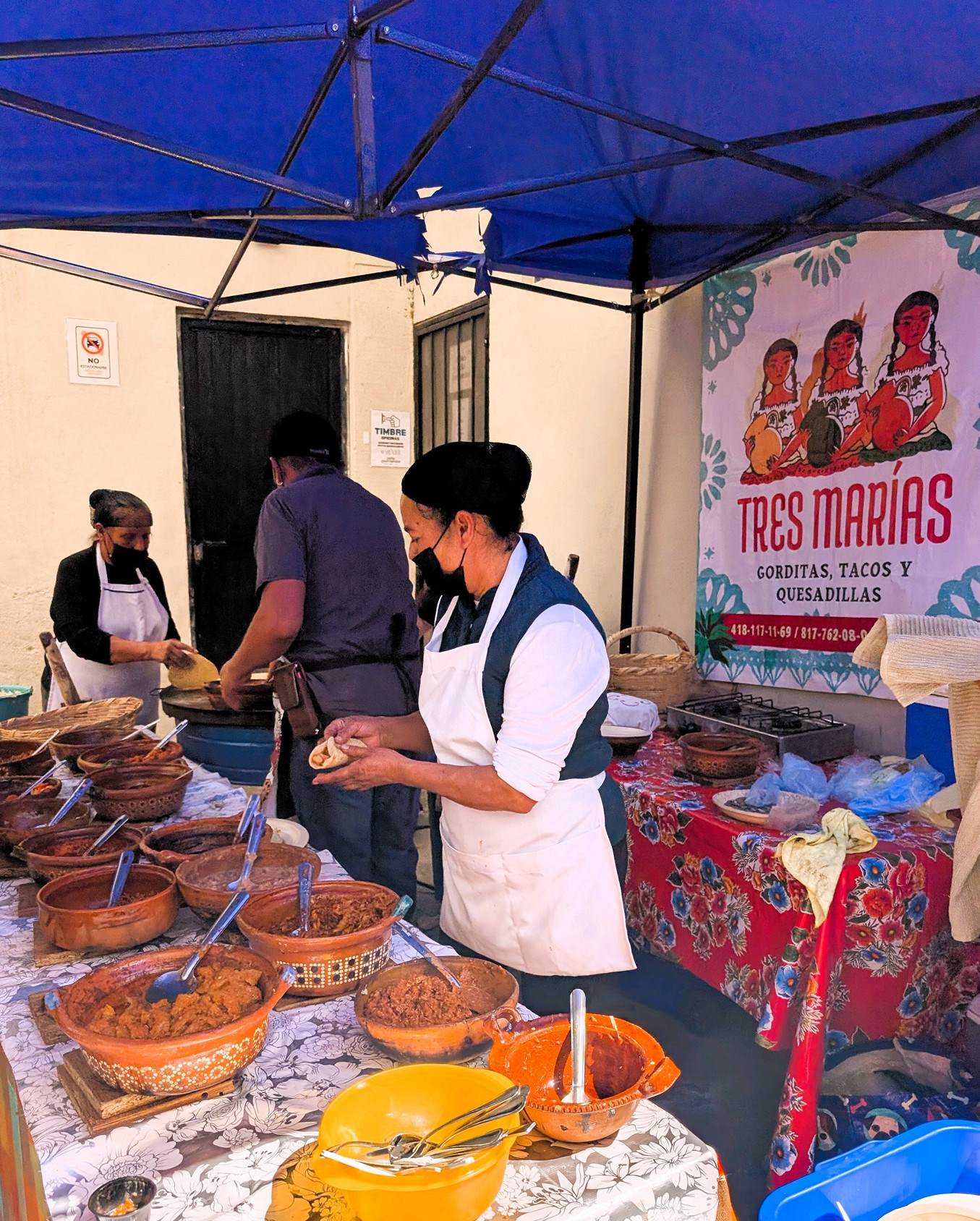
On Saturday morning we board a bus (ten pesos) to Tianguis Orgánico San Miguel de Allende (TOSMA for short), a lively weekly market, crowded with tables filled with people eating and listening to the live band or perusing vendor stalls stacked with locally made food and craft items such as cheeses, mole sauces, candles, jewelry, salsas, clothing, and even cowboy boots. For ready-made meals I could order goulash or mushroom soup at Slovak but instead opt for gorditas made from blue corn masa, stuffed with shredded barbacoa and cheese, and a green tortilla filled with refried beans at Tres Marías, a long table set with colorful pots of food.
Though the organic market is open only on Saturdays, the store in front, Mercado Sano, which has a café and sells artisan food products, is open daily and so I stock up on cream, cans of nopales, and spinach with the idea of making cream of cactus soup for dinner. I think about buying masa and making my own tortillas and then decide against it and purchase freshly made bread at La Casita Feliz, a bakery just down the street.
Lunch one day is chicken enchiladas at Café Rama, a lively spot with bright splashes of color, local artwork for sale displayed on shelves and walls, and live music. They were hosting a pop-up market that day featuring clothing, books, jewelry and Mexican folk art among the many items. Afterwards, we stroll through the nearby 250-acre Parque Benito Juarez, a calming oasis with walking paths, gardens, a kiosco or bandshell, vendors, and a few monuments to military and political heroes. Calle Aldama, considered one of the most picturesque streets in the city, is also nearby. It is lined with buildings dating back centuries, distinctive because of their Mexican colonial elements, including adobe brick washed in colors of dusty yellows, greens, tangerines, and reds, tiled roofs and steps, wide wood doors built to accommodate wagons and coaches, and flowering plants like bougainvillea growing along the exterior walls.
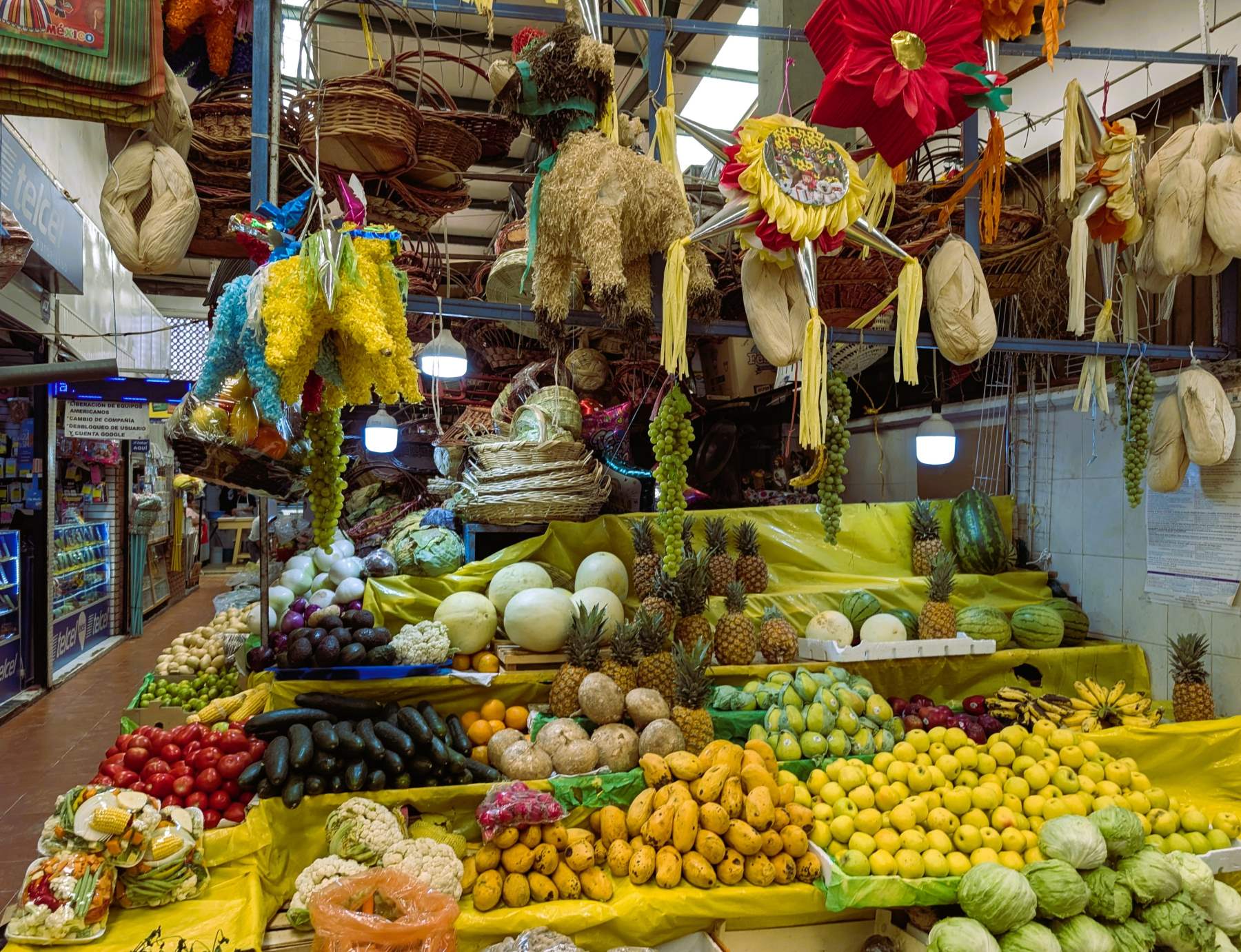
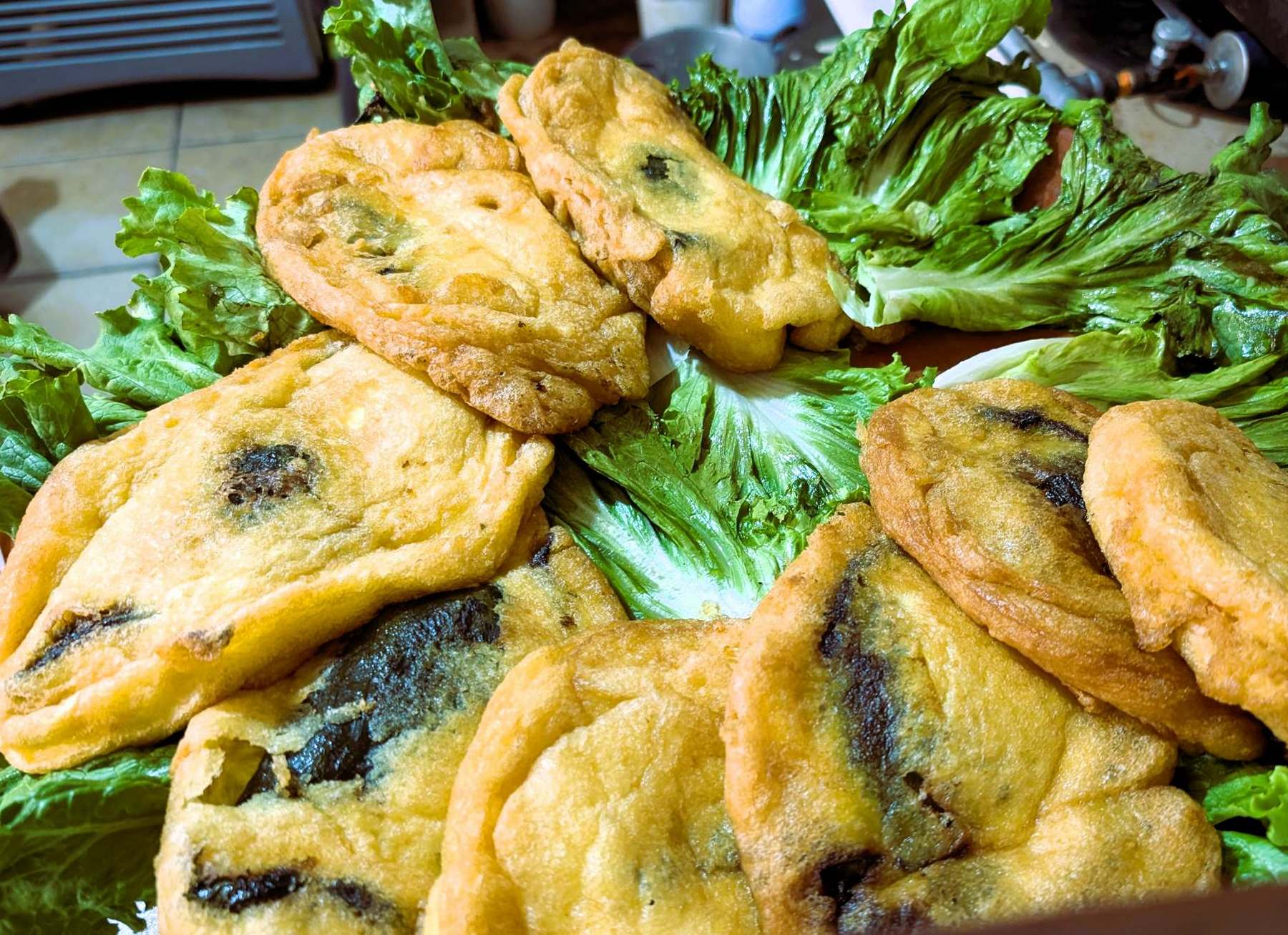
For a quick meal I turn left from the house where I’m staying and head down Callejón Blanco to a series of sprawling market buildings like Mercado de San Juan de Dios filled with merchants and their goods. Here, amidst stalls heaped with fresh produce, I can order chiles rellenos (cheese and spinach stuffed peppers dipped in batter and fried), or chicken in a dark brown mole sauce, all accompanied with rice and beans at Cocina Económica Doña Raque for about four dollars.
El Huarache Velóz, also found at the market, has been serving huarache rancheros— corn masa filled with meat, refried beans, and cheese — since 1986. At first, I was disappointed when eating the beans served in San Miguel de Allende, being used to mashed and refried pinto beans while the white kidney beans such as Alubias Blancas and Ayocote Patachete grown locally and cooked until creamy are common here.
I purchase bags of dried beans to take home and then, of course, I need a pot to cook them in. Luckily, I find a clay bean pot with decorative paintings on the sides and lid. The cost? Seven dollars. If I had room in my suitcase, I’d buy a couple more to take home. But at least I have one to capture the flavors of San Miguel de Allende.