Paolo Ferrari
Almost a quarter of your skeleton lives in your feet. Fifty-two bones. Dozens of joints. They will carry you 75,000 miles over a lifetime, enough to circle the Earth three times and usually without complaint… usually. Yet we spend most of that time ignoring them. Not to mention what lies beneath them.
The trouble is, we’re trained to look up when we travel. Up at the balconies; the colors and the skyline do their best impression of history. It’s where the postcards point. Big mistake in the Yucatán.
Here in San Francisco de Campeche, history isn’t hung on walls. It’s pressed into the ground: in grooves, gradients and wear marks that still remember the weight of cannon wheels or the rush of floodwaters. Even the strong bare feet of Maya laborers who built the walls and kept the pirates out.
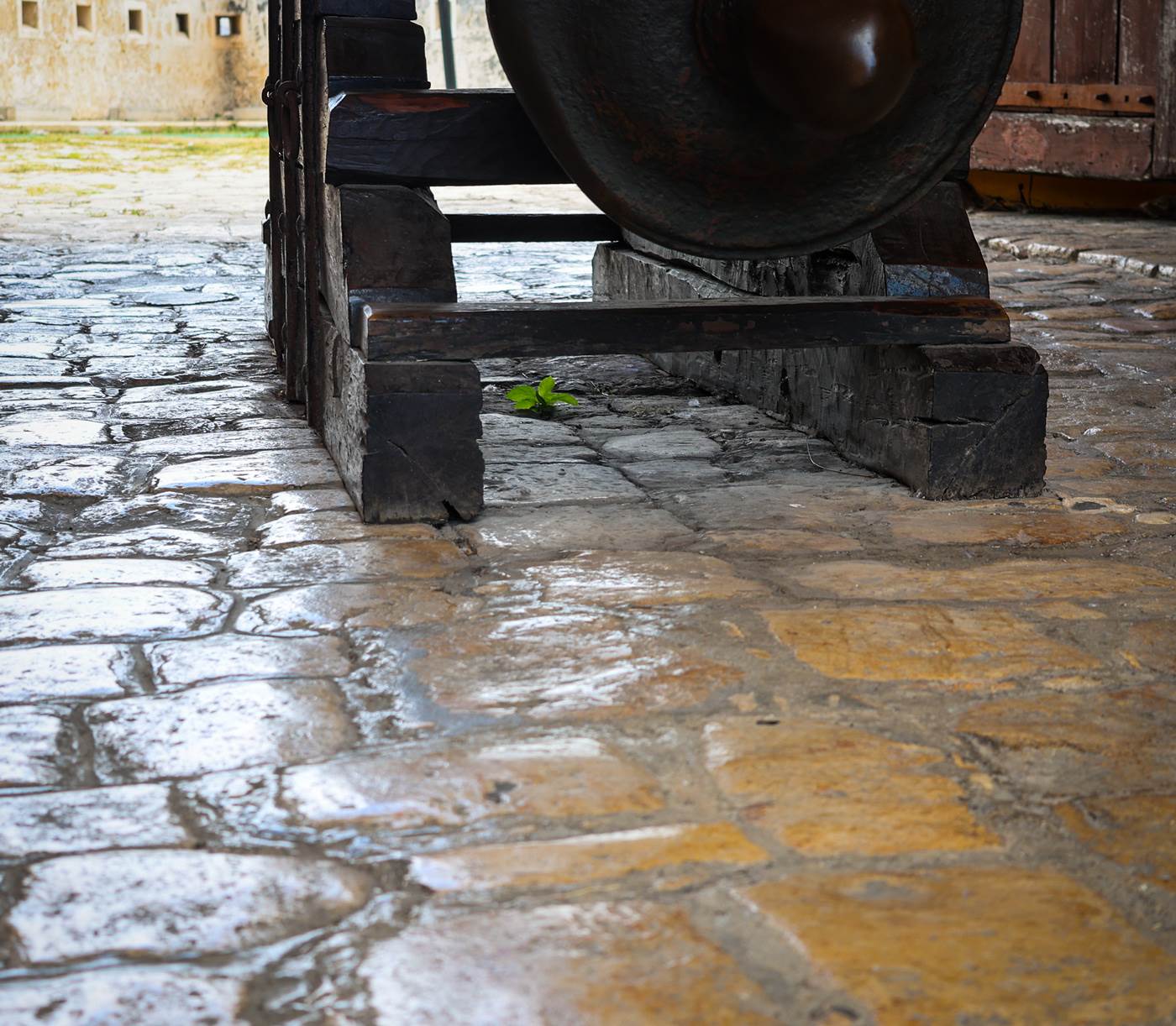
The Military Scars: The Bastions.
To walk this walled city eyes-down is to switch from viewing a painting to reading a manuscript. The historic center is a flat open-air archive but you have to know how to turn the page.
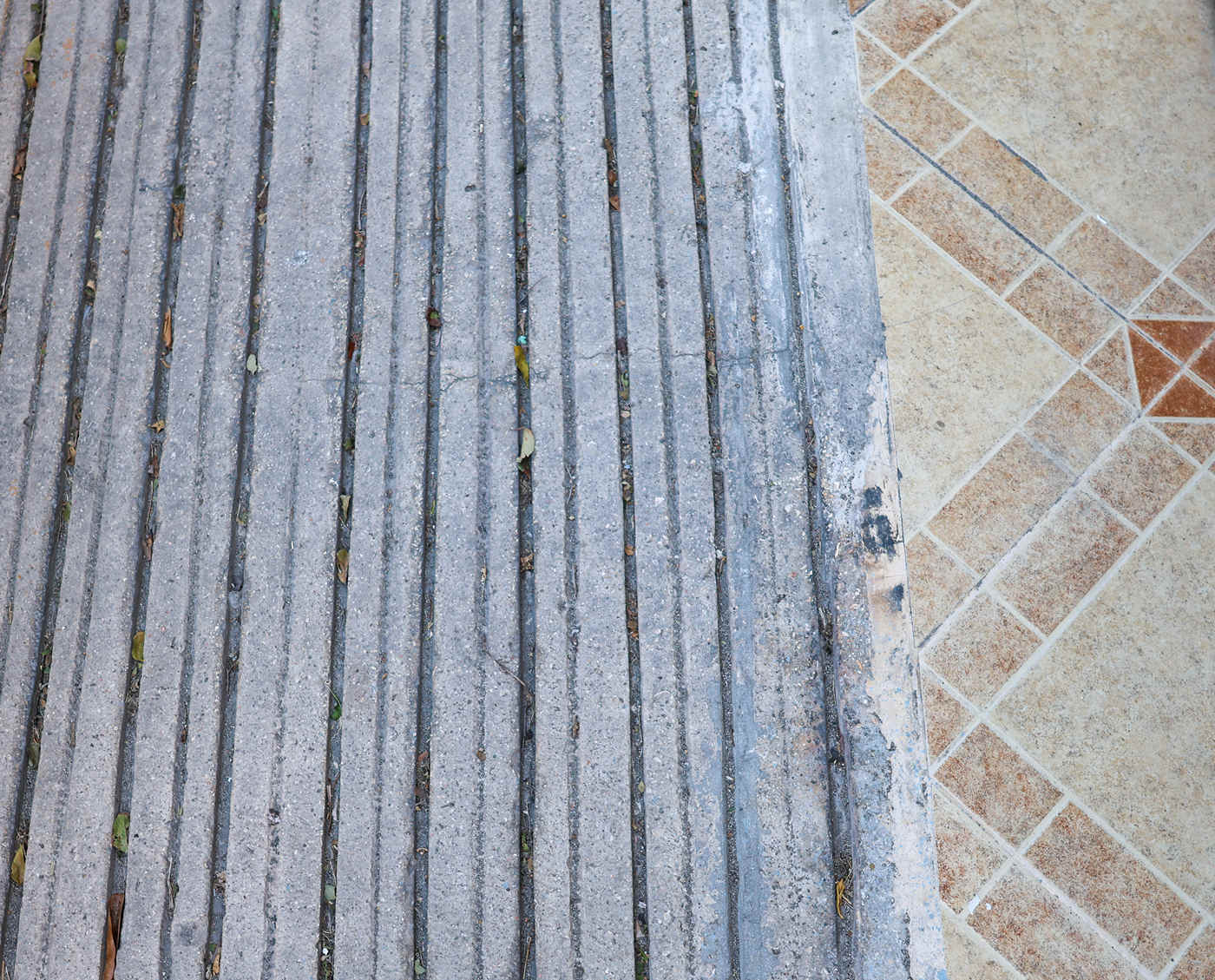
Start with the cannon wheel grooves. Near the bastions of San Carlos and San Juan, the stone pavement isn’t just uneven. It’s scarred and beautifully lived. Look for the parallel, deep-set furrows carved into the limestone thresholds. These aren’t cracks or erosion. They are the industrial graffiti of the 18th century. Over hundreds of years the heavy iron-rimmed wheels of Spanish artillery dragged back and forth during drills and defense preparations. Run your finger along one and you are tracing the exact path of a soldier’s maneuver from 300 years ago.
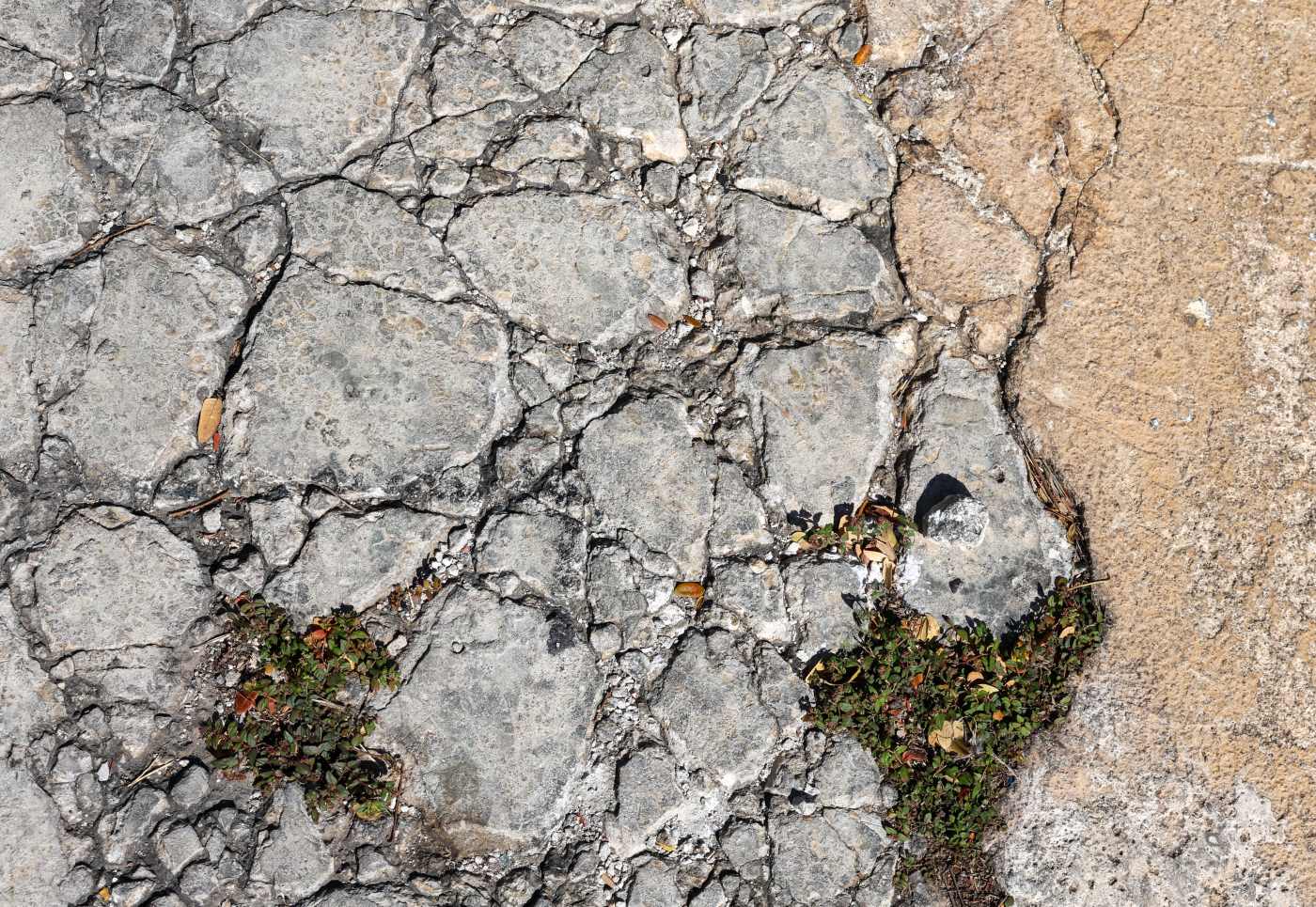
The Battle Line (The Malecón)
From the bastions, make your way to the Malecón de San Francisco de Campeche, the seawall that rims the city. Here, the ground beneath you shifts from being a foundation to being a shield.
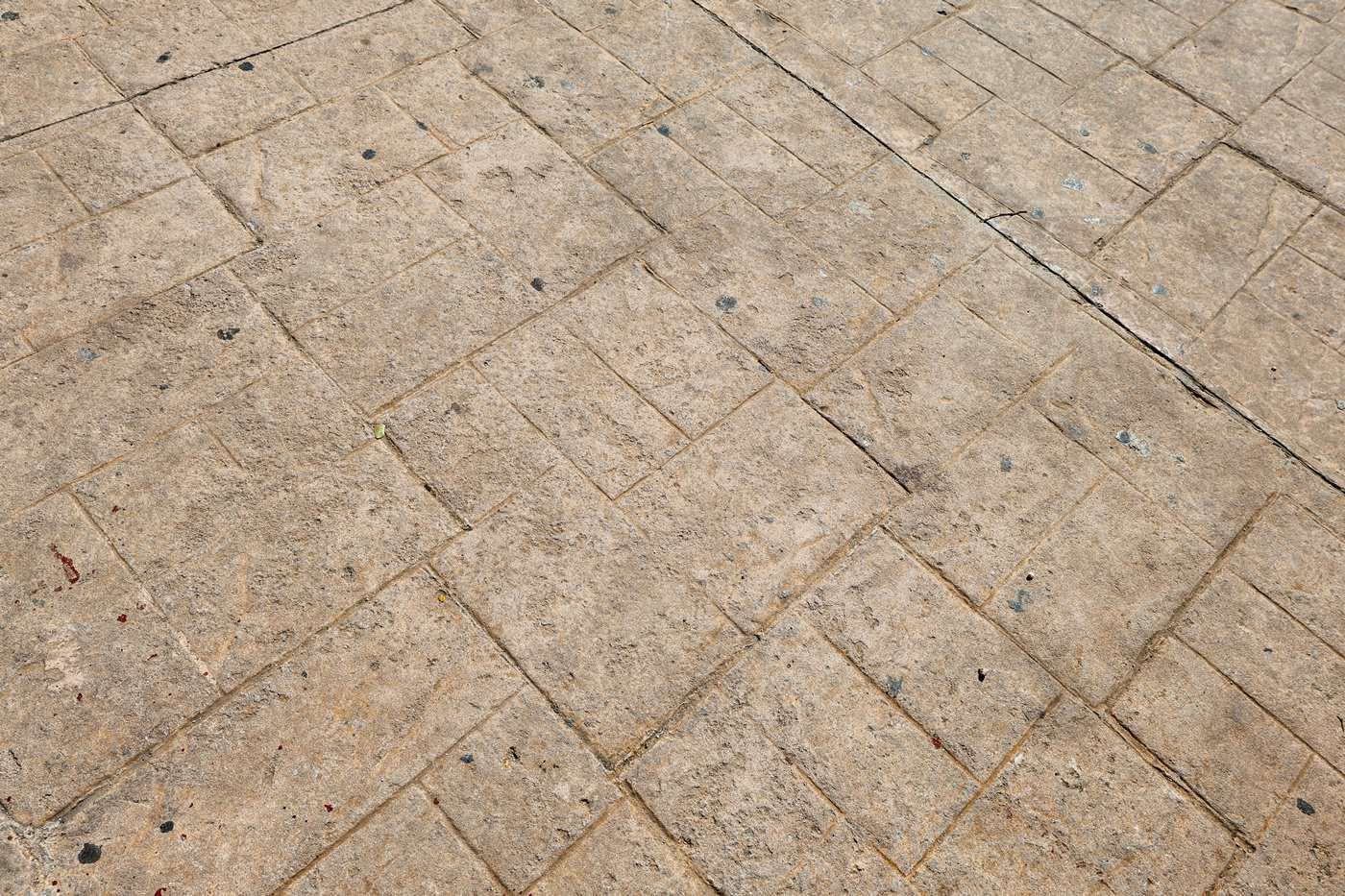
Walking along the Malecón is a tactile lesson in standing your ground against the Gulf of Mexico. Look at the texture of the pavement where it meets the sea wall. You’ll often see a rougher, more pitted surface. Concrete and stone that has been sandblasted by centuries of salt spray and crashing waves. Notice how the paving stones are laid in tighter, more interlocking patterns than in the quiet interior streets. This was a necessity to prevent the waves from lifting the floor of the city during a storm. Now, you aren’t just walking on a sidewalk you are walking on a buttress. Every step you take here is on the front line of Campeche’s perpetual battle against the sea.
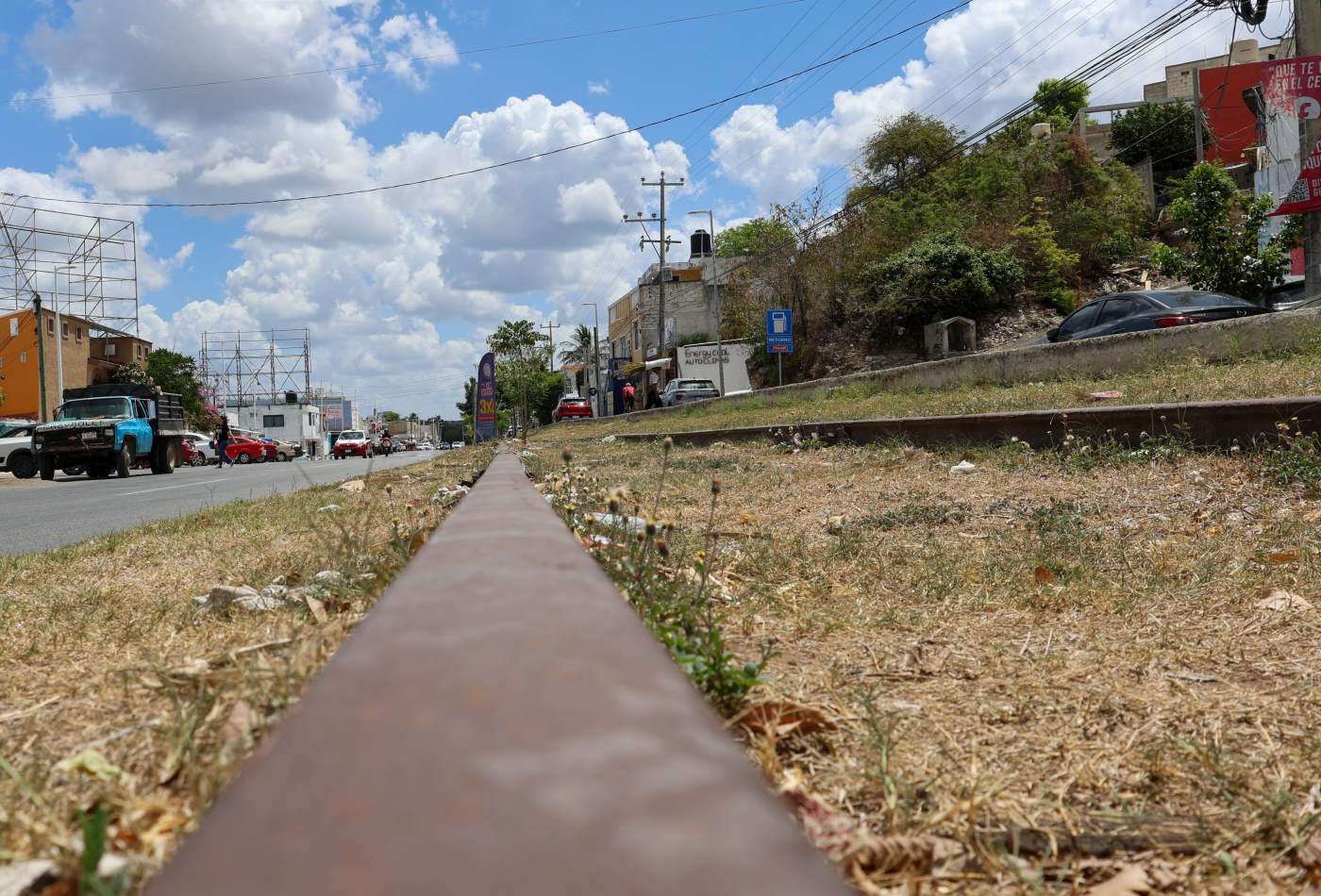
The Industrial Veins (The Ghost Rail)
Step just off the main promenades and into the streets that feed the old market and you might stumble upon Campeche’s industrial ghosts.
For decades, the city pulsed with the rhythm of the railroad. The steam engines are gone but their iron veins still run through the asphalt. Watch for rusted, semi-sunken tracks, with grass pushing up around them as the steel endures.
These tracks are the remnants of the Ferrocarril de Campeche, a line that once hauled precious logwood, henequen, and sugar from the interior jungles straight to the ships waiting in the port. When you see these rails cutting across a modern street, imagine the vibration of the heavy loads and the screech of brakes that once defined this soundscape.
The Merchant’s Rhythm (The Portales)
Move away from the rails and toward the commercial arteries of the historic center and the texture of the city shifts from industrial grit to mercantile polish. Here, the ‘living archive’ tells the story of trade, wealth and the relentless rhythm of the port.
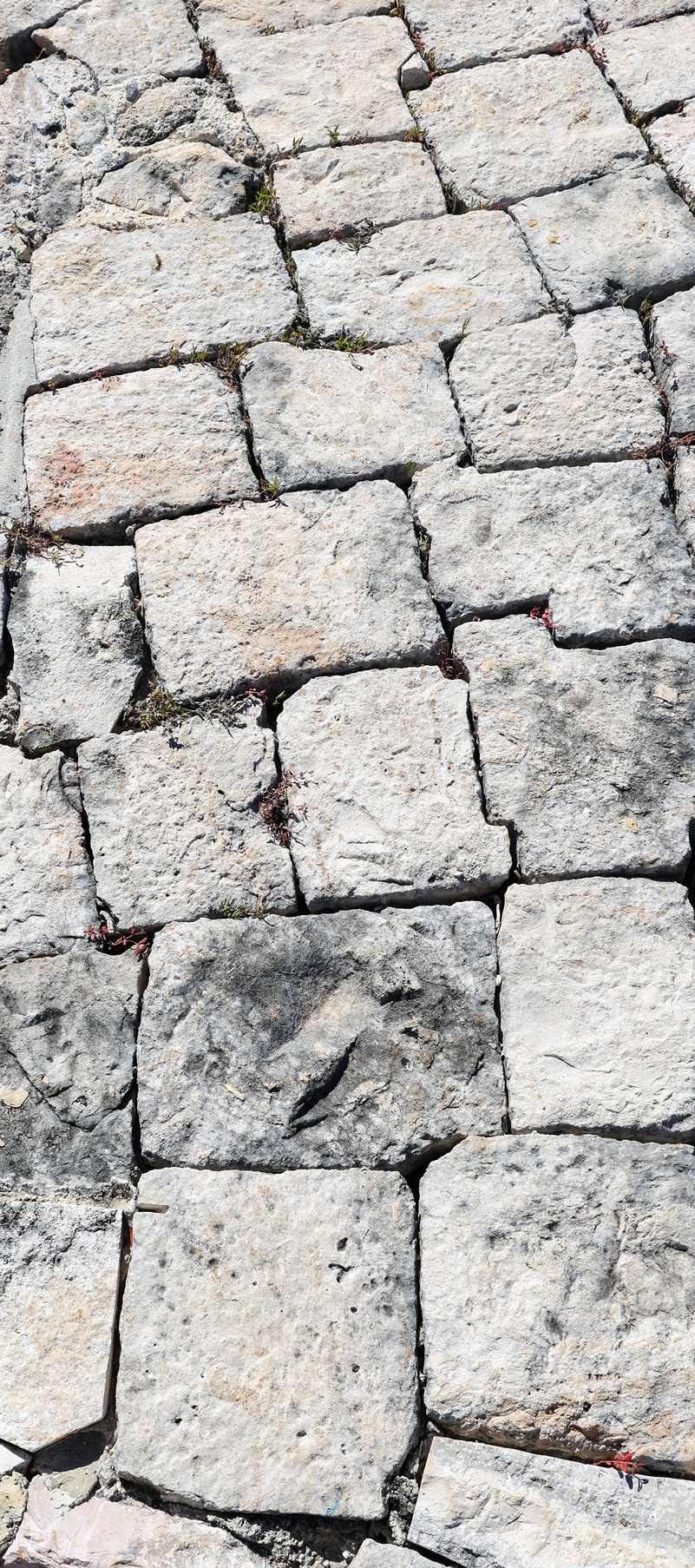
Look closely at the cobbles or adoquines under the traditional portales (arched colonnades). Unlike the jagged, military-grade stone near the walls these stones are rounded, smoothed by centuries of friction. Not just weathering; it is the physical accumulation of commerce. If you shift your gaze to the center of the street you’ll often notice a subtle concavity; a dip in the road surface that mirrors the path of the cart wheels. In Campeche’s heyday these streets hummed with the sound of heavy wooden carts loaded with dyewood, logwood and sugar cane rolling toward the harbor.
The stone hasn’t just been worn down; it has been shaped by the very cargo that made the city rich.
The Residential Thresholds (The Vertical Gradient)
To truly ‘read’ the street, you have to look where the private world meets the public one: the threshold.
Campeche’s distinctive architecture.Those high, pastel-colored walls create a dramatic verticality but the ground level reveals the practical engineering of daily life. Examine the base of the colonial mansions along calle 59 or calle 8. You will often see a distinct ‘zócalo’ (architectural socle) or baseboard made of polished stone or cement that rises about a foot or two up from the ground.
Traditionally, these baseboards protected the buildings from the Gulf of Mexico’s humid, salt-heavy air-conditions that would otherwise wear away the lower sections of lime-plastered walls.
Then, lower your eyes to the doorsteps. Many of the heavy wooden double doors sit atop massive, single-block stone sills. Look for the hollows worn into the center of these stones. These are ‘foot-worn depressions’ carved out over hundreds of years by servants, merchants and family members crossing the threshold. To run your hand over one of these smooth, bowl-like indentations is to touch the exact spot where thousands of people have stepped out to start their day for centuries. It is a communal handshake across time. A crucial footnote in the story of a place that no political shift or social change has managed to erase.
And yet, we travel in search of skylines and facades, treating cities like museums where the art is hung at eye level. But San Francisco de Campeche much like the rest of Mexico, requires a different kind of attention.
It wants you to engage your 52 bones, 8000 nerve endings, 75.000 miles of average foot travel at a soul level. A tactile sensory journey your sense of wonder will thank you for.
So tomorrow morning, fueled on lechón tacos or better yet huevos motuleños, as you leave your hotel, resist the urge to look up at the balconies. Keep your eyes on the asphalt and the stone. Look for the cannon grooves, the cart-ruts and the ghost of the rail lines. You’ll find that the ground isn’t just something you stand on, it’s a guide. It’s the key that unlocks the wonders of a country that wears its character into its surface. If you learn to read the grooves and gradients, you’ll realize you aren’t just walking down a street; you’re walking through the pages of history.
Published or Updated on: April 14, 2026 Paolo Ferrari