
Paolo Ferrari
Men are strange creatures. On the hazy fumes of a drunken evening, they will compete over anything: V8 vs. V6 engines, grill surface area, lawn stripes and, after sufficient cerveza, even personal appendage metrics.
But in a brightly lit taquería, when the conversation behind me turned to hammocks, I couldn’t help overhearing. For research purposes, obviously.
‘Handwoven cotton.Totally breathes.’
‘Oh yeah? So does my T-shirt, hermano. Doesn’t mean I sleep in the backyard.’
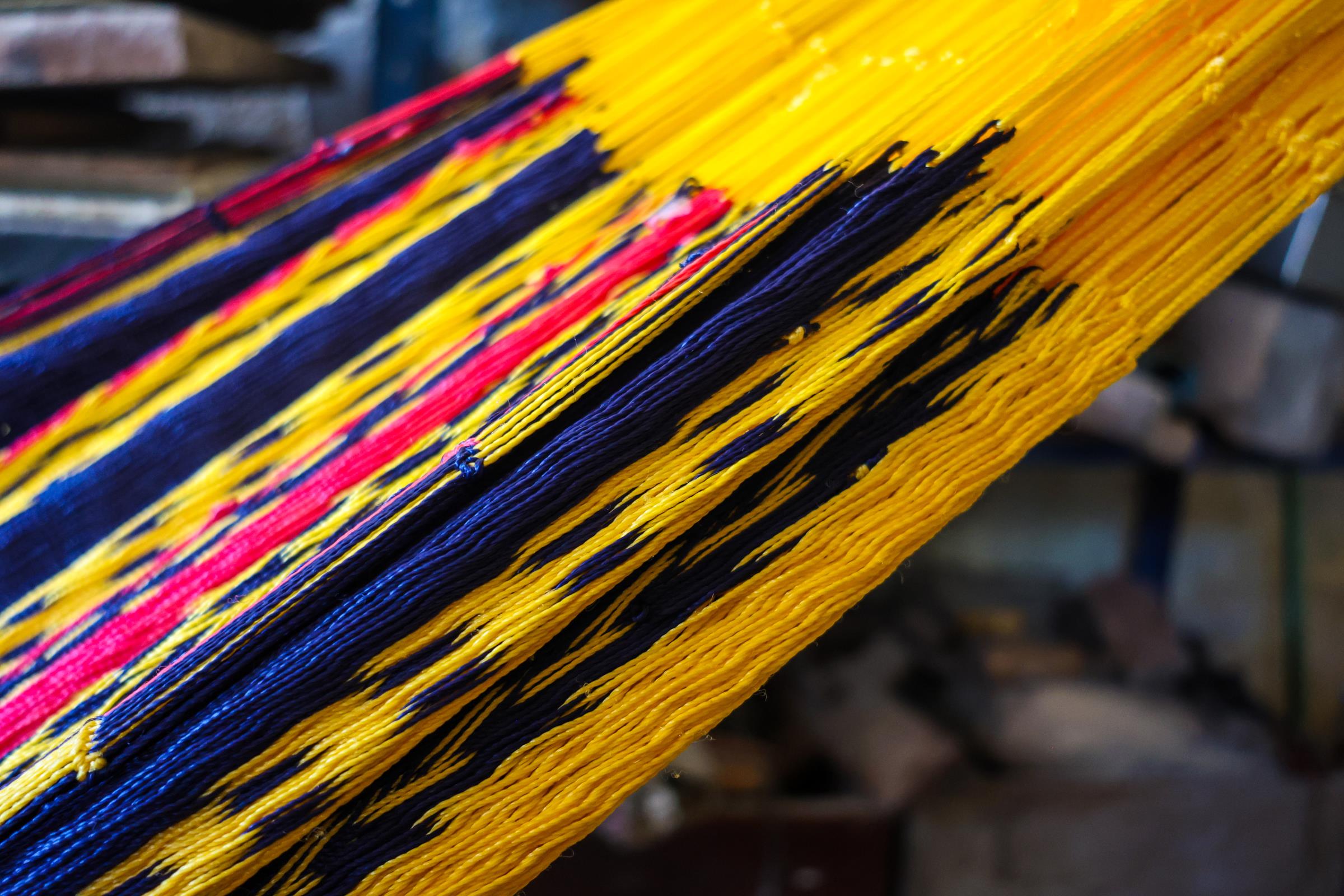
That was enough to pique my curiosity. From that day on, the tiny workshop I passed each morning refused to remain background scenery: thick brick walls, shadowed interiors, sudden bursts of color.
Living room hammock workshop
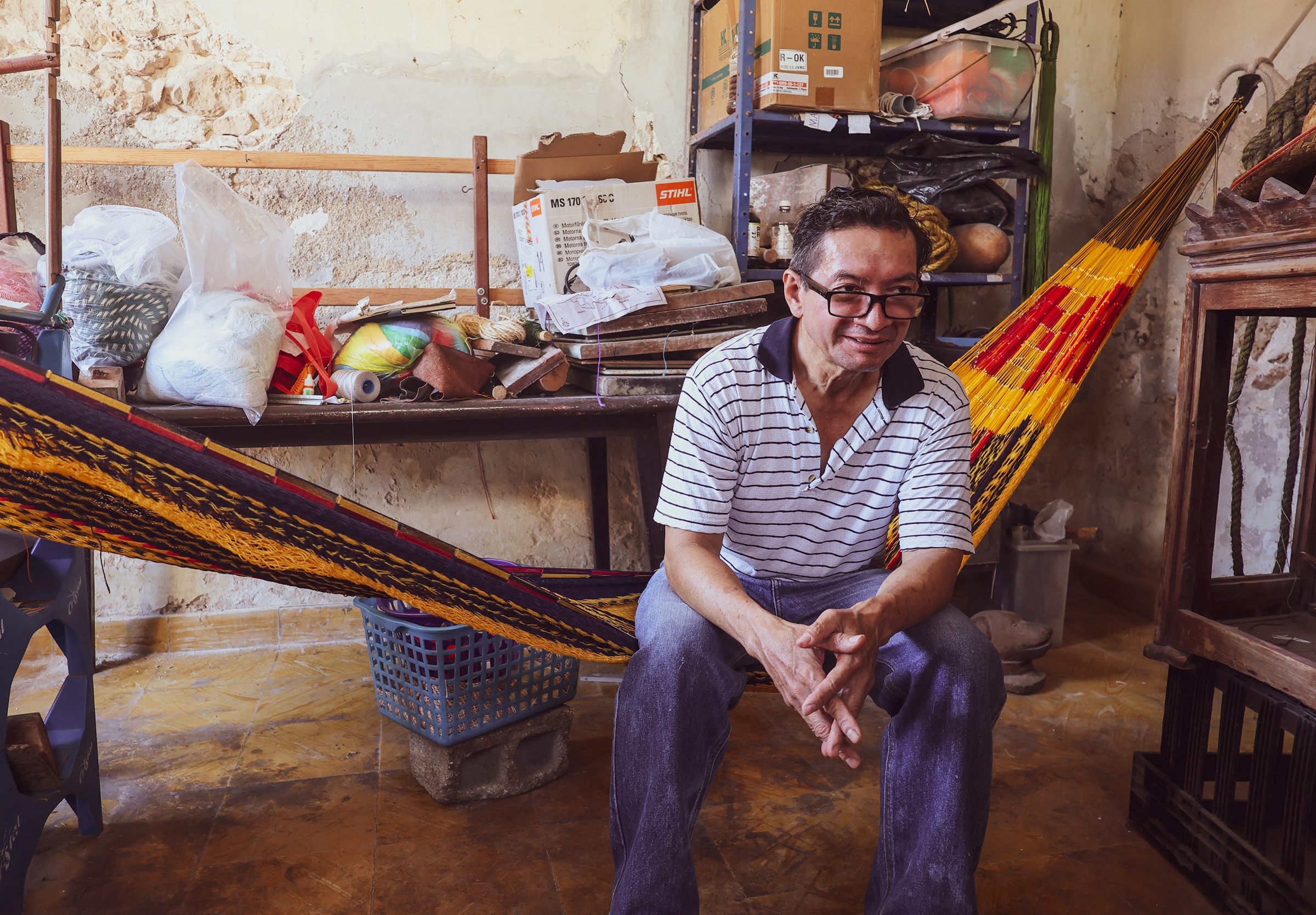
It was here, deep in the barrio of San Jose, just minutes from the tourist-trodden historic center of Campeche that I found Reene Bera, a third-generation hamaquero. On a pleasant midweek morning, he invited me into his home where the living room and workshop blur into one.
Inside, time settles gently, patient beside the seasoned craftsman.
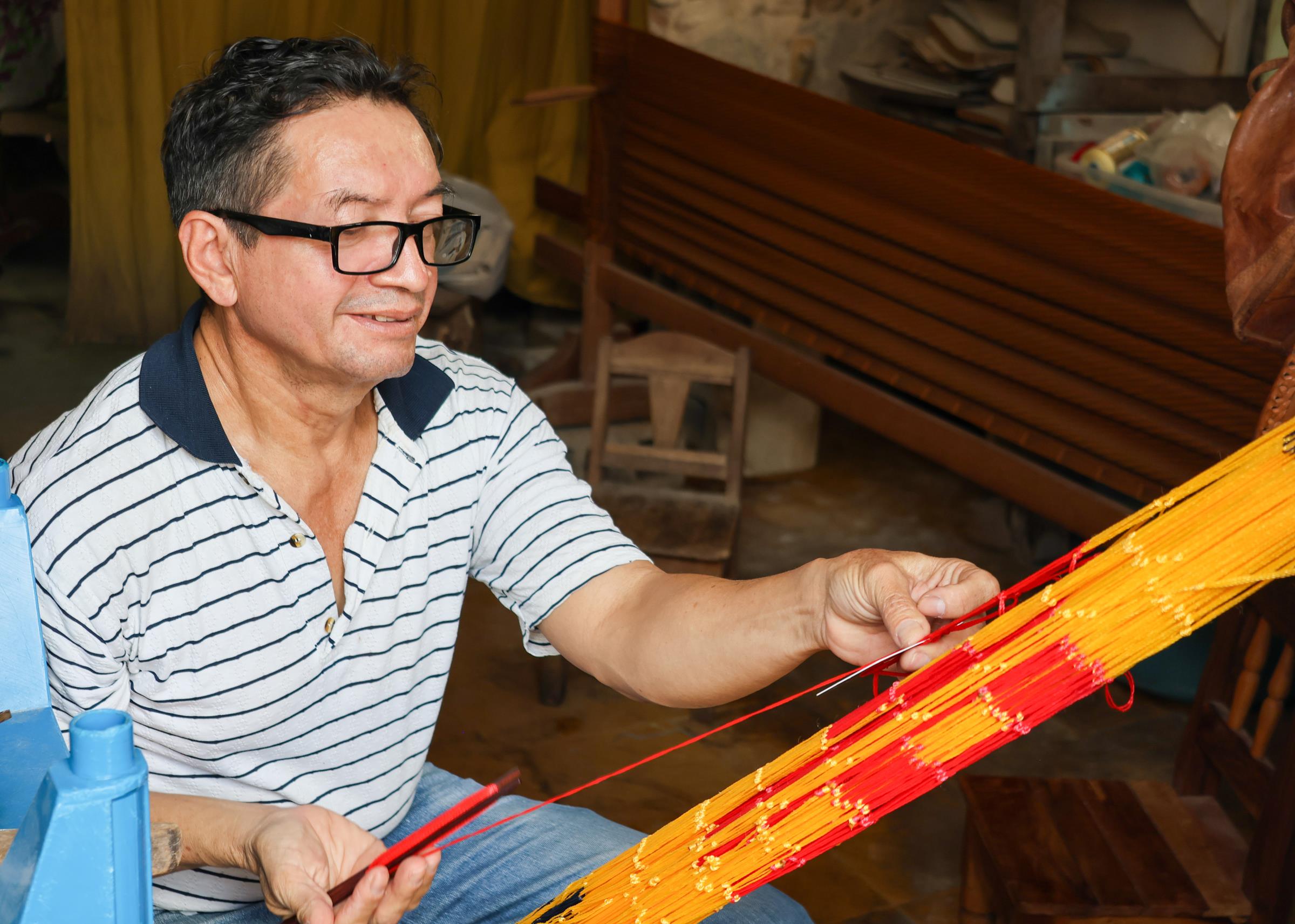
Reene worked seated within the contemplative geometry of his craft, resting in a half-finished hammock as he wove. Slender and soft-spoken, his face shaped more by decades of concentration than hardship. His hands are the stars: lean, muscular and terrifyingly precise.
Under a wooden bench lay Perrito, the workshop’s unofficial quality-control supervisor asleep with stoic commitment. He did not stir at the percussive clack of the frame nor at my arrival, suggesting either supreme trust in the craft or a lifetime immunity to Mexico’s urban soundtrack.
‘If these walls could talk,’ Reene said with a shy smile, ‘they would tell you how many mistakes live here.’
He wasn’t talking about the house, but the craft. Within those four walls lay years of invisible apprenticeship: broken threads, misjudged tensions, errors that forged mastery.
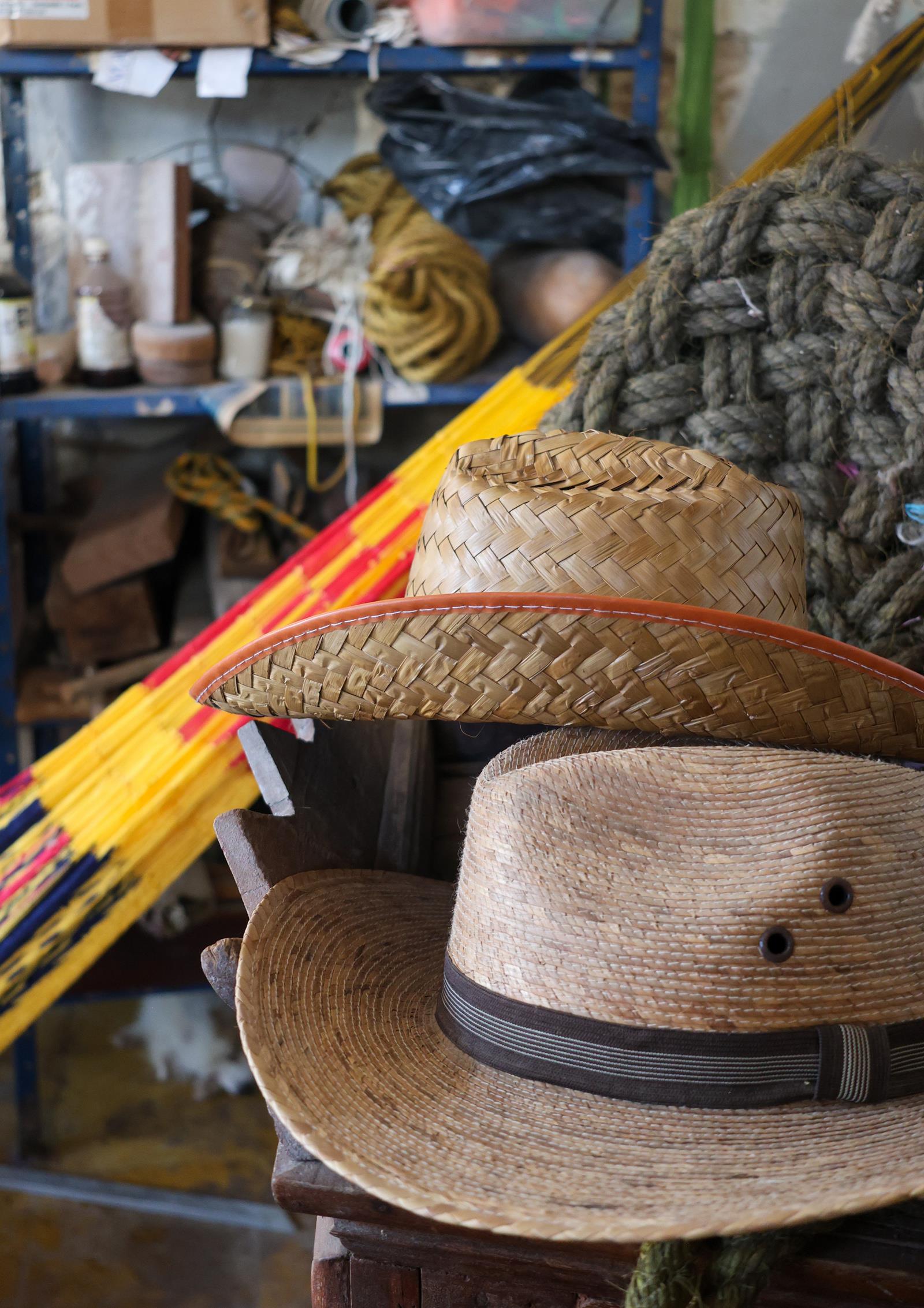
Third-generation hammock-maker
His journey wasn’t linear. Hammock weaving had been second nature to his grandfather in Yucatan. As a child, Reene roamed the workshop, absorbing the rhythm of the craft without knowing he was learning. Outside, he played football in the street with a rag ball like the other boys; inside, thread and tension entered his hands.
Yet the inheritance skipped a beat. His grandfather later dedicated himself to selling hammocks rather than weaving them and Reene remained an observer. Close enough to understand the idea, distant enough to forget its language. Life carried him elsewhere until necessity forced his hand.
‘When something is not practiced, it is forgotten,’ he admitted. ‘You have the idea but you forget it. Life itself takes you to different circumstances.’
He relearned the trade not through lineage alone but through the blunt insistence of survival when other doors slammed shut.
I watched him work. The labor is a collection of small punishing repetitions: shoulders pivot taut, back braces constant, feet anchor as knots pull vise-tight. Too loose, it sags. Too tight and it snaps like haste.
‘Was it a calling?’ I asked. ‘Something in the blood?’
Reene let out a cackle. ‘I was broke,’ he said. ‘I had no choice.’
Refreshing honesty. While we romanticize a dying art, Reene sees livelihood. He returned to the loom twenty-five years ago when options vanished. Destiny, often, is survival’s last knot.
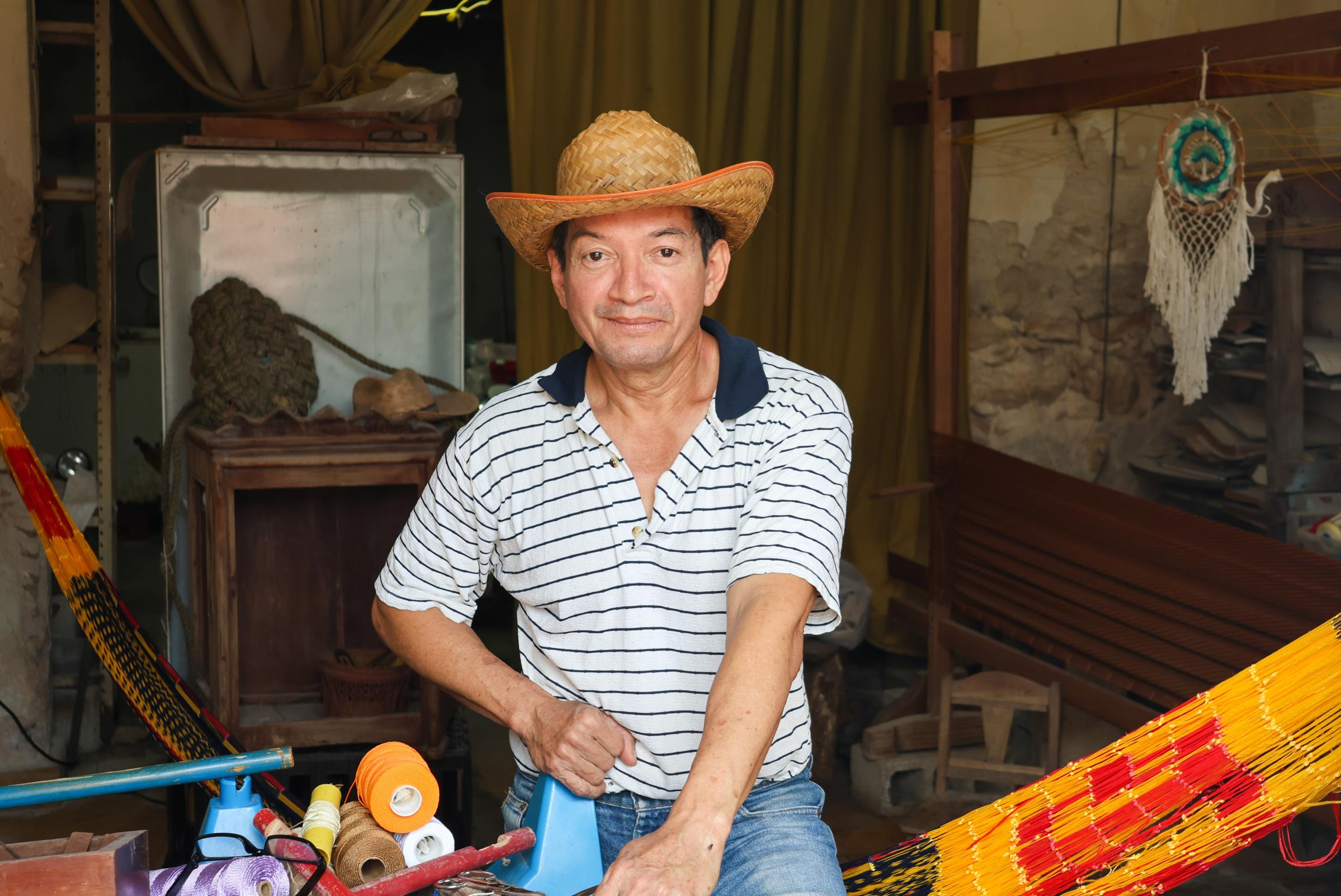
Patience is a virtue
Today, he works at a pace that would alarm a factory foreman. A full-time weaver might finish one in a week; Reene, balancing custom orders and repairs, stretches the process over months.
For those with great skill a hammock takes a week,’ he explained. ‘In my case, I do it little by little. It can take several months because I only dedicate a little time.’
‘The work is not compensated,’ he said plainly, hands dancing on. ‘You cannot charge for every hour, every knot or no one in Mexico could afford sleep.’
He broke down the math.To make a single high-quality nylon hammock requires roughly twenty rolls of thread. At thirty-five pesos each, materials alone approach seven hundred pesos. Add the cowhide spreader bar, costing around two thousand pesos, weeks of labor, and the arithmetic becomes sobering.
Factory hammocks sell for pennies. His, built to last decades, struggle to find buyers who understand their value.
‘The cost does not match the labor,’ he sighed. ‘If I charged minimum wage for the days I spend, the price would be higher than buying a new one.’
Handmade’s economic tragedy is palpable. Yet he speaks without bitterness.
‘They’re good,’ he said of factory models. ‘They cover a social need. In the southeast heat, if you have low resources, you buy the inexpensive version. It will last a few years, not a lifetime, but it covers the need.’
Lifespans tell the truth: machine-made nylon yields after years in sun and strain; Reene’s cotton can last thirty; his handwoven nylon, sixty.
Consequently, he has become a custodian more than a salesman favoring repairs to extend a hammock’s life. People bring him worn slings from Mérida, Ciudad del Carmen, even Chetumal.
‘I check the wire to see if it breaks,’ he said. ‘I look at the age of the hammock. I tell them if it is worth saving.’ Nothing goes to waste. ‘The important thing,’ he added, ‘is that it’s enjoyed and shared. A hammock is for family.’
In southeastern Mexico’s punishing heat, it is no boho patio accessory. It is a biological necessity, strung low to capture moving air.
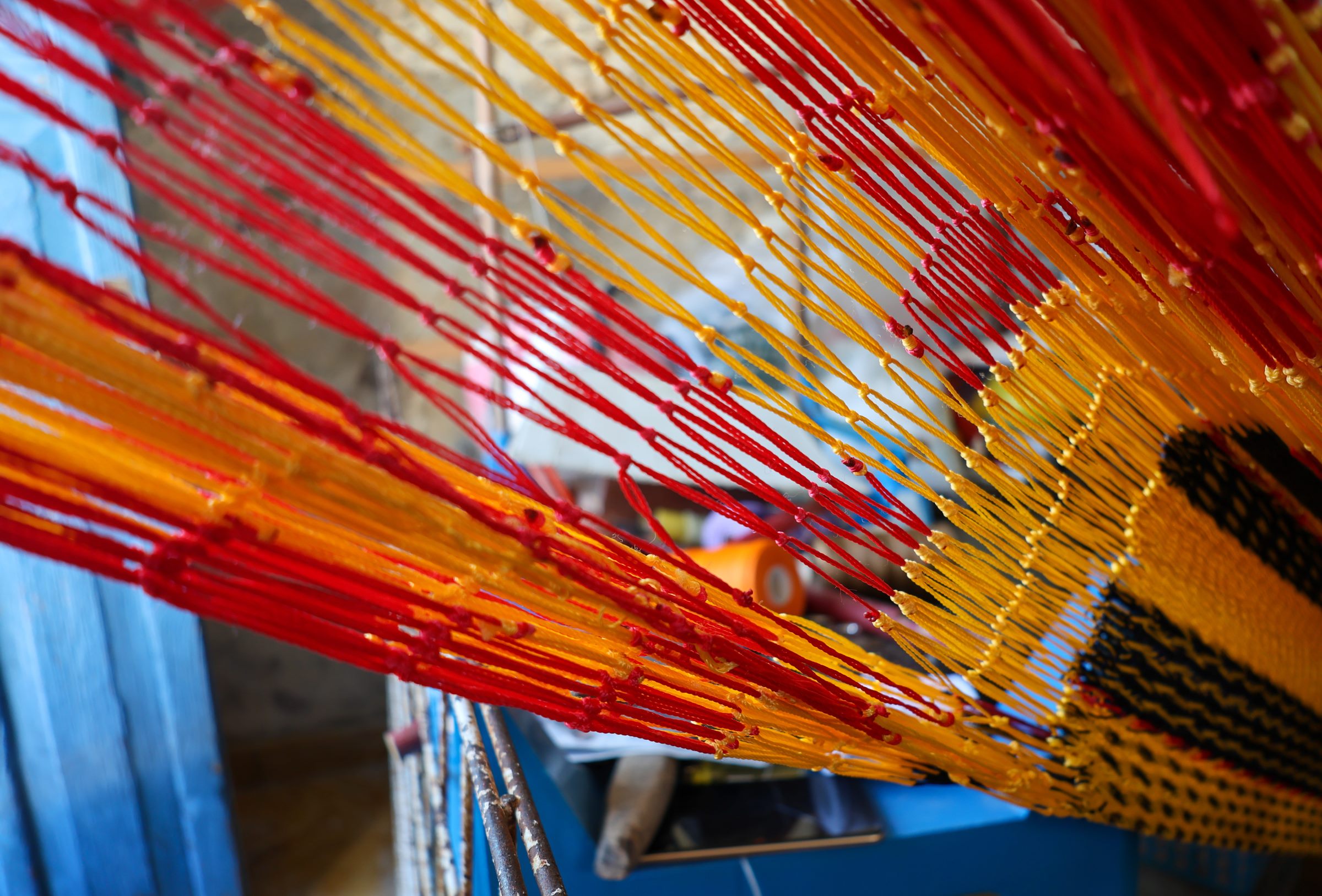
‘I cannot afford to be an artist,’ he laughed. ‘It takes too much time and they won’t pay for it. I copy what works. I look for weight balance, knot durability, and reliable suspension. Beauty in equilibrium.’
He respects objects fiercely, buying fellow artisans’ wares to study their ingenuity. ‘Can this knot withstand the future with the same pride as designed?’ he asks himself.
A dying art?
Few hamaqueros remain. Cities and quick cash lure younger generations away from the loom. Yet Reene shrugs off predictions of extinction. He still goes door-to-door offering repairs, relying on word of mouth that travels faster than traffic.
‘They recognize me,’ he said. ‘Friends tell friends. It is beautiful work.’
‘I’m sure they’ll endure,’ he added, eyes fixed on the threads. ‘It is not the same to sleep in a bed as to sleep in a hammock. You don’t take your bed out to the patio to refresh yourself. You take out a hammock.’
As long as it is hot, he believes, people will need them.
As I left, the midday heat pressed against the streets like a physical weight. Inside, the air remained cool, dense with patience. A hammock holds more than a body: it holds the sweat of the maker, a grandfather’s memory and the hard math of survival… all tied together, one deliberate knot at a time.
Published or Updated on: March 10, 2026 Paolo Ferrari