Comprehending shamanism in the Huichol world
Shamanism is humanity's oldest form of relationship to Spirit. As such, it is the underpinning beneath all religion. But shamanism is not a religion. It is a complex set of practices, beliefs, va...
read more
The Huichol people of Mexico and their symbols
Deer. Maize. Peyote These are the most important symbols for the Huichol. They represent a culture in transition from hunting and gathering strategies to that of a sedentary agrarian lifestyle.
read more
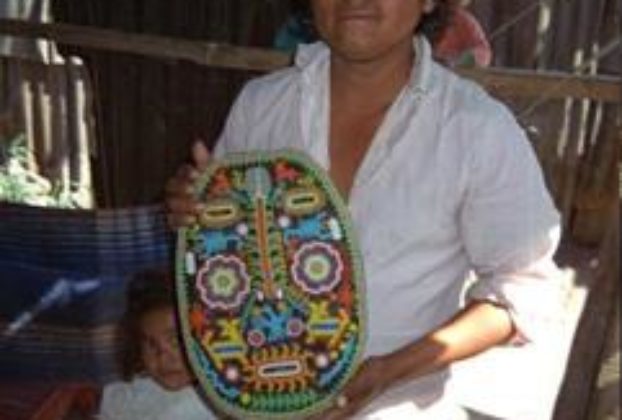
Huichol artwork: masks
The masks are like mirrors that reflect the patterns of face paintings worn during sacred ceremonies. The Huichol people understand themselves to be mirrors of the gods.
The Huichol people believe tha...
read more
Huichol artwork: celestial things
The eclipse has special meaning for the Huichol, because it represents the eclipse of July 11 1991 at 10:21 A.M. Pacific Coast time. This is the sixth sun according to the ancient Meso-American Calenda...
read more
The Huichol of Jalisco and Nayarit
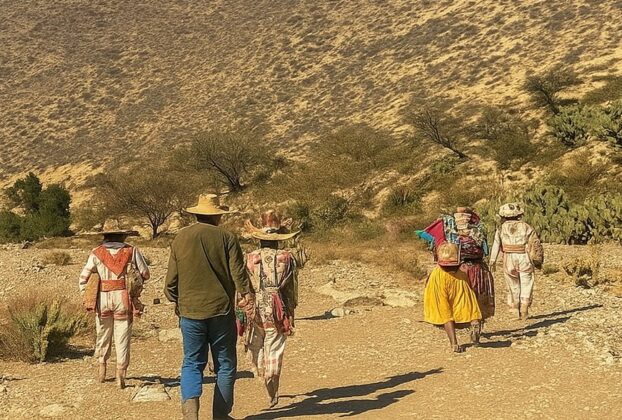
The Huichols are a hearty and enduring people numbering about 18,000, most of which live in the Jalisco and Nayarit, two rugged and mountainous states in North Central Mexico.
They are descendents of ...
read more
Symbolism used by the Huichols
Tacutsi Aramara, the Goddess of Life, is the Mother Goddess. From her have sprung all life forms; humans, animals and plants. Tacutsi not only gives life to all she nurtures, but teaches a manner of li...
read more
Huichol shamanic art
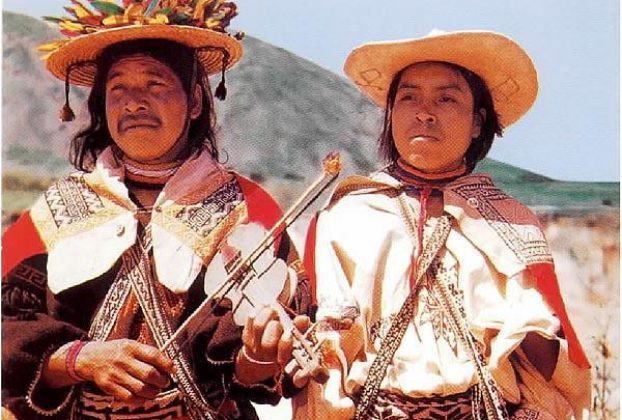
The Huichol People of central Mexico still follow the age-old shamanic ways of their ancestors, an unbroken wisdom-bridge stretching back into the Paleolithic. The mara'akame, the shaman, still leads p...
read more
Huichol literature
"The Earth is sick and dying. The lands of the Huichol Indians,
hidden high in the remote Sierra Madre mountains of northwestern Mexico,
are dying. The forests are shrinking, water is b...
read more
The Huichols: a culture in transition
A Message From Susana Eger Valadez, Director,
The Huichol Center For Cultural Survival And Traditional Arts
Dear Friends on the Internet:
Thank you for your clicking on us to find out about t...
read more
Symbolic Huichol Art: Journeys of Vision
As I walked through the gardens of La Nueva Posada, my eyes were riveted on the young indigenous girl seated on the garden wall. Her vivid yellow skirt and blue top reminded me of our magazine's masthe...
read more
Huichol Indians: their art and symbols
Deer and wolves that speak to man, arrows that carry prayers, serpents that bring rain or impart skill in embroidery, pumas that are messengers of the Gods — are all real in the Huichol beli...
read more
Mexico is a noisy place
Mexico is a noisy place. Unless your cave is very high up the mountain, far beyond human habitation, noise is an integral part of your life.
Certain kinds of noises are universal, occurring with equ...
read more
The Preclassic or Formative Period ( 1500 BC - 300 AD )
The Formative Period begins with the first appearance of pottery and ends with the rise of the Teotihuacan and Mayan civilizations. It was an epoch marked by the emergence of effective agriculture, the...
read more
The Post Classic Period ( 900 - 1521 ) Part 1
While data on early Mesoamerican cultures has been deduced primarily from archaeological evidence, historians have utilized the written records of later cultures to produce the final chapters of pre-hi...
read more
The Classic Period (300-900 AD) Part 2: Cholula
The most important center of the Mexican highlands after the fall of Teotihuacan was Cholula, near the twin volcanic peaks Iztaccihuatl and Popocatepetl and the city of Puebla. The Great Pyramid there,...
read more
African Roots Stretch Deep Into Mexico
March 3, 1996 -- In Mexico, various Indian peoples still play ancient instruments. And their songs and dances -- which tell of uprisings against their masters -- pay tribute to their ancestors.
The...
read more
Beliefs of Mexico's Huichol people: Responsible Ecstasy
Ecstasy is a real human need...
a state of consciousness beyond concept.
And if it does not come through... in positive ways...
it's going to come out in violence.
— Elizabeth...
read more
Mexico's Native American peoples and the global economy
I wrote his in early 1995. Thankfully, the decency and good will of the average Oaxacan had not vanished along with their purchasing power and hopes for the future.
Teen age gangs, on the rise, have m...
read more
How to survive - and stay - in Oaxaca
This was written in 1994. How to survive - and stay - in Oaxaca, were very much on my mind. (The picture is of the Oaxaca State Band playing their Sunday concert in the zocalo.) Photography by Diana Ri...
read more
Guadalupe and the way of the Huichol
The Huichol way is the way of the Heart. Of utmost importance to the awakening and development of the heart is the sacred Peyote. Peyote looks like a cactus and grows wild in the desert. It has been us...
read more