Jicama: a sign of changing culinary seasons in Mexico
A native of Mexico, Central and South America and Asia, the jicama has been part of the Mexican diet for centuries. Culinary anthropologist Sophie M. Coe tells us that jicama "was almost always eaten raw and praised for its cool crispness" by the Aztecs. The Maya, in whose diet root crops were prominent, mention jicama in the Book of Chilam Balam of Chumayel.
read more
Dancing Alone in Mexico from the Border to Baja and Beyond by Ron Butler
Here's a book of travel essays from a man who obviously admires this country. He's covered Mexico from coast to coast and from north to south in a criss cross journey that's well described here. Thus we get informed accounts of places like Cuernavaca, Puerto Vallarta, Oaxaca, Mazatlan and so on, along with a lengthy look at Mexico City. But rather than simply giving us the usual guidebook account of a place, Butler finds all kinds of interesting facets and people, too, wherever he goes. Along the way you're also treated to history, politics and whatever attractions are available locally.
read more
Karen Hursh Graber: Menu & Kitchen Consulting, Food Research, Cooking Classes & Mexican Cuisine Presentations
The fields of Menu Consulting and Food Research/Writing have, in recent years, expanded to include information on culinary traditions and ingredients on an international scale. Economic globalization,...
read more
From The Halls of Moctezuma: Cooking with Leaves
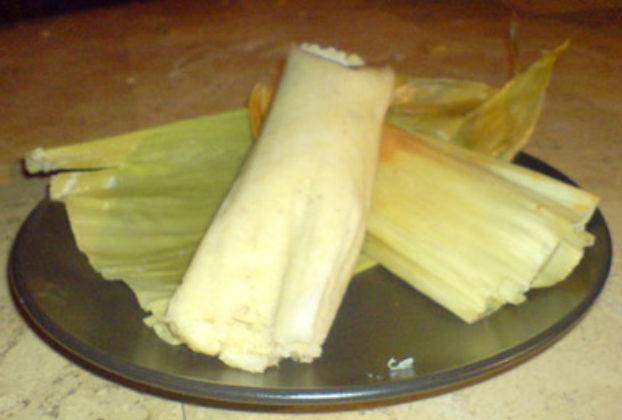
One of the earliest food preparation techniques in many parts of the world was wrapping food in leaves and cooking it over an open fire, usually either steamed or roasted. In some instances, the food w...
read more
Mexican yucca in orange sauce: Yuca en naranja
Yucca has always been a staple in the cooking of the Caribbean and the Yucatan peninsula. Fairly bland on its own, it takes well to the flavor of other ingredients. In Mexican yucca in orange sauce, it...
read more
Mexican Wedding Feasts: La Comida de la Boda
June is a month of family celebrations; in México as well as north of the border, weddings, graduations and Father's Day are all prominent June occasions. This month, I happily recall a couple of the ...
read more
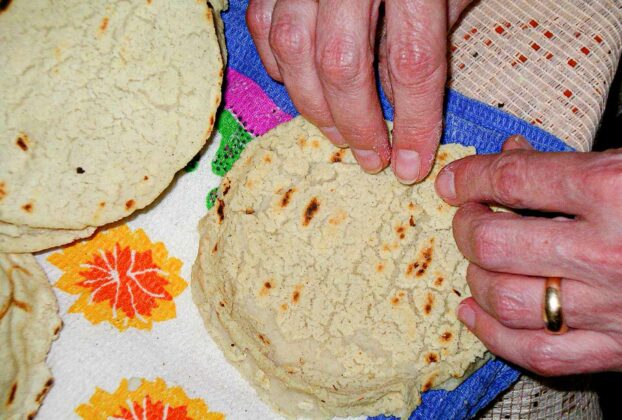
From Masa To Mesa: The Many Faces Of Tortillas
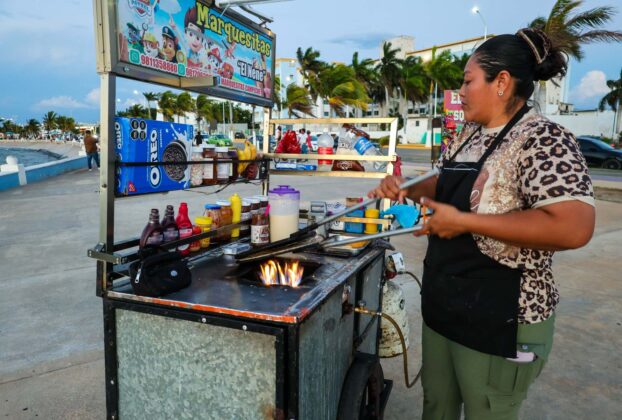
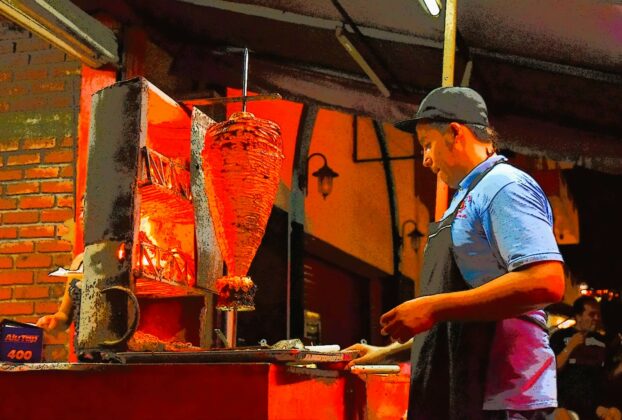
It is nearly impossible to walk more than a block in any Mexican town without encountering a food vendor or two, with either stands on the street or small storefront businesses. The national affinity f...
read more
Dining in the DF: food and drink in Mexico's capital
A look at the myriad dining experiences to be had in the capital itself, Mexico City, commonly known as "el D.F.," short for Distrito Federal.
read more
A Gastronomic Circuit Around the City or When Lost in Mexico, Follow Your Stomach: El Estado de Mexico
A friend from western Mexico is on the phone, planning a trip to visit us down south in Oaxaca.
"From the map, it looks like there's a freeway loop around Mexico City," he says hopefully.
Yes, well. ...
read more
Mexican mangos: fantastic flavor, big business
The Cuisine of Tabasco: Heartland Of Pre-Hispanic Cooking
Nestled along the southernmost coast of the Gulf of Mexico is the state of Tabasco, birthplace of the Olmecs, called the "mother culture of Mesoamerica", and the Chontal Maya, famous as seafaring trade...
read more
The Cuisine of Michoacán: Mexican Soul Food
If Michoacan is "the soul of Mexico," as it has often been called, then its food is Mexico's soul food, for few other places in the country can claim such a profound and long-lasting indigenous influence on their regional cuisine. This western state, part of the Bajio region located north and west of Mexico City, has retained its culinary roots for over a millennium.
read moreBeans, a staple in the Mexican kitches: Frijoles
Since pre-Hispanic tmes, beans have been a staple in the Mexican kitchen. They appear in a world of traditional recipes, from frijoles refritos or refried beans to frijoles charros (cowbooy beans) and ...
read more
The cuisine of Chiapas: Dining in Mexico's last frontier
Although the mention of Chiapas frequently brings to mind images of masked revolutionaries and steamy jungles, Mexico's southernmost state is a beautiful combination of mountains, plains and seacoast w...
read more
Mexican Cookbooks: A Holiday Wish List
Although many of the recipes I try come from friends, market salespeople, food stand cooks and restaurant chefs in many parts of Mexico, there is nothing like a good cookbook for inspiration, especiall...
read more
Rice: The Gift Of The Other Gods
Just as corn was called "the gift of the gods" in ancient Mesoamerica, the same phrase was used for rice in what is now Southeast Asia. In several Asian languages, the word for rice and food is the sam...
read more
Campeche: Cocktails and Seafood in a Pirates' Paradise
Picture a small tropical city nestled up against sparkling coastal waters, surrounded by fortress walls, complete with drawbridges and moats to keep out invading buccaneers. Where, in the twenty-first ...
read more
Demystifying mole, Mexico's national dish
Although Cinco de Mayo, the national May 5th holiday commemorating the 1862 Battle of Puebla, is celebrated with much more fervor by Mexicans living in the United States than in Mexico, one exce...
read more
The Pumpkin, An Ancient Mexican Native: La Calabaza Grande
Perhaps the quintessential symbol of autumn, the pumpkin is a Mexican native and an ancient staple food. The oldest pumpkin seed found dates back as far as 7000 BC, according to archeologists excavatin...
read more
A Central Mexican Mixed Grill: La Parillada
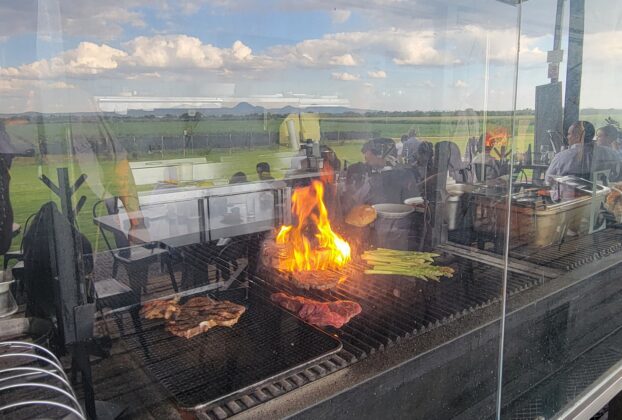
Although the season for outdoor grilling has just begun north of the border, here in Mexico grilling is done nearly year-round. Whenever our family and next-door neighbors in Cholula had a Sunday free ...
read more
Oaxaca Journal by Oliver Sacks
Oliver Sacks is obviously too seasoned a traveller and too astute an observer to confine himself to ferns. One encounters a host of pleasures as he ruminates on a variety of topics. He muses about the New World's contributions to civilization -cocoa, tobacco, potatoes, tomatoes, chilies, gourds, pepper, maize, chewing gum, cochineal and exotic hallucinogens. In Monte Alban he considers the production of rubber which the Zapotec people used to make balls.
read more
Winter sunshine: Mexican ways with citrus
As Mother Nature assaults the Northern climates with chill winds, sleet and snow, northerners can take comfort from the fact that she has thoughtfully provided the season's bounty of citrus fruit from ...
read more
Getting to the heart of Oaxacan cuisine: A cooking class with Susanna Trilling
The longer one lives and travels in Mexico, the more meaningless the term "Mexican food" seems to become, for the true cuisine of Mexico contains such distinct regional differences that some people cla...
read more
Mexican Wines
We are traveling to Mazatlan for Christmas this year and would love to sample some good Mexican wines. Can anyone supply us with the names of some good reds and whites?
read more
Like Water for Chocolate
"Like Water for Chocolate" is a sort of combined novel and cookbook. Food plays a very prominent part in the narrative. The heroine, Tita, is a wonderful cook and we are even provided with her recipes along with the action. The story is set at the time of the Mexican Revolution - 1910-1920 - in Piedras Negras in Northern Mexico. And, like so many Mexican stories, it concerns a family. The story mainly concerns Tita, the youngest daughter, the remarkable cook and originator of all those recipes.
read more