MexConnect
All results for tag “flora”
Showing 26—50 of 76 results

Seeing the forests and the trees links by Ron Mader

Mexican forests cover more than 140 million hectares or about 72% of the national territory. That said, the trees are falling quickly. A recent government study of satellite images, the country is losi... read more

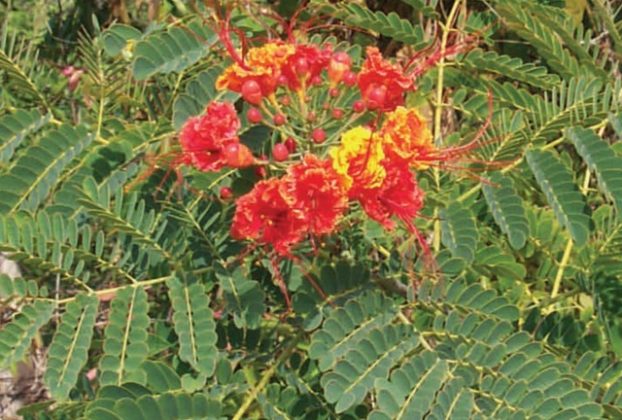
Triangle palm, yucca and thunbergia: ornamental plants and flowers of tropical Mexico by Linda Abbott Trapp

Three beautiful options for your tropical garden in Mexico are the triangle palm, yucca and thunbergia. read more

Acalypha, anthurium and sago palm: ornamental plants and flowers of tropical Mexico by Linda Abbott Trapp

Three beautiful options for your tropical garden in Mexico are the acalypha, anthurium and sago palm. read more

Gorgeous giants by Linda Abbott Trapp

The next time you find yourself in a tropical or subtropical zone, take a closer look at some of the large and lovely foliage. One of the most delightful surprises of any tropical vacation is recogniz... read more

Tropical blues: ornamental plants and flowers of tropical Mexico by Linda Abbott Trapp

Blue can be compelling as the neon flash of a bird's wing, or quiet as a cloud, but it is never unnerving, always drawing the viewer to relax and witness its timeless grace. In music, blues are associ... read more

Allamanda, tulipan and zamia: ornamental plants and flowers of tropical Mexico by Linda Abbott Trapp

Three beautiful options for your tropical garden in Mexico are the allamanda, tulipan and zamia. read more

Limon, papaya y sabila by Maria Elena

Copyright © 2000 by Maria Elena. All Rights Reserved Worldwide.   There are three plants that are an essential part of the Mexican household, limon [lime, not lemon], papaya, and the trus... read more

El Arbol de Tule: probably the biggest tree in the world by Rohan Barnett

At over 2000 years old, El Arbol del Tule, which is actually an Ahuehuete Cypress, is amongst the oldest living trees in the world. With a 10 meter (33 feet) diameter trunk it is also considered by many to be the broadest tree in the world. The circumference of the trunk is an amazing 54 meters (178 feet) It is over 40 meters (130 feet) high, boasts a foliage diameter of over 51 meters (170 feet), and weighs over 500 tons.

read more

Oaxaca Journal by Oliver Sacks Reviewed by Allan Cogan

Oliver Sacks is obviously too seasoned a traveller and too astute an observer to confine himself to ferns. One encounters a host of pleasures as he ruminates on a variety of topics. He muses about the New World's contributions to civilization -cocoa, tobacco, potatoes, tomatoes, chilies, gourds, pepper, maize, chewing gum, cochineal and exotic hallucinogens. In Monte Alban he considers the production of rubber which the Zapotec people used to make balls. read more

Almost an Island: Travels in Baja California by Bruce Berger Reviewed by Allan Cogan

Bruce Berger is an excellent guide to the Baja. He’s been going there since the mid '60s, having driven the length of the peninsula at least three times when that meant travelling more than 1,000 kilometers of single lane dirt road. One could drive for a day and meet only one other car. And you would never dream of leaving without taking plenty of food, water and gasoline plus whatever extras and spare parts you might need to fix auto problems along the way. read more

Chaya, the Maya miracle plant by Sophie Annan Jensen

Chaya plant © Educational Concerns for Hunger Organization, 2009 Updated in October, 2009 "Here is a contribution of the unforgettable Maya Indians, whom we have abandoned," is the wistful introd... read more

Cuatro Ciénegas, Coahuila by Nancy T. Wilson

Sitting in bathtub-warm water in the middle of the desert looking at the surrounding mountains under a deep blue sky is a delightful experience. We are in the Cuatro Ciénegas Nature Preserve just outs... read more

Did You Know? Most "bark paper" comes from wild fig trees by Tony Burton

Besides being used as a kind of rough paper for records and correspondence, amate was also cut into human or animal forms as part of witchcraft rituals after which it would be buried in front of the pe... read more

Did You Know? Trade in Mexico's cacti grew in the 1840s by Tony Burton

A young Belgian botanist established a business exporting Mexican cacti to Europe back in the 1840s.   Prickly Pear Cactus Flower Henri Guillaume Galeotti was born on September 10, ... read more

Did You Know? Popular children's chorus features cockroaches and pot smoking by Tony Burton

La Cucaracha (The Cockroach), one of Mexico's best known corridos, is a comic, satirical song, with infinite possibilities for creative verses. Versions of La Cucaracha have been performed by countless bands and musicians, including Louis Armstrong, Bill Haley & His Comets, Doug Sahm read more

Did you know? Mexico has over thirty UNESCO-designated biosphere reserves by Tony Burton

A surprising percentage of Mexico's land area is protected in one form or another. A very large number of sites of archaeological or historical importance are managed by the National Institute of Anthr... read more

Did You Know? Vanilla Festival in Papantla, Veracruz by Tony Burton

The Vanilla Festival is held in early summer every year in Papantla, Veracruz. The origins of the festival pre-date the Spanish conquest. Its timing is now tied to the Catholic celebration of the Feast... read more

Did you know? Mexico's Domesday Book by Tony Burton

Mexico's equivalent of the Domesday book was compiled in the sixteenth century. History shows that conquerors often have very little idea of what they have really acquired until it is firmly within th... read more

Did You Know? Bouncing balls and Mexican ingenuity by Tony Burton

Rubber balls wouldn't bounce very high if it wasn't for some Mexican ingenuity. The Morning Glory Ipomoea alba, the tropical white-flowering morning glory (moonflower or moon vine) is a perennial in ... read more

Did You Know? Mexico in the Guinness world records: part two by Tony Burton

An earlier column described several Guinness records and their connection to Mexico and Mexicans. This month's column examines four more very different Guinness records which do not involve quite as mu... read more

Did You Know? Mexico's national flower is the humble dahlia by Tony Burton

With more than 30,000 native flowering plants to choose from, who would have thought that the humble dahlia would become Mexico's national flower? The earliest known description of the dahlia (known t... read more

Did You Know? Birth control pills come from Mexican yams by Tony Burton

The oral contraceptive pill, often referred to simply as "the Pill" was officially fifty years old on October 15, 2001. In the words of The Economist: it "was arguably the first lifestyle drug t... read more

Did You Know? Mexico's kapok trees aided the U.S. war effort by Tony Burton

Mexican kapok trees once helped the U.S. war effort. During the Mexican dry season, a peculiar and very distinctive leafless tree often attracts attention because it appears to have large balls of flu... read more

Did you know? In Chiapas, Mexico's Mam turn to organic farming by Tony Burton

Organic farming has helped some indigenous peoples in Mexico to reinvent themselves. How many people are there? According to INEGI figures, about six million Mexicans over the age of five speak at le... read more

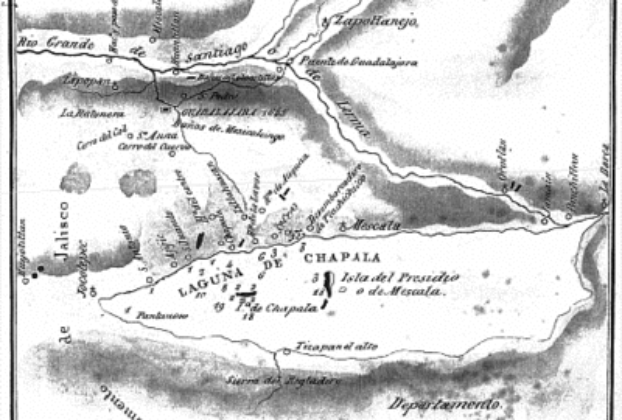
Did you know? Lake Chapala under attack from water hyacinth by Tony Burton

Masses of beautiful violet and yellow flowing water hyacinth ( Eichhornia crassipes) add an attractive splash of colour to the Lake Chapala landscape during the rainy season but are a serious problem for thelives and economy oflocal residents. read more
Showing 26—50 of 76 results