Mexico's San Felipe: A living desert museum
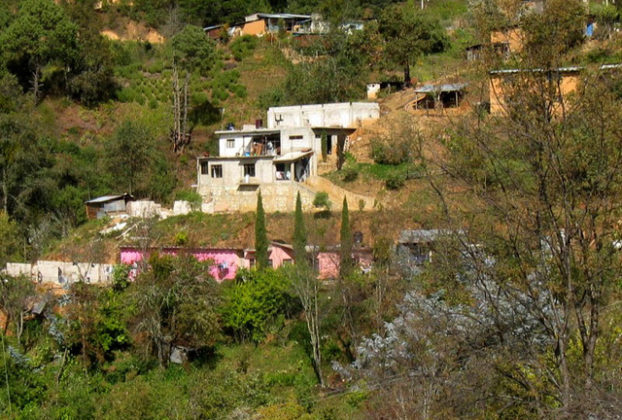
San Felipe is the center of a living museum that has witnessed the passage of a continuum of men, women and children for the past 2- to 3,000 years. Whereas evidence of their existence remains in most ...
read more
Audubon de Mexico: A community partner for ecological awareness
I'm sitting in a third grade class at the Independencia School in San Miguel de Allende, Mexico. Aside from the charming teacher, there's hardly a full set of teeth in the room, although nobody's smile...
read more
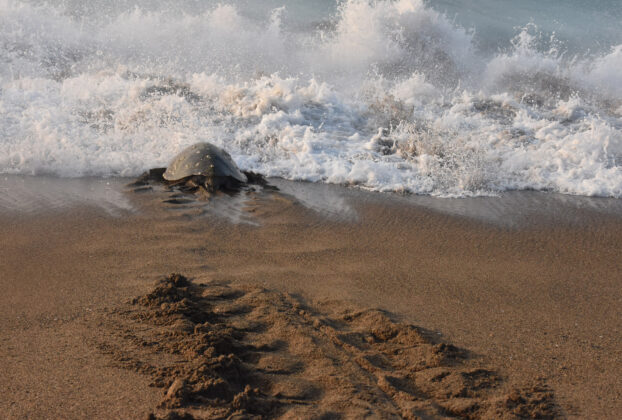
Rescuing and releasing sea turtle hatchlings in Todos Santos, Mexico
Photos by Mariah Baumgartle
The sun is setting off the coast of Todos Santos, Baja California Sur and, even though we are in the tropics, we are bundled up in heavy, hooded sweatshirts and jeans to pr...
read more
Ecotourism in Mexico: Arroyo Guacamaya, Ixtlan and the Sierra Norte of Oaxaca
Arroyo Guacamaya is one of the closest ecotourism sites to the City of Oaxaca, accessible by private vehicle in about an hour, or via public transportation. La Guacamaya has most if not all of the fea...
read more
Saving Mexico's tarantulas: Rodrigo Orozco's ingenious plan
Rodrigo Orozco shares his Guadalajara, Mexico, home with thousands of tarantulas and tens of thousands of crickets. He's a man with a mission. "I want to end the illegal trade in Mexican tarantulas," h...
read more
Going native: gardens in Mexico become more Mexican
As the world's environment deteriorates, some of Mexico's streets and plazas are stepping back toward better ecosystems by going native. Curiously, most ornamental plant species in many Mexican cities...
read more
Overfishing in the Sea of Cortez: Are sustainable fish farms the solution?
Water Safety
If you are concerned with the quality of the water at your beach, we recommend you contact the tourism department for updated reports and avoid swimming in questionable waters.
Mexi...
read more
Laguna Catemaco, Veracruz
The lush green volcanic hills of southern Veracruz permitted only glimpses of the approaching Laguna Catemaco. Small islands hid among swirls of soft grey neblina.(fog) They appeared then disappeare...
read more
Loreto Bay: the greenest place in Baja, and quite possibly in all of Mexico!
Loreto Bay, a 3-billion-dollar, 6,000-home development in Baja California Sur, may be the most eco- and socially-aware resort project anywhere in the country.
Interactive map of Baja California & ...
read more
Did you know? Sheep and environmental damage in Mexico
Believe it or not, the introduction of sheep to Mexico had serious environmental consequences.
After the Conquest, Spanish settlers introduced numerous Old World species into the New World. The mo...
read more
Did you know? A plastic island is constructed in Mexico
An entire island has been constructed, not by Bob the Builder, but by Richie the Recycler!
Amazing but true: off the coast of Quintana Roo, Richie Sowa has painstakingly constructed an entire island,...
read more
Did you know? Mexico has over thirty UNESCO-designated biosphere reserves
A surprising percentage of Mexico's land area is protected in one form or another. A very large number of sites of archaeological or historical importance are managed by the National Institute of Anthr...
read more
Did You Know? Bouncing balls and Mexican ingenuity
Rubber balls wouldn't bounce very high if it wasn't for some Mexican ingenuity.
The Morning Glory
Ipomoea alba, the tropical white-flowering morning glory (moonflower or moon vine) is a perennial in ...
read more
Did you know? Mexico's largest bird is the American White Pelican
The American White Pelican is Mexico's largest bird, while its relative the Brown Pelican is one of the most fun to watch.
White Pelicans on Lake Chapala;
photo: John Mitchell, Earth Images Foundat...
read more
Did You Know? Birth control pills come from Mexican yams
The oral contraceptive pill, often referred to simply as "the Pill" was officially fifty years old on October 15, 2001. In the words of The Economist: it "was arguably the first lifestyle drug t...
read more
Did you know? Lake Chapala under attack from water hyacinth
Masses of beautiful violet and yellow flowing water hyacinth ( Eichhornia crassipes) add an attractive splash of colour to the Lake Chapala landscape during the rainy season but are a serious problem for thelives and economy oflocal residents.
read more