Celebrating the Days of the Dead: The Heart Speaks Clearly in Michoacán
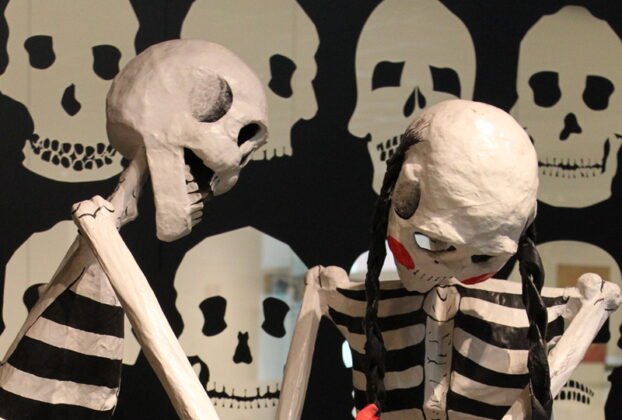
The Days of the Dead, celebrated throughout Mexico, coincide with the Christian All Souls and All Saints days, November 1 and 2nd. People who have died in the past year are remembered, their pictures p...
read more
Eating the guest of honor
Juan Mata Ortíz is a small village of potters, farmers and cowboys in Northern Chihuahua. About 30 years ago, an unschooled artistic genius, Juan Quezada, taught himself how to make earthenware jars i...
read more
Getting a divorce in Mexico
Sure, it's possible for two US citizens to obtain a divorce from one another in Baja California. Whether it's wise is another matter.
In the old days, before "no fault" or irreconcilable differences grounds became prevalent, Mexican divorces were popular because of the difficulty of obtaining a divorce in certain states. As a result, many Mexican "quickie" divorces did nothing more lighten the litigants' pockets and fill them with the false notion that the marriage had actually been dissolved.
read moreShopping in Mexico: the tianguis
The Aztecs called it tianquiztli, Nahuatl for the marketplace". Modern Mexicans refer to it as the tianguis, mercado sobre ruedas ("market on wheels" - a term used mostly in Mexico City), ...
read more
20 years visiting the Huichols
High in the Sierra Madre Occidental mountains of Mexico, northwest of Guadalajara, the Huichol Indians live in small villages called ranchos scattered throughout this remote, rugged terrain. They integ...
read more
La Quinceañera: a celebration of budding womanhood
The transition from childhood to womanhood is a significant passage for adolescent girls in almost all cultures. In Mexico, it is marked with the celebration of the Quinceañera, or 15th Birthday. From...
read more
Huichol artwork: the ceremonial bowls
The ceremonial bowls or jícaras, as they are called, are made of gourds which are prized for their light weight and durability as water vessels and storage containers.
The bowls hold visions and crea...
read more
In Mexico, saying 'gracias' comes naturally
Not long after her husband died, our friend Lila decided to leave Mexico and return to the USA. She chose Florida over her native New York. As a newly single senior, it seemed like a good place for her...
read more
Comprehending shamanism in the Huichol world
Shamanism is humanity's oldest form of relationship to Spirit. As such, it is the underpinning beneath all religion. But shamanism is not a religion. It is a complex set of practices, beliefs, va...
read more
The Huichol people of Mexico and their symbols
Deer. Maize. Peyote These are the most important symbols for the Huichol. They represent a culture in transition from hunting and gathering strategies to that of a sedentary agrarian lifestyle.
read more
Huichol artwork: celestial things
The eclipse has special meaning for the Huichol, because it represents the eclipse of July 11 1991 at 10:21 A.M. Pacific Coast time. This is the sixth sun according to the ancient Meso-American Calenda...
read more
The Huichol of Jalisco and Nayarit
The Huichols are a hearty and enduring people numbering about 18,000, most of which live in the Jalisco and Nayarit, two rugged and mountainous states in North Central Mexico.
They are descendents of ...
read more
Symbolism used by the Huichols
Tacutsi Aramara, the Goddess of Life, is the Mother Goddess. From her have sprung all life forms; humans, animals and plants. Tacutsi not only gives life to all she nurtures, but teaches a manner of li...
read more
Huichol shamanic art
The Huichol People of central Mexico still follow the age-old shamanic ways of their ancestors, an unbroken wisdom-bridge stretching back into the Paleolithic. The mara'akame, the shaman, still leads p...
read more
Huichol literature
"The Earth is sick and dying. The lands of the Huichol Indians,
hidden high in the remote Sierra Madre mountains of northwestern Mexico,
are dying. The forests are shrinking, water is b...
read more
The Huichols: a culture in transition
A Message From Susana Eger Valadez, Director,
The Huichol Center For Cultural Survival And Traditional Arts
Dear Friends on the Internet:
Thank you for your clicking on us to find out about t...
read more
Huichol Indians: their art and symbols
Deer and wolves that speak to man, arrows that carry prayers, serpents that bring rain or impart skill in embroidery, pumas that are messengers of the Gods — are all real in the Huichol beli...
read more
The "Indian Time" syndrome
The Mañana Principle- Mañana means tomorrow, right? Wrong! In Indian space-time, mañana can mean almost anytime ... next week, next month ... possibly never. However, it can be a most usefu...
read more
Communicating In Latin America
HURDLE THE LANGUAGE BARRIER - by learning Latin American hand and voice signals. These vary from one culture to another. The following are distinctly LATINO:
THE WAGGING FINGER -
...
read more
Mexico: a window on technology and the poor
Over the Columbus Day weekend, I was in Mexico City, attending and speaking at a conference marking the founding of the Mexican chapter of the Internet Society.
That was a potentially historic event i...
read more
El Grito: Mexico's Cry for Independence
The Declaration of Independence of the United States eloquently states in its introductory paragraph: "When in the course of human events it becomes necessary for one People to dissolve the political b...
read more
Beliefs of Mexico's Huichol people: Responsible Ecstasy
Ecstasy is a real human need...
a state of consciousness beyond concept.
And if it does not come through... in positive ways...
it's going to come out in violence.
— Elizabeth...
read more
Guadalupe and the way of the Huichol
The Huichol way is the way of the Heart. Of utmost importance to the awakening and development of the heart is the sacred Peyote. Peyote looks like a cactus and grows wild in the desert. It has been us...
read more