Through the lens: Dia de los Muertos (Day of the Dead)
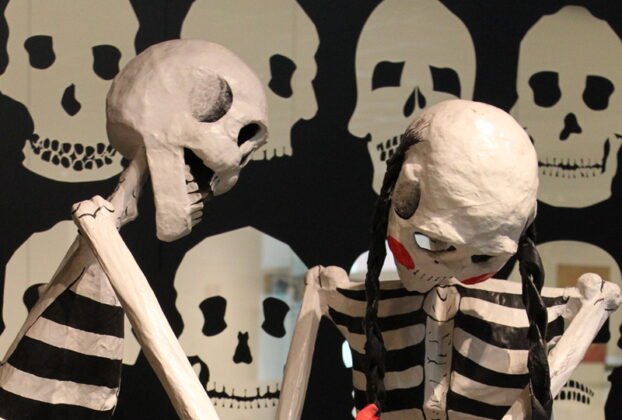
Day of the Dead, one of the most important celebrations in Mexico, is understandably difficult for foreigners to fully comprehend. Cemeteries full of families, flowers, food, and music seem daunting to...
read more
Arts and Culture of Mexico - Index Page
Within this section we highlight some of the best Mexico has to offer in the way of artesans, writers, painters, ceramicists, cultural examples, sculptors and more. If you like what you see, contact the artists and let them know you saw it on MexConnect.
read more
Saint Anthony and John the Baptist: June festivals at Lake Chapala
Ethnic diversity in Mexico
Mexico is an ethnically diverse country. To understand México, one must understand her peoples, their history and contributions to what is the México of today. Within this section, we consider those ...
read more
The Religious Virgins and Saints of Mexico: las Virgenes y santos de Mexico
An Index Page of Articles, Images and Resources.
read moreMexico's Huichol resource page: their culture, symbolism, art
Our guide to the Huichol people of Mexico: their culture, history and extraordinary art
read more
May in Mexico: Fiestas galore
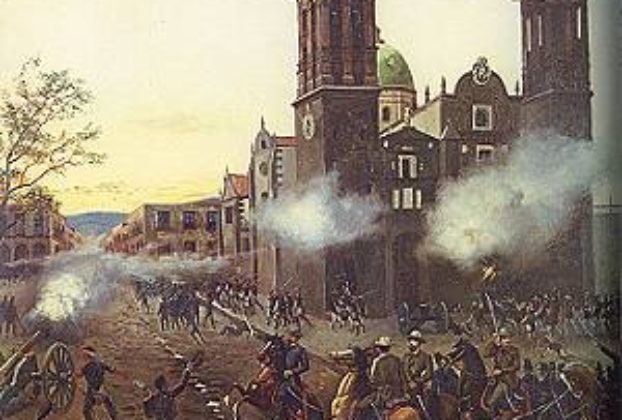
It actually begins on April 30 with the Dia del Niño, when children are honored with gifts and treats, and classes are canceled for a day of fun. Labor Day — May 1 — follows immediately with parades in every city and town. May 3 is the feast day of the Holy Cross. The Battle of Puebla is commemorated on the 5th — el Cinco de Mayo, perhaps a bigger event in the U.S. and Canada. May 10 is always Mother's Day... read more
Did You Know? Cinco de Mayo is more widely celebrated in USA than Mexico
Why this one? The main reason is that the Battle of Puebla marks Mexico's only major military success since independence from Spain in 1821.
On May 9, 1862, President Benito Juarez declared that the Cinco de Mayo, the anniversary of the Battle of Puebla, was to be a national holiday. In the U.S., the Cinco de Mayo has been transformed into a much more popular cultural event. read more
Silver, saints, and sinners™: Semana Santa in Taxco, Mexico
The City of Silver
If you have heard of the picturesque, old colonial Mexican town of Taxco at all, you probably associate it with that precious metal so characteristic of Mexico – silver. If you...
read more
Dancing with the Stars: Carnival on Cozumel
As a wave of dancers flooded the street, the beat of the salsa flowed through my body. My feet moved and my shoulders shimmied. A beautiful dancer, wearing an off-the-shoulder dress leaned toward me an...
read more
Uncovering Tonala's history at the National Ceramic Museum
Dating back to pre-Hispanic times, the nahual is a shape shifter who switches between human and animal forms and is often characterized as a shaman.
read more
Our Lady of Guadalupe: Tonantzin or the Virgin Mary?
It was on December 9, 1531, when Juan Diego, a humble Indian peasant, was crossing the hill of Tepeyac just north of present day Mexico City that — it is said— a beautiful shining woman miraculously appeared to him. Declaring herself to be the Virgin Mary, Mother of Christ, she called Juan her son. He reported his vision to Bishop Juan de Zumarraga, who demanded additional evidence of the divine apparition. On December 12 then, Juan Diego returned to Tepeyac, where the Virgin told him to gather roses where none had grown previously. Then, when the Indian delivered the roses to the Bishop, the image of the Virgin Mary miraculously appeared on his cloak.
read more
Mexico's Dia de Muertos celebration: Is it dying?
"Every year there are more and more tourists. They're not coming to see our tradition, they just want another reason to have a fiesta. It gets worse later, when they start urinating on the candles."
read moreWomen potters of San Marcos Tlapazola, Oaxaca
Every Sunday Gloria awakens at 3:00 a.m., and begins preparing tejate, a frothy, tasty corn and cacao based drink, which she will offer for sale in the Tlacolula market. A couple of hours later, her si...
read more
There is no such thing as a bullfight
From the outside, this bullring resembles nothing so much as a red erector-set construction but inside, it is a concrete-stepped cone funneling down to the sand, on which are painted two white rings, o...
read more
Guelaguetza
Monday, July 26, 2010, the colorful pageantry of Mexico's Guelaguetza is reenacted once again during the Lunes del Cerro (Mondays on the Hill. A Zapotec word signifying offering or offertory, Guelaguetza was the term used to describe the Oaxaca ceremony and celebration held each year to propitiate the gods in return for sufficient rain and a bountiful harvest. Today it is one of the most colorful fiestas in Mexico.
read more
Personal reminiscences of Mexico's Huichol people V: journey to the sierra
Cultural differences and clarity in Mexico's business world
When U.S. executives are sent to Mexico, they soon hear that Mexicans are "indirect" and "will not give you a straight answer, "especially if what needs to be communicated is unpleasant." Thus, the gen...
read more
Pilgrimage from San Miguel de Allende to San Juan de los Lagos in 1967
Founded in 1542, San Juan de los Lagos is set in the Los Altos region of Jalisco, an area distinguished by its devotion to the Roman Catholic faith. The Cathedral there is home to the diminutive image of the Virgin of the Immaculate Concepcion. Late in January, pilgrims on foot can be seen thronging toward the town for the celebration of Candlemas on February 2.
read more
Our Lady of Guadalupe in Mexican art
The Virgin of Guadalupe first appeared in Mexico in 1531 to Juan Diego and, as proof of her visit, caused roses to bloom at the site. Because church leaders did not believe he had seen her, she instruc...
read more